by Joan Harvey
I learned in New Jersey that to be a Negro meant, precisely, that one was never looked at but was simply at the mercy of the reflexes the color of one’s skin caused in other people. —James Baldwin, Notes of a Native Son
I am invisible, understand, simply because people refuse to see me. —Ralph Ellison, Invisible Man
…American society is blind to hundreds, even thousands of murders perpetrated in its name by agents of governments. — John Lewis
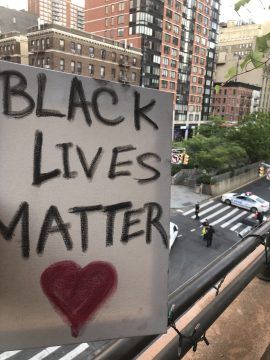
I had begun thinking about how the coronavirus made very visible the shambles of our society, when the murder of George Floyd took place. Disasters pull aside the veil, and make an underlying reality more apparent. Already the coronavirus had exposed the reality of racism, capitalist economics, the weakness of our food system, our health care crisis, the extreme vulnerability of so many populations, and the built-in structural violence. The George Floyd murder, and the subsequent protests and riots, were police brutality made visible, and rage against the brutality made visible.
Activist and epidemiologist Gregg Gonsalves, referring to the way the virus has been mishandled, asks:
How many people will die this summer, before Election Day? What proportion of the deaths will be among African-Americans, Latinos, other people of color? This is getting awfully close to genocide by default. What else do you call mass death by public policy?
His comments apply equally to the public policy that allows so many to be killed by police. Writing in 2014, civil rights leader John Lewis mentions a recent study that reported that “one black man is killed by police or vigilantes in our country every 28 hours, almost one a day.” Read more »
 Have a look at the
  In thinking about knowledge and consciousness, it is just about irresistible to distinguish between the basic facts of what we observe and interpretations or beliefs about those facts. You and I see the same glass of water – maybe our perceptions of the glass are nearly identical – and yet you see it has half full while I see it as half empty. We look at the same economic reports, and you find reason to celebrate while I find cause to worry. We see an artificial satellite in orbit, and you see it an incursion of government and industry into space while I see it as a glory of science and engineering. And so on – it seems obvious that there is a divide between what everyone can plainly see and what’s a matter of interpretation.


 When I feel myself becoming irritable, disheartened, or just plain fed-up with life during the pandemic, I find it helpful to conduct a thought-experiment familiar to the ancient Stoics. I reflect on how much I have to be grateful for, and how things could be so much worse. That prompts the more general question: Who are the fortunate, and who are the unfortunate at this time?
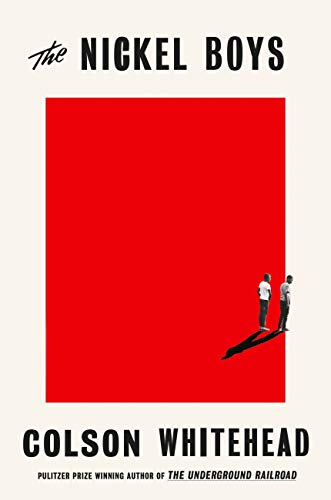 Colson Whitehead won his second Pulitzer Prize for The Nickel Boys in 2020, joining the ranks of three other writers recognized for the rare honor. His first was for another historical fiction The Underground Railroad in 2017. What are the odds of winning the Pulitzer for two books that deal with the same subject – the troubled race relations in America? Pretty good, I would say, if your second book is as brilliant as The Nickel Boys.
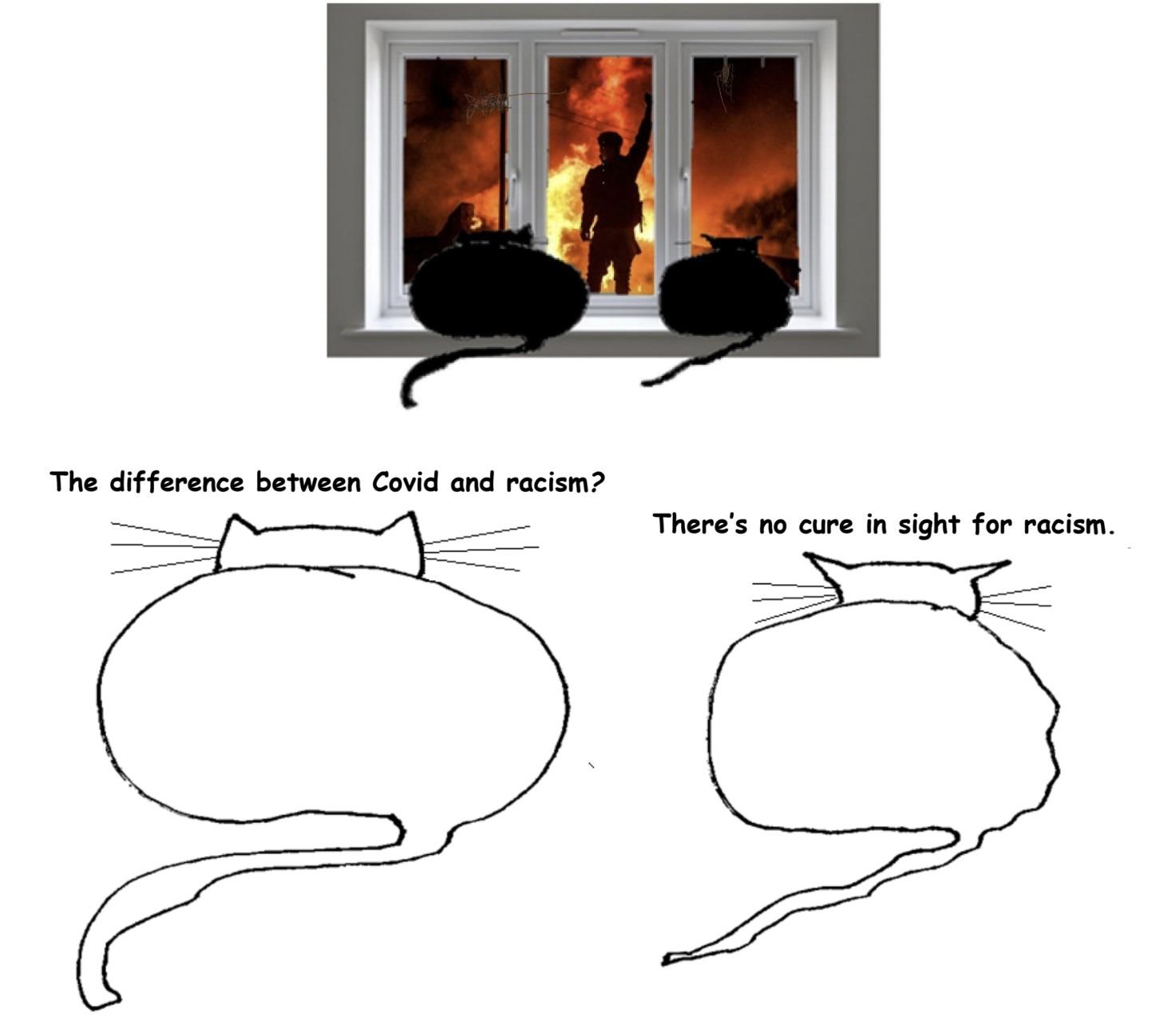

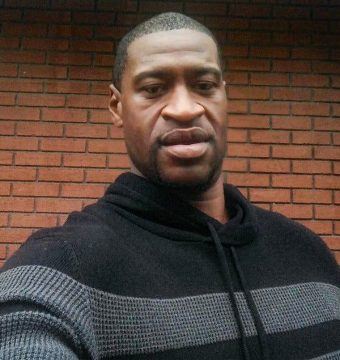 It feels impossible this week not to talk about George Floyd, and yet it feels as if talk has become egregiously cheap, less a mechanism for change than a means of resting in paralyses of complacency, disbelief, or comfort. When rage, grief, frustration, and loss take over communities, states, and entire countries as they have this week, words feel at once like our most important tool and a frantic means of filling what could otherwise be a devastating silence. How do we address a racism so deeply ingrained in society that it feels woven into every fiber of our country’s foundation—and, indeed, was there at the United States’ genesis, when black bodies bolstered a white economy at the expense of their lives, health, and humanity, and in the process built what we so misguidedly call the land of the free, the world’s first great democracy?
 My father had an immensely fat friend whom I often glimpsed filling a plate alone at the buffet table of the King Eddie’s restaurant as I walked past that grand hotel. This man himself had a father even then in those days a nonagenarian, whom he saw daily, devotedly, taking him to the pool for a swim. It turned out that, obesity or no obesity, the friend would outlive my own father by twenty years. Because I liked the man very much, his longevity does not strike me as an injustice. He had a snuffling voice, small but piercing eyes, a gigantic nose and a fund of forgiving affection, the kind dispensed even in the awareness that what was being forgiven might have been awful. He preferred not to know, though his ignorance was (if I may venture a paradox) well informed. My mother played matchmaker for decades in his behalf, possibly because she found him appealing. Her stratagems did not avail. His marvellous acquitting heart remained unpaired.