by Philip Graham
 Michele Morano’s first collection of essays, Grammar Lessons: Translating a Life in Spain, is a classic of travel literature that I have taught several times, to the great pleasure of over a decade’s worth of students. Now she has bested the power of that excellent book with a new collection of essays, Like Love. This book too, in a way, is a travel book, but one that stays close to home as Morano discovers and examines in her life the surprisingly varied terrains of affection, infatuation, love and devotion. And in this travel, Morano embraces the side paths that require uncommon honesty and self-examination that often go unspoken or unwritten. Readers following Michele Morano on this journey will be rewarded with their own moments of revelation, which may breathe life into memories perhaps long neglected.
Philip Graham: I have long been an admirer of your writing, but your new book of nonfiction, Like Love, has taken my appreciation to new heights. Right from the start, the title tells a reader something special is afoot. Such a seemingly simple pairing of two single-syllable words, and yet, placed together, they resonate with many possible readings that only deepen as one proceeds through the book. What is the history of this title, was it an early, middle or late inspiration as you were writing the collection?
Michele Morano: Thank you, Philip, I appreciate your asking about the new book’s title, which came somewhat early in the process. I’d published a third of the essays as stand-alone pieces before recognizing the theme of odd romances, relationships that don’t follow the usual storylines, in my work—and in my life. I decided to make a book, and because I’ve always loved the title of Lorrie Moore’s short story collection, Like Life, I took inspiration from it for the title essay and the book as a whole. Like Love refers to all the unconsummated, shimmering infatuations, entanglements, relationships, and taboo attractions that happen throughout our lives. Read more »

 If you go to Kashmir today this is what you will see. As you drive away from Srinagar’s Hum Hama airport, a large green billboard with white lettering proclaims, Welcome to Paradise.
 Like millions of others, my reaction to the result of the US presidential election was primarily relief. Relief at the prospect of an end to the ghastly display of narcissism, dishonesty, callousness, corruption, and general moral indecency (a.k.a. Donald Trump) that has dominated media attention in the US for the past four years. Also, relief that American democracy, very imperfect though it is, appears to be coming off the ventilator after what many consider a near death experience. The reaction of Trump and the Republicans, trying every conceivable gambit to thwart the will of the people, indicates just how uninterested they are in upholding democratic norms and how contentious things would have become had everything hinged on the outcome in one state, as it did in the 2000 election.
 The United States is undergoing a long-overdue reckoning, in the highest echelons of government, with the problem of systemic racism. The new Biden-Harris administration has








 1.
1.
 Look on the back label of most wine bottles and you will find a tasting note that reads like a fruit basket—a list of various fruit aromas along with a few herb and oak-derived aromas that consumers are likely to find with some more or less dedicated sniffing. You will find a more extensive list of aromas if you visit the winery’s website and find the winemaker’s notes or read wine reviews published in wine magazines or online.
 In a recent article in
 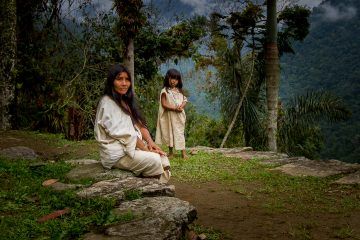 High in the Sierra Nevada de Santa Marta of northern Colombia, the Kogi people peaceably live and farm. Having isolated themselves in nearly inaccessible mountain hamlets for five hundred years, the Kogi retain the dubious distinction of being the only intact, pre-Columbian civilization in South America. As such, they are also rare representatives of a sustainable farming way of life that persists until the modern era. Yet, more than four decades ago, even they noticed that their highland climate was changing. The trees and grasses that grew around their mountain redoubt, the numbers and kinds of animals they saw, the sizes of lakes and glaciers, the flows of rivers—everything was changing. The Kogi, who refer to themselves as Elder Brother and understand themselves to be custodians of our planet, felt they must warn the world. So in the late 1980s, they sent an emissary to contact the documentary filmmaker, Alan Ereira of the BBC—one of the few people they’d previously met from the outside world. In the resulting film,