
by David J. Lobina

After running through “a linguistic update” of the study of nationalism and outlining some of the psychological underpinnings of the nationalist world-view that such an update suggests, it is now time to take stock. It is time, that is, to consider some of the repercussions of this general take on things.
Three interconnected corollaries come to mind, which I shall rank, and present, from the more general of consequences to the narrower and more significant. I should add that this is probably the sort of stuff that overzealous referees of academic journals dismiss outright, without giving it much thought (I know from experience), but do humour me anyway.
The first corollary has to do with the study of nationalism itself; or more properly, with what may well be termed “the origins of nationalism” – i.e., the genesis of nationalist beliefs.
There has been plenty of discussion on this issue in the relevant literature, with various proposals on offer, each espousing a whole paradigm. Some of the better-known accounts come under the names of perennialism, primordialism or ethno-symbolism, while the consensus on the study of nationalism I myself outlined is based on the so-called modernist paradigm, perhaps the most prominent of them all. Though a well-trodden topic, I think some of the material I presented in what I am now calling Parts 1 (the update) and 2 (the psychology) of this series on nationalism offers some novelty. As argued in Part 2, after all, it is by teasing out “the building blocks” of nationalism that we can obtain a better view of the overall phenomenon, and it may well be by drawing attention to the psychological underpinnings of nationalist beliefs that it might be possible to make sense of where nationalism as an idea comes from.[i] Read more »
 Sughra Raza. Karachi Afternoon Sun, 2010.

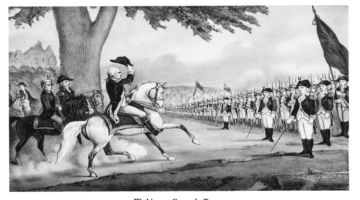





 In spite of my abiding interest in literature when I came to college I was vaguely inclined to major in History. In the long break between school and college I chanced upon two books of Marxist history which opened me to a new vista of looking at history. The first was Maurice Dobb’s Studies in the Development of Capitalism. This book showed me that there is a discernible pattern in the jumble of facts in history, which attracted me. Soon after, I read a lesser Marxist history book, A.L. Morton’s People’s History of England which showed me how recasting the old widely-known history of England from the people’s perspective gives you new insights. These books whetted my appetite to read more of Marxist history.
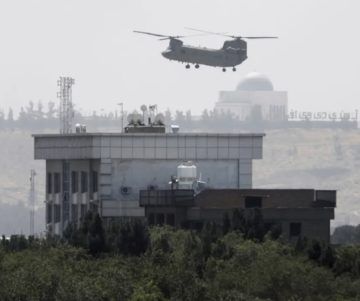 The events in Afghanistan over the last week are being seen as yet another “hinge moment” in history. The images of helicopters evacuating personnel from embassies and people chasing aircraft in desperation to get on them have been seared into the memories of all who have seen them. As a person from the region (Pakistan), a student of history, and as someone interested in the current state of the world, I too have watched these events with a mixture of amazement, trepidation, horror, and perplexity. It is not clear yet whether “hope” or “fear” – or both – should be added to that list. The things I say in this piece are just the thoughts and speculations of a non-expert lay person trying to make sense of an obscure situation. As will be obvious from the rest of this piece, for all the pain and suffering the new situation in Afghanistan will bring to people in Afghanistan, I think that the American decision to withdraw was the only rational choice. The alternative of staying on for years – perhaps decades – to build a better Afghanistan would just be another exercise in paternalistic colonialism. However, the way the withdrawal is happening is a great failure of American leadership and the blame for that lies mainly with the American policies of the last two decades. Perhaps its biggest failure was in not preparing Afghanistan for this day that was sure to come sooner or later. Now the Afghan people – especially women – will pay a price for that failure, but it may also come back to haunt the United States and other great powers. It has happened before….



 Sughra Raza. Temple Wall Philosophy. Galle, Sri Lanka, 2010.