
Nina Allan in The Guardian:
 I’d never heard the word before. Stillicide,” a corporate executive named Steven thinks to himself around a third of the way through Cynan Jones’s fragmented, marvellously compressed novel of the same title. “Water falling in drops. I challenge myself to get it into a sentence for the [journalists].” I had not heard the word before either, though Jones helpfully opens with a dictionary definition. And it is this image of dripping water and its powers of erosion that comes to define his book as a whole, both as a novel that confronts the challenge of describing what climate crisis might look like, and in the way a slow accretion of pertinent detail gathers cataclysmic momentum.
Stillicide takes place in the near future, when phases of extreme weather have plunged Britain into an alternating cycle of flood and drought. As temperatures continue to rise, smaller rural communities are becoming unsustainable, while the logistics of feeding and watering the growing city population has come to dominate the economic agenda. Steven is a PR spokesman for the corporation in charge of supplying an unnamed city with potable water. Previous attempts to augment the overstretched supply – an overground pipeline, an armoured freight train – have become the focus of terrorist activity, with raiding parties from the countryside violently advancing the demands of those who live beyond the urban centres. A new plan is hatched: an iceberg is to be towed from the Arctic and brought to an “ice dock” where its abundance of pure drinking water can be tapped and distributed. It is hoped that the iceberg will be largely immune from attacks by vigilantes and climate protestors. Moreover, meltwater from the berg – stillicide – can be utilised to irrigate agricultural land throughout the duration of its passage.
More here.
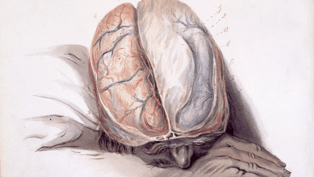 In wondering what can be done to steer civilization away from the abyss, I confess to being increasingly puzzled by the central enigma of contemporary cognitive psychology: To what degree are we consciously capable of changing our minds? I don’t mean changing our minds as to who is the best NFL quarterback, but changing our convictions about major personal and social issues that should unite but invariably divide us. As a senior neurologist whose career began before CAT and MRI scans, I have come to feel that conscious reasoning, the commonly believed remedy for our social ills, is an illusion, an epiphenomenon supported by age-old mythology rather than convincing scientific evidence. If so, it’s time for us to consider alternate ways of thinking about thinking that are more consistent with what little we do understand about brain function. I’m no apologist for artificial intelligence, but if we are going to solve the world’s greatest problems, there are several major advantages in abandoning the notion of conscious reason in favor of seeing humans as having an AI-like “black-box” intelligence.
 In 1955, R. Gordon Wasson set off for southern Mexico to experience a sacred Indian ceremony rumored to provide a “pathway to the divine.” Wasson later extolled the mystical effects of what he called the “magic mushroom,” the Mexican plant used in the ceremony, in
  Like so many technological innovations, the internet is something that burst on the scene and pervaded human life well before we had time to sit down and think through how something like that should work and how it should be organized. In multiple ways — as a blogger, activist, fiction writer, and more — Cory Doctorow has been thinking about how the internet is affecting our lives since the very beginning. He has been especially interested in legal issues surrounding copyright, publishing, and free speech, and recently his attention has turned to broader economic concerns. We talk about how the internet has become largely organized through just a small number of quasi-monopolistic portals, how this affects the ways in which we gather information and decide whether to trust outside sources, and where things might go from here.
 While all men might be equal in death, all sponsors must all be thanked in appropriately sized font. The memorial courtyard now contains an eternal flame, a donation from AGL, Santos and East Australian Pipelines. The gas for the eternal flame is ‘generously’ provided by Origin Energy under a sponsorship agreement. The gas industry’s ‘sacrifice’ in funding a tiny fraction of the local cost of the Australian War Memorial receives far more prominence than the names of Australian who gave their lives for our country. Lest we forget our sponsors. … While the irony of sponsorship by the oil industry, a fuel over which so many wars were fought in the twentieth century, might be missed by some, surely no one could miss the irony of BAE Systems, Lockheed Martin, Thales and other weapons manufacturers sponsoring the Australian War Memorial.
 But by far the most affecting performance came toward the event’s end, when the lights dimmed and an image of Stritch herself materialized on a big screen, like a glamorous ghost, in what might have been called her prime had she not so forcefully redefined that term. Wearing an ensemble of white blouse and black tights cribbed from Judy Garland’s famous “Get Happy” sequence but carried off even more effectively with her long, slim legs, she began the Sondheim song “The Ladies Who Lunch,” from the landmark 1970 musical Company, which was for so many years her signature anthem.
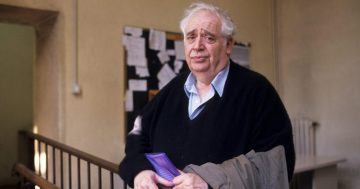 The positive lesson was that the most important thing a teacher can convey is a deep love of literature and an understanding that it offers insights, wisdom, and experiences to be found nowhere else. Nothing could be further from Bloom than the usual ways in which most students are taught literature today. Most learn mechanics: let’s find symbols. Others are instructed to see the work as a mere document of its times. And many are taught to summon the author before the stern tribunal of contemporary beliefs so as to measure where she approached modern views and where she fell short. (Bloom was to name such criticism “the school of resentment.”) Each of these approaches places the critic in a position superior to great works, which makes it hard to see why it is worth the effort to read them. Bloom instructed us to do the opposite: presume that the poets are wiser than we are so we can immerse ourselves in their works and share in their insights. Then the considerable difficulty of reading Milton or Spencer or Shelley makes sense.
 The landscape of Lessing’s childhood – and her sense of being in exile from it afterwards – remained, I think, the key to her writing in the 40 books that eventually gained her a Nobel Prize. Her experience of the veld was crucial to her politics. She became a communist because she was outraged by the system of racial segregation known as the colour bar, oppressing the black people she heard playing the drums at night outside in the bush while her mother played Chopin on the piano. And the veld was also crucial to her life as a feminist. After roaming freely as a child, sometimes pausing to shoot guinea fowl, she didn’t understand the conventions governing women’s lives in the city. Living in the Southern Rhodesian capital of Salisbury (now Harare), she found the nuclear family unbearably claustrophobic and longed to escape a social world that restricted the independence of women. And so, in 1942, aged 23, she abandoned her marriage, leaving behind two children.
 Some years and several books ago, the New Yorker journalist
  Three myths about morality remain alluring: only humans act on moral emotions, moral precepts are divine in origin, and learning to behave morally goes against our thoroughly selfish nature. Converging data from many sciences, including ethology, anthropology, genetics, and neuroscience, have challenged all three of these myths. First, self-sacrifice, given the pressing needs of close kin or conspecifics to whom they are attached, has been documented in many mammalian species—wolves, marmosets, dolphins, and even rodents. Birds display it too. In sharp contrast, reptiles show no hint of this impulse.
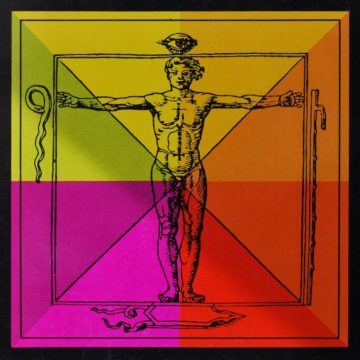 Like other teachers and sages I’d known and apprenticed myself to for seasons of my life, Bloom performed, but what he didn’t perform was pedagogy or teaching, not for himself and not for us. He just did readings, in the Bloom way, which was an ongoing drama, in words, between the work at hand and the absent works, lines and phrases that the work had brought itself into being from. This isn’t the same as watered down “intertextuality” or “influence studies” or, god forbid, some kind of seminar or salon-like conversation. It wasn’t “New Critical” thing-in-itself close reading, because poems weren’t things in themselves, they were living subjects, and as full of contradictions and private dramas and unconscious desires and hauntings as any other. While some critics thought about the “political unconscious” and others of just the human unconscious, Bloom found a way to surface the poetic unconscious.
 Warning: this story is about death. You might want to click away now.
 Is a penchant for moral posturing part of a newspaper columnist’s job description? Sometimes it seems so. But if there were a prize for self-indulgent journalistic garment renting, Bret Stephens of The New York Times would certainly retire the trophy.
  The question that I’ve been perplexed by for a long time has to do with moral motivation. Where does it come from? Is moral motivation unique to the human animal or are there others? It’s clear at this point that moral motivation is part of what we are genetically equipped with, and that we share this with mammals, in general, and birds. In the case of humans, our moral behavior is more complex, which is probably because we have bigger brains. We have more neurons than, say, a chimpanzee, a mouse, or a rat, but we have all the same structures. There is no special structure for morality tucked in there.
 The idea for the Aspen Institute first emerged after the second world war. In 1949 Walter Paepcke, a Chicago businessman, planned a bicentennial celebration of the life of Goethe. Paepcke and his wife, Elizabeth, chose Aspen because it was both beautiful and easily accessible from either coast. The couple felt there was an “urgent need” to understand Goethe’s thought: the world, still recovering from the war, had been cleft in half by the ideological battle between communism and capitalism. The Paepckes saw Goethe as a prime advocate of the underlying unity of mankind. He also worried about the corrosive effects of rapidly proliferating wealth. The Paepckes imagined that Aspen could become an “American Athens”, educating an upper-crust elite hungry for spiritual sustenance in the newly ascendant nation. Such work was vital “if the people of America and other nations are to strengthen their will for decency, ethical conduct and morality in a modern world”. Herbert Hoover, the former president, was named honorary chairman; Thomas Mann joined the board of directors.
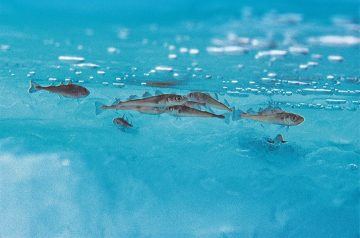 In the depths of winter, water temperatures in the ice-covered Arctic Ocean can sink below zero. That’s cold enough to freeze many fish, but the conditions don’t trouble the cod. A protein in its blood and tissues binds to tiny ice crystals and stops them from growing. Where codfish got this talent was a puzzle that evolutionary biologist Helle Tessand Baalsrud wanted to solve. She and her team at the University of Oslo searched the genomes of the Atlantic cod (Gadus morhua) and several of its closest relatives, thinking they would track down the cousins of the antifreeze gene. None showed up. Baalsrud, who at the time was a new parent, worried that her lack of sleep was causing her to miss something obvious.