Some sporting moments achieve mythical status because of their sheer audacity. Muhammad Ali’s ‘rumble in the jungle’ defeat of George Foreman in Kinshasa in 1974 to regain his world heavyweight title comes to mind.
Others astound with a seemingly impossible perfection such as Nadia Comăneci’s perfect 10 in gymnastics at the 1976 Montreal Olympic Games.
And then there are those that astonish by redefining one’s perception of what it’s possible for a human being to achieve.
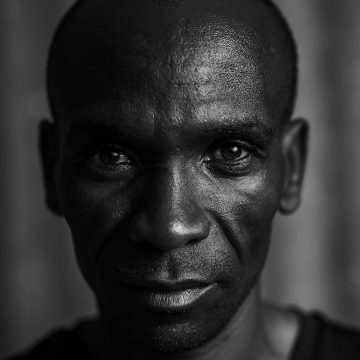
Eliud Kipchoge’s completion of a marathon in under two hours was one of those moments. People have long dreamt of, even predicted, a sub-two hour marathon. But the possibility of breaking the two-hour mark had seemed more for the imagination than for the road. On Saturday we witnessed imagination being given form.
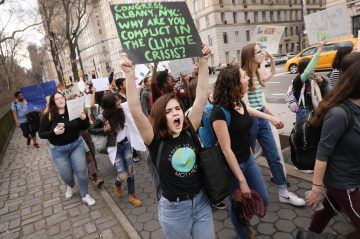
As it is becoming obvious that political responses to global warming such as the Paris treaty are not working, environmentalists are urging us to consider the climate impact of our personal actions. Don’t eat meat, don’t drive a gasoline-powered car and don’t fly, they say. But these individual actions won’t make a substantial difference to our planet, and such demands divert attention away from the solutions that are needed.
Even if all 4.5 billion flights this year were stopped from taking off, and the same happened every year until 2100, temperatures would be reduced by just 0.054 degrees, using mainstream climate models — equivalent to delaying climate change by less than one year by 2100.
Nor will we solve global warming by giving up meat. Going vegetarian is difficult — one US survey shows 84 percent fail, most in less than a year. Those who succeed will only reduce their personal emissions by about 2 percent.
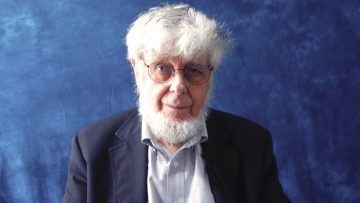
How do we understand that our 100,000-fold excess of numbers on this planet, plus what we do to feed ourselves, makes us a tumor on the body of the planet? I don’t want the future that involves some end to us, which is a kind of surgery of the planet. That’s not anybody’s wish. How do we revert ourselves to normal while we can? How do we re-enter the world of natural selection, not by punishing each other, but by volunteering to take success as meaning success and survival of the future, not success in stuff now? How do we do that? We don’t have a language for that.
(ROBERT POLLACK is a professor of biological sciences, and also serves as director of the University Seminars at Columbia University.)
I’m asking myself what’s most important to do in the time I have. I’m very grateful for the time I have. I’m astounded at the difference between where I am and where I was in my memory, and astounded at the absence of a future stability to meet the stability that I had when I was growing up.
I was born in 1940. I’ve lived through the period of the greatest hegemony of American power and democracy and military might, with you and everybody else my age. We’ve lived seventy years without a nuclear war, after the use of nuclear weapons once. I look at my students who have remained the same age for the forty years I’ve been teaching them as I’ve gotten forty years older, and I wonder what their lives will be when they’re my age, what their grandchildren’s lives will be. That’s what’s on my mind. I don’t think it’s a political question at all. It’s an existential question. It may be a religious question. It is certainly an emotionally driven question. I’m a scientist, so I guess I have to say as well that it’s a scientific question. When I think about it as a scientific question, I think about it in terms of my work.
– on being asked to leave a poetry workshop because I am blind
“I am not used to blind poets,” says the teacher, his Ray-Ban sunglasses sliding off his nose, “they’re flying in the dark, landing who knows where, right in your face, in your hair – on your stairs.”
Homer in his Red Baron jacket hits turbulence over Troy. Milton and Satan lock wings, turn somersaults on the runway. Borges nosedives into his labyrinth.
My plane wobbles, hits an airpocket. I worry: how will I braille the sky? Until my radar, a sleek-winged, dapper bat, flies in. I soar over my coffee, hear the echo of the Northern Lights in its cream.
Heather Mac Donald in The Christian Science Monitor:
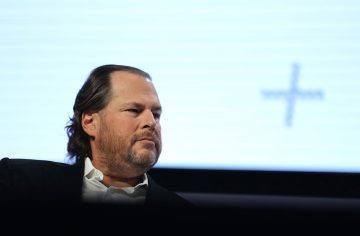
Tech mogul Marc Benioff has been winning media accolades for his declaration that “capitalism, as we know it, is dead.” The billionaire founder and CEO of Salesforce, a cloud-based customer-relations company, has launched an advertising blitz promoting his new book, Trailblazer, which calls for a “more fair, equal and sustainable capitalism,” as Benioff put it in a New York Times op-ed on Monday. This “new capitalism” would not “just take from society but truly give back and have a positive impact,” Benioff maintains.
…Fortunately for anyone seeking to evaluate what the new capitalism might entail, Benioff has provided a concrete example of a CEO solving “social challenges”—the challenge in this case being San Francisco’s festering homeless problem. Salesforce is headquartered in San Francisco and is the city’s biggest employer. In 2018, Benioff, in conjunction with San Francisco’s most fearsome advocacy group, the Coalition on Homelessness, put a new tax on the local ballot to double the taxpayer dollars already going to the city’s main homelessness agency. Proposition C would impose an extra 0.5 percent gross-receipts sales tax on companies with more than $50 million in annual revenue, raising an estimated $250 million to $300 million, all of which would be funneled into the homelessness-industrial complex.
To Benioff, the issue was clear: “Are you for the homeless or not for the homeless? For me, it’s binary. I’m for the homeless,” he told the San Francisco Chronicle.
Throughout my career as a neurosurgeon, I have worked closely with oncologists. Many of my patients have cancer of the brain — one of the deadliest of the near-infinite number of cancers. I have always viewed my oncological colleagues with complicated, contradictory feelings. On the one hand, I’m in awe of their work, which can be so emotionally demanding. On the other, I suspect they don’t always know when to stop.
There’s an old joke in medical circles: “Why should you never give an oncologist a screwdriver?” The answer: “Because they will open the coffin and carry on treating the patient.”
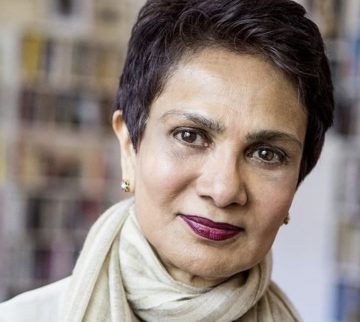
Azra Raza, an oncologist at Columbia University, vividly illustrates this tug-of-war in her book “The First Cell: And the Human Costs of Pursuing Cancer to the Last.” It is, in many ways, a cry of protest against the disease that killed her husband (also an oncologist) and, over time, most of her patients. When it comes to cancer, Raza knows firsthand how hard it is to reconcile compassion with science and hope with realism.
More here. [And congratulations to my sister on her excellent book!]
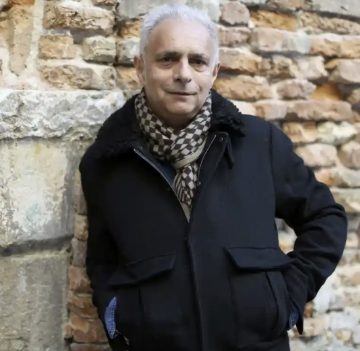
Unlike Hillary Clinton, who used the same title for her memoir, Hanif Kureishi attaches a question mark to What Happened?, making clear that this collection of essays and stories is an interrogation of the recent past and not merely a dispassionate account of events. There is a note of incredulity, too, in his question, and this desire to comprehend and come to terms with the cultural and political shifts of the past decade runs through the book.
What Happened? serves as a postscript to Kureishi’s Collected Essays, published in 2011, which brought together the best of his journalism and nonfiction over the previous three decades. Many of the pieces here revisit similar themes and preoccupations, particularly around ideas of race, religion and cultural identity. Why Should We Do What God Says? and Fanatics, Fundamentalists and Fascists cast an eye back to the 1989 fatwa against his friend Salman Rushdie, and the far-reaching ripples of that event for free speech, the western perception of Islam, and the hardening and polarising of ideologies. “The contemporary view of Muslims is the mirror image of the current far-right ideology overtaking the west: sexist, homophobic, insular, monocultural, combative,” he writes in the latter piece, before calling for a different kind of radicalism among the young, a movement of solidarity to tackle the creeping fascism and fearful power-grabbing of their elders.
In New York, where I live, whenever there’s a big holiday weekend, the traffic on Friday as folks leave town turns much of Manhattan into a hot, fume-filled parking lot. On those days, one can often walk faster than the traffic is moving. That may be the exception, but congestion in many cities has reached the point where getting around by car at certain times of day is almost not an option.
Folks who live in L.A., for example, simply rule out driving to other parts of the city at certain hours. (The old “nobody goes there anymore, it’s too crowded” problem.) These drivers have synced their lives to the ebb and flow of other people’s cars, a sad but logical response, since congestion costs Americans more than $1,300 per year and 97 hours of their time. When you consider than almost half of Americans would find themselves in a financial crisis if they got hit with a $400 expense, it’s pretty clear that car-based lifestyles in cities aren’t sustainable.
So why do we keep driving? The simple answer is, in some cities, many of us have little choice. The Barcelona Institute for Global Health says that 60 percent of urban infrastructure is devoted to cars. Years of prioritizing driving at the expense of walking, biking and mass transit have left many people no viable alternative to private vehicles.
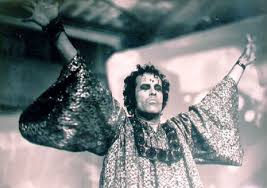
FOR THE AUTUMNAL EQUINOX OF 1967, avant-garde filmmaker Kenneth Anger performed an Aleister Crowley ritual at a theater in the Haight-Ashbury district of San Francisco. The ceremony, intended to conjure the Egyptian deity of Horus, was filmed, eventually appearing in Anger’s 1969 short, Invocation of My Demon Brother.
In Invocation, the rite plays at an exaggerated speed, suggestive of a silent film’s frenzied pacing. Anger races across the stage, sets things on fire, waves a swastika flag, and commands convulsions from his audience. Watching the ceremony, you have to wonder: Were parents right to be worried about their flower children? Was the hippie pose, as they’d feared, just a disguise for Satan worshippers and acid-heads? Famously described as “an attack on the sensorium” by its creator, Invocation makes a case for the affirmative by forcing its viewer into fearful agreement with a torrent of psyche-searing documentary footage.
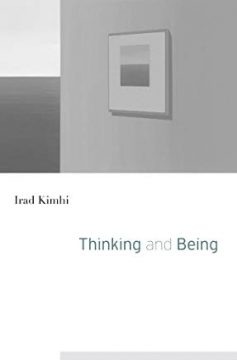
Of all the ways that human beings differ from the rest of what is found in nature, being able to think is most fundamental. Being able to think is, it seems, uniquely characteristic of us. But what is so special about the ability to think? In other words, what is so special about us? Analytic philosophy finds its foundations in an answer: not very much. An elusive new book, Thinking and Being, by Irad Kimhi, a heretofore little-known Israeli philosopher, argues that this is the wrong answer. And so, he argues, a whole tradition of philosophical thought is wrong, not just in the details, but in the fundamentals. What Kimhi wants to show is that the logical features of thought, and so also the features of those who think them, stand at a far remove from anything we might now call “natural.”
Why is thought so special? Consider the natural world, which consists just of things and how they are: the breeze is warm, the lawn is lush, the bees buzz. Thinking, however, is not only about how things are—the warm breeze and the buzzing bees—but also about how they aren’t. Though the weather is fine, I can think of it being grim—I can think what is false.
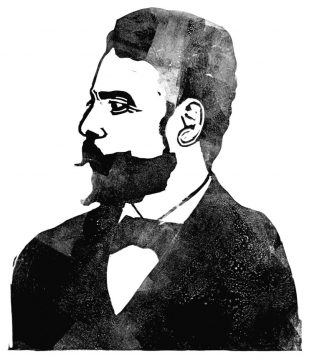
This shattering, sometimes unbearably powerful novel, completed in 1904, was written by Henrik Pontoppidan, who won the Nobel Prize in 1917. It is considered one of the greatest Danish novels; the filmmaker Bille August turned the story into a nearly three-hour movie called, in English, “A Fortunate Man” (2019). The novel was praised by Thomas Mann and Ernst Bloch, and is effectively at the center of Georg Lukács’s classic study “The Theory of the Novel” (1920). In Danish, it is called “Lykke-Per”; in German, it was given the title of the Grimm brothers’ fairy tale “Hans im Glück.” And in English? In English, it didn’t exist, having gone untranslated for more than a century, until the scholar Naomi Lebowitz administered the translator’s equivalent of a magic kiss and roused it from shameful oblivion. Published nine years ago in academic format, “Lucky Per” has finally appeared in Everyman’s Library, in Lebowitz’s fluent and lucid version, with an excellent introduction by the novelist and critic Garth Risk Hallberg. Our luck has caught up with everyone else’s.
A man walks outside of the crumbling oval skeleton of the House of the Bulgarian Communist Party on mount Buzludzha in central Bulgaria on March 14, 2012. Over two decades after the toppling of the regime they glorified, the megalomaniac monuments of the communist era are still standing, setting a quandary for Bulgarian authorities, who can neither maintain nor dismantle them. AFP PHOTO / DIMITAR DILKOFF TO GO WITH AFP STORY BY VESSELA SERGUEVA – BULGARIA-HISTORY-COMMUNISM-CULTURE (Photo credit should read DIMITAR DILKOFF/AFP/Getty Images)
What Neil Postman called “technopoly” may be described as the universal and virtually inescapable rule of our everyday lives by those who make and deploy technology, especially, in this moment, the instruments of digital communication. It is difficult for us to grasp what it’s like to live under technopoly, or how to endure or escape or resist the regime. These questions may best be approached by drawing on a handful of concepts meant to describe a slightly earlier stage of our common culture. First, following on my earlier essay in these pages, “Wokeness and Myth on Campus” (Summer/Fall 2017), I want to turn again to a distinction by the Polish philosopher Leszek Kołakowski between the “technological core” of culture and the “mythical core” — a distinction he believed is essential to understanding many cultural developments.
“Technology” for Kołakowski is something broader than we usually mean by it. It describes a stance toward the world in which we view things around us as objects to be manipulated, or as instruments for manipulating our environment and ourselves. This is not necessarily meant in a negative sense; some things ought to be instruments — the spoon I use to stir my soup — and some things need to be manipulated — the soup in need of stirring. Besides tools, the technological core of culture includes also the sciences and most philosophy, as those too are governed by instrumental, analytical forms of reasoning by which we seek some measure of control. By contrast, the mythical core of culture is that aspect of experience that is not subject to manipulation, because it is prior to our instrumental reasoning about our environment.
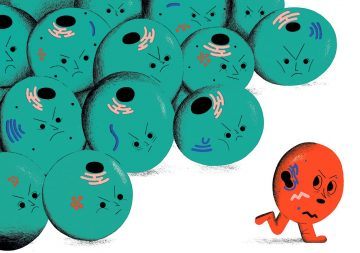
Yasuyaki Fujita has seen first-hand what happens when cells stop being polite and start getting real. He caught a glimpse of this harsh microscopic world when he switched on a cancer-causing gene called Ras in a few kidney cells in a dish. He expected to see the cancerous cells expanding and forming the beginnings of tumours among their neighbours. Instead, the neat, orderly neighbours armed themselves with filament proteins and started “poking, poking, poking”, says Fujita, a cancer biologist at Hokkaido University in Sapporo, Japan. “The transformed cells were eliminated from the society of normal cells,” he says, literally pushed out by the cells next door.
In the past two decades, an explosion of similar discoveries has revealed squabbles, fights and all-out wars playing out on the cellular level. Known as cell competition, it works a bit like natural selection between species, in that fitter cells win out over their less-fit neighbours. The phenomenon can act as quality control during an organism’s development, as a defence against precancerous cells and as a key part of maintaining organs such as the skin, intestine and heart. Cells use a variety of ways to eliminate their rivals, from kicking them out of a tissue to inducing cell suicide or even engulfing them and cannibalizing their components. The observations reveal that the development and maintenance of tissues are much more chaotic processes than previously thought. “This is a radical departure from development as a preprogrammed set of rules that run like clockwork,” says Thomas Zwaka, a stem-cell biologist at the Icahn School of Medicine at Mount Sinai in New York City.
The little airplanes of the heart with their brave little propellers What can they do against the winds of darkness even as butterflies are beaten back by hurricanes yet do not die They lie in wait wherever they can hide and hang their fine wings folded and when the killer-wind dies they flutter forth again into the new-blown light live as leaves
Lawrence Ferlinghetti from Poetry Center at Smith College
Most patients continue to face excruciating, costly and ineffective treatments. It’s time to shift our focus from fighting the disease in its last stages to finding the very first cells.
Acute myeloid leukemia, seen in blood cells from bone marrow. PHOTO: PR. J. BERNARD/CNRI/SCIENCE SOURCE
I have been studying and treating cancer for 35 years, and here’s what I know about the progress made in that time: There has been far less than it appears. Despite some advances, the treatments for most kinds of cancer continue to be too painful, too damaging, too expensive and too ineffective. The same three methods—surgery, chemotherapy and radiotherapy—have prevailed for a half-century.
Consider acute myeloid leukemia, the bone-marrow malignancy that is my specialty. AML accounts for a third of all leukemia cases. Currently, the average age of diagnosis is 68; roughly 11,000 individuals die annually from the disease. The five-year survival rate for diagnosed adults is 24%, and a bone-marrow transplant increases the odds to 50% at best. These figures have hardly budged since the 1970s.
The overall rate of cancer deaths in the U.S. has fallen by a quarter since its peak in 1991, translating to 2.4 million lives saved—but improved treatments are not the primary reason. Rather, a reduction in smoking and improvements in screening have led to 36% fewer deaths for some of the most common cancers—lung, colorectal, breast and prostate. And for all those gains, overall cancer death rates are not dramatically different from what they were in the 1930s, before they rose along with cigarette use. Meanwhile, cancer drug costs are spiraling out of control, projected to exceed $150 billion by next year. With the newest immunotherapies costing millions, the current cancer-treatment paradigm is fast becoming unsupportable. Read more »
Artificial intelligence is better than humans at playing chess or go, but still has trouble holding a conversation or driving a car. A simple way to think about the discrepancy is through the lens of “common sense” — there are features of the world, from the fact that tables are solid to the prediction that a tree won’t walk across the street, that humans take for granted but that machines have difficulty learning. Melanie Mitchell is a computer scientist and complexity researcher who has written a new book about the prospects of modern AI. We talk about deep learning and other AI strategies, why they currently fall short at equipping computers with a functional “folk physics” understanding of the world, and how we might move forward.
Skye C. Cleary in the Los Angeles Review of Books:
Writers always have to make difficult choices about what to leave in and what to cut from their work. The choices become especially acute when a writer is telling her own story. “What an odd thing a diary is,” a character in Simone de Beauvoir’s novel The Woman Destroyed (La Femme rompue, 1967) says, “the things you omit are more important than those you put in.”
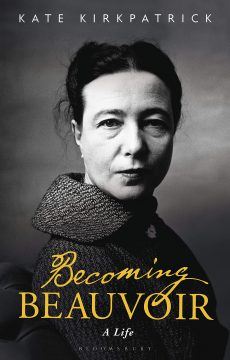
The statement seems to be more personal confession than fiction. Exploring the mysteries and misconceptions about Simone de Beauvoir (1908–1986) — one of the most underappreciated of philosophers — is the project of the new biography Becoming Beauvoir:A Life by Kate Kirkpatrick. Certainly, Beauvoir’s life story is not entirely new. Not only did she publish memoirs, travelogues, diaries, and letters, but Deirdre Bair published a 700-page biography in 1990 (Simone de Beauvoir: A Biography), drawing on five years’ worth of discussions with Beauvoir, often starting at 4 p.m. sharp, with an ounce of scotch served in Mexican glass tumblers. There have been other biographies, too, such as Hazel Rowley’s Tête-à-Tête: The Tumultuous Lives and Loves of Simone de Beauvoir and Jean-Paul Sartre (2005), and Lisa Appignanesi’s brief portrait (titled Simone de Beauvoir), published in 1988.
However, since these biographies came out, new material has been released, notably Beauvoir’s student diaries (Cahiers de jeunesse: 1926–1930, published in 2008) and her love letters to Claude Lanzmann (published in 2018), which throws previous accounts of her life and thinking into question.

 Some sporting moments achieve mythical status because of their sheer audacity. Muhammad Ali’s ‘rumble in the jungle’ defeat of George Foreman in Kinshasa in 1974 to regain his world heavyweight title comes to mind.
 As it is becoming obvious that political responses to global warming such as the Paris treaty are not working, environmentalists are urging us to consider the climate impact of our personal actions. Don’t eat meat, don’t drive a gasoline-powered car and don’t fly, they say. But these individual actions won’t make a substantial difference to our planet, and such demands divert attention away from the solutions that are needed.
 How do we understand that our 100,000-fold excess of numbers on this planet, plus what we do to feed ourselves, makes us a tumor on the body of the planet? I don’t want the future that involves some end to us, which is a kind of surgery of the planet. That’s not anybody’s wish. How do we revert ourselves to normal while we can? How do we re-enter the world of natural selection, not by punishing each other, but by volunteering to take success as meaning success and survival of the future, not success in stuff now? How do we do that? We don’t have a language for that.
 Tech mogul Marc Benioff has been winning media accolades for his declaration that “capitalism, as we know it, is dead.” The billionaire founder and CEO of Salesforce, a cloud-based customer-relations company, has launched an advertising blitz promoting his new book, Trailblazer, which calls for a “more fair, equal and sustainable capitalism,” as Benioff put it in a New York Times op-ed on Monday. This “new capitalism” would not “just take from society but truly give back and have a positive impact,” Benioff maintains.
 Throughout my career as a neurosurgeon, I have worked closely with oncologists. Many of my patients have cancer of the brain — one of the deadliest of the near-infinite number of cancers. I have always viewed my oncological colleagues with complicated, contradictory feelings. On the one hand, I’m in awe of their work, which can be so emotionally demanding. On the other, I suspect they don’t always know when to stop.
 Unlike Hillary Clinton, who used the same title for her memoir,
  In New York, where I live, whenever there’s a big holiday weekend, the traffic on Friday as folks leave town turns much of Manhattan into a hot, fume-filled parking lot. On those days, one can often walk faster than the traffic is moving. That may be the exception, but congestion in many cities has reached the point where getting around by car at certain times of day is almost not an option.
 FOR THE AUTUMNAL EQUINOX OF 1967
 Of all the ways that human beings differ from the rest of what is found in nature, being able to think is most fundamental. Being able to think is, it seems, uniquely characteristic of us. But what is so special about the ability to think? In other words, what is so special about us? Analytic philosophy finds its foundations in an answer: not very much. An elusive new book, Thinking and Being, by Irad Kimhi, a heretofore little-known Israeli philosopher, argues that this is the wrong answer. And so, he argues, a whole tradition of philosophical thought is wrong, not just in the details, but in the fundamentals. What Kimhi wants to show is that the logical features of thought, and so also the features of those who think them, stand at a far remove from anything we might now call “natural.”
 This shattering, sometimes unbearably powerful novel, completed in 1904, was written by Henrik Pontoppidan, who won the Nobel Prize in 1917. It is considered one of the greatest Danish novels; the filmmaker Bille August turned the story into a nearly three-hour movie called, in English, “A Fortunate Man” (2019). The novel was praised by Thomas Mann and Ernst Bloch, and is effectively at the center of Georg Lukács’s classic study “
 Yasuyaki Fujita has seen first-hand what happens when cells stop being polite and start getting real. He caught a glimpse of this harsh microscopic world when he switched on a cancer-causing gene called Ras in a few kidney cells in a dish. He expected to see the cancerous cells expanding and forming the beginnings of tumours among their neighbours. Instead, the neat, orderly neighbours armed themselves with filament proteins and started “poking, poking, poking”, says Fujita, a cancer biologist at Hokkaido University in Sapporo, Japan. “The transformed cells were eliminated from the society of normal cells,” he says, literally pushed out by the cells next door.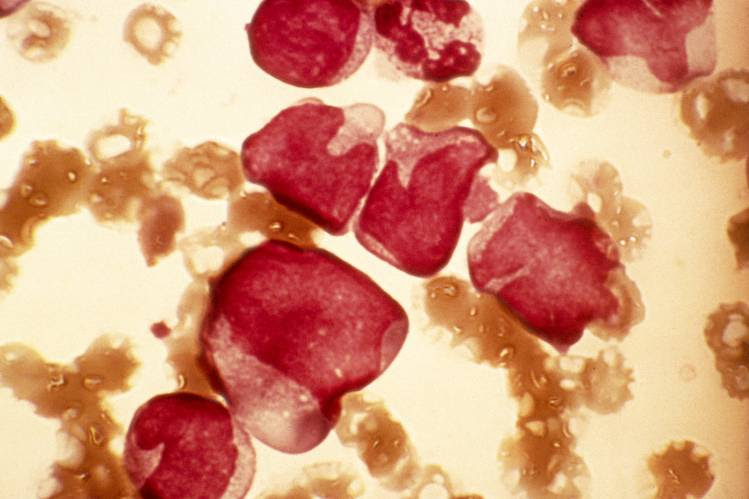
 Artificial intelligence is better than humans at playing chess or go, but still has trouble holding a conversation or driving a car. A simple way to think about the discrepancy is through the lens of “common sense” — there are features of the world, from the fact that tables are solid to the prediction that a tree won’t walk across the street, that humans take for granted but that machines have difficulty learning. Melanie Mitchell is a computer scientist and complexity researcher who has written a new book about the prospects of modern AI. We talk about deep learning and other AI strategies, why they currently fall short at equipping computers with a functional “folk physics” understanding of the world, and how we might move forward.
 Writers always have to make difficult choices about what to leave in and what to cut from their work. The choices become especially acute when a writer is telling her own story. “What an odd thing a diary is,” a character in Simone de Beauvoir’s novel The Woman Destroyed (La Femme rompue, 1967) says, “the things you omit are more important than those you put in.”