Genealogy
Outside, it’s cold like the day
my father’s grandpa drowned
while Sigrid salted cod on walls
of stacked antlers. Their sons
and daughter fled to Eden
Prairie. One, my father’s uncle, lost
a claim in Manitoba, another crashed
a Hupmobile. One died ice-fishing.
My father’s mother, pink and vicious, made
him cover the bidet with plywood
when we lived in Tehran. Made me drive
all over Fairfax County in search
of Carnival glass. Told me “Never
marry a woman for her looks.” My mother’s
dad lost his lungs to mustard gas. Her mom
never gambled. Betty lived in Hollywood
working at the studios, roller-skating
with a man who would later play
Tonto. She rented a room
in a house with a victory garden until
the Tamuras were shipped
to Utah, then married Dad, who left
to kill Koreans. On the ship
to Japan to join him in Kobe, my sister
scared me with stories of dwarves. My children’s
mom is small and pale, like the pages
of an appointment book, except when speaking
Spanish. Then, her hands become larakeets, her eyes
marcasite. Her grandfather knew the Franks
before they moved to Holland, and he
to Pasadena, where he never met
my mother who skis like she’s waltzing,
or my father, who came home and built
a barbeque of brick, or my sister the shrink,
or my brother who sells drugs, or my other sister
for that matter. They all live
in California and no one
ever dies. There’s a boy
at the bus stop who dances
in place: knit cap, heavy coat, an extra
chromosome, perhaps. Sometimes he raises
his arms and spins. The world starts with him.
by Jeffrey Bahr
from Rattle #16, Winter 2001

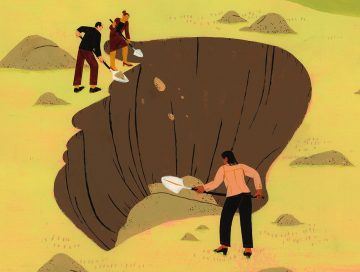 President Trump has far surpassed Nixon in his zeal to ignore, jettison or rewrite the nation’s norms. Even his allies in the Republican Party, in which Trump still has 89 percent support, according to Gallup, have denounced his efforts to recruitforeign help in winning elections and to profit from his family business while holding office.
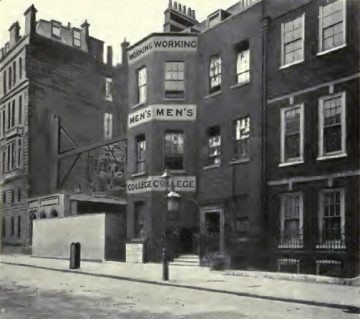 The hero of Thomas Hardy’s tragic novel Jude the Obscure (1895) is a poor stonemason living in a Victorian village who is desperate to study Latin and Greek at university. He gazes, from the top of a ladder leaning against a rural barn, on the spires of the University of Christminster (a fictional substitute for Oxford). The spires, vanes and domes ‘like the topaz gleamed’ in the distance. The lustrous topaz shares its golden colour with the stone used to build Oxbridge colleges, but it is also one of the hardest minerals in nature. Jude’s fragile psyche and health inevitably collapse when he discovers just how unbreakable are the social barriers that exclude him from elite culture and perpetuate his class position, however lovely the buildings seem that concretely represent them, shimmering on the horizon. By Hardy’s time, the trope of the exclusion of the working class from the classical cultural realm, especially from access to the ancient languages, had become a standard feature of British fiction. Charles Dickens probes the class system with a tragicomic scalpel in David Copperfield (1850). The envious Uriah sees David as a privileged young snob, but he refuses to accept the offer of Latin lessons because he is ‘far too umble. There are people enough to tread upon me in my lowly state, without my doing outrage to their feelings by possessing learning.’
 Democracy depends
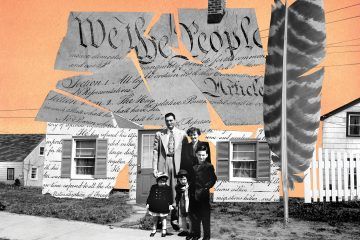 Jedediah Britton-Purdy in New Republic:
 Erica Chenoweth, Sirianne Dahlum, Sooyeon Kang, Zoe Marks, Christopher Wiley Shay and Tore Wig in The Washington Post:
 Adam Tooze in Social Europe:
 Jay Caspian Kang in The New Yorker:
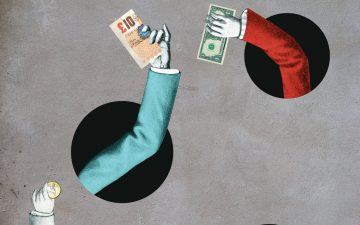 How did the most successful conservative party of the 20th century become the agent for a national humiliation? How could a political party so firmly tied to power, not least economic power, come to disregard its own particular view of the national interest? The Conservative-born Brexit crisis that has tormented the nation since 2016 has multiple causes, the most crucial and under-explored of which is economic. The great financial crisis of 2008 certainly had an impact on the referendum result: it led to economic stagnation, not least in productivity and wages, as well as disastrous cuts to many public services. Local authorities, responsible for social care, were hit especially hard, as were the working poor. But the really significant economic transformations behind the decision to leave the EU have deeper roots. Over the past 40 years the nature of capitalism in the UK has changed in ways that concepts such as “neoliberalism” and “post-industrialism” have failed to grasp. The relationship between capitalism and politics has also changed radically.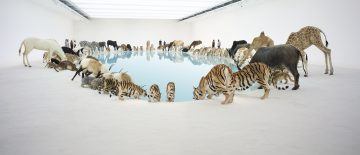
 J. M. Coetzee (JMC): Balzac famously wrote that behind every great fortune lies a crime. One might similarly claim that behind every successful colonial venture lies a crime, a crime of dispossession. Just as in the dynastic novels of the nineteenth century the heirs of great fortunes are haunted by the crimes on which their fortunes were founded, a successful colony like Australia seems to be haunted by a history that will not go away. The question of what to say or do about dispossession of Indigenous Australians is as alive in the Australian imagination as it has ever been.
 Bowie was a famously insatiable reader. As a teenager in Bromley he was schooled in the Beats by his older brother Terry. Cocaine-crazed in 1970s America, he would stay up all night inhaling books about the occult from his 1,500-volume portable library. In 1998, somewhat more well adjusted, he wrote reviews for Barnes & Noble. Feeling from an early age formless and incomplete, he rebuilt himself from pieces of the things he loved: not just literature and music but cinema, art, people, places. While the similarly well-read Bob Dylan preferred to veil his sources, Bowie made an exhibition of them – literally so at his touring museum show David Bowie Is, where some of his favourite books dangled from the ceiling like mobiles. He was the star-as-fan and his fandom was promiscuous. When LCD Soundsystem’s
 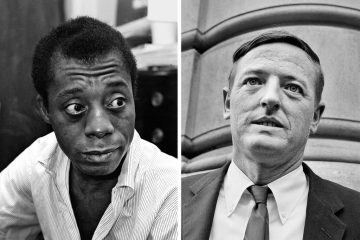 In 1965, the year of the Selma-to-Montgomery marches and the Watts riots, an ancillary skirmish played out across the Atlantic. James Baldwin, then at the height of his international reputation, faced off against William F. Buckley Jr., the “keeper of the tablets” of American conservatism, in the genteel confines of the Cambridge Union. The proposition before the house was: “The American dream is at the expense of the American Negro.” For Baldwin, who would roll his eyes more than once during the debate, the question indicated glaring ignorance. The American dream was a nightmare from which he was trying to wake. For Buckley, the American dream was a giant bootstrap that American blacks refused to employ. “We will fight … on the beaches and on the hills, and on mountains and on landing grounds,” he told the audience of students that evening, channeling Winston Churchill. Only Buckley invoked the imagery of plucky guerrilla resistance not against a Nazi invasion of the British Isles, but against Northern radicals bent on uprooting the Southern way of life.
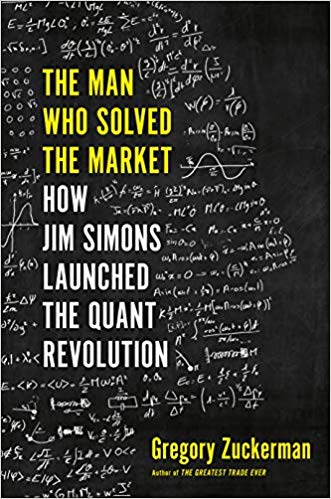 There’s an excellent new book out about Jim Simons and Renaissance Technologies,
  The elderly
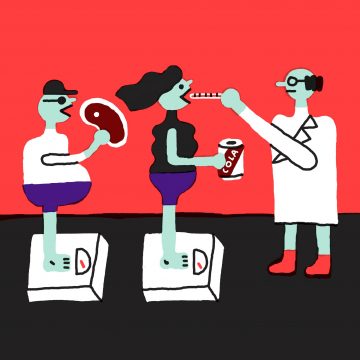 Most diet trials in the best journals fail even the most basic of quality control measures. That’s the finding of a study by us
 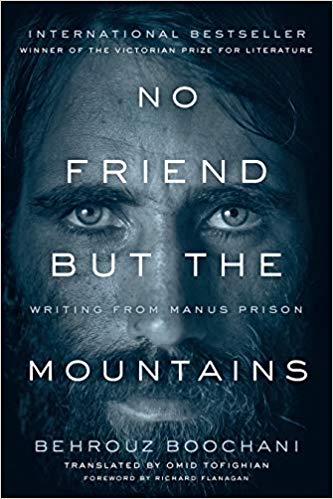 The experience of translating Behrouz’s book is itself rich with multiple narratives; some reaching back before our initial communication, even before the construction of Manus Prison. Over the last few years, especially after meeting Behrouz, I’ve come to realise how integral narratives are to living life well, and the translation process for this book has confirmed and expanded my insights and experiences with storytelling. This translator’s tale provides some insight into the many experiences and conversations that have shaped the book and characterise our shared vision of narrative and life.