
Anna Nowogrodzki in Nature:
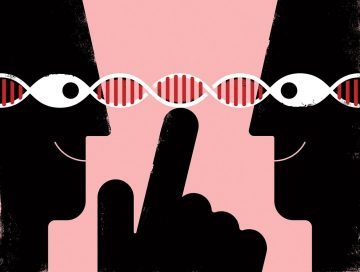 When Adam Siepel was building algorithms for evolutionary genomics as part of his PhD, he wasn’t thinking about visualization. But, as a graduate student in the laboratory of computational biologist David Haussler, at the University of California, Santa Cruz (UCSC), he happened to sit next to the software engineers who were building and maintaining a tool called the UCSC Genome Browser. These engineers helped Siepel to make his algorithms publicly available as a track, or data overlay, that anyone could explore. Genome browsers are graphical tools that display the genome sequence, usually as a horizontal line. Other sequence-associated data are aligned and stacked above and below that line in ‘tracks’, for instance to illustrate the relationship between gene expression, DNA modification and protein-binding sites.
Siepel’s track identifies sequences that have been retained over evolutionary time; when a user applies it while viewing the alignment of genomic data from two or more species, the track highlights regions that are evolutionarily conserved. Allowing others to use the algorithm to highlight regions of interest in their own data was “probably the single most important thing I did during my PhD”, says Siepel, who is now a computational biologist at Cold Spring Harbor Laboratory in New York. Other researchers have used it, for instance, to find mutations associated with diseases and to pinpoint functionally important regions of noncoding RNA molecules.
More here.
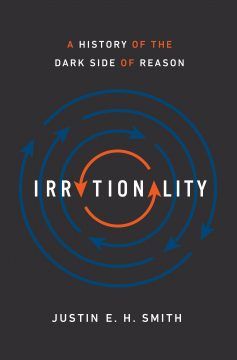 Justin Smith’s Irrationality is one of many books provoked by the political eruptions of 2016. Trump is a recurring preoccupation, but so is the internet and the carnival of quickfire nonsense it hosts. Taking these two themes together – the absurd liar in the White House, and the sarcastic meme culture that helped put him there – suggests that something distinctly new and dangerous has arisen. Trump, it seems, outstrips any previous conspiracy theorist or demagogue. His election means ‘the near-total disappearance of a shared space of common presuppositions from which we might argue through our differences’. In 2016, we saw ‘the definitive transformation of the internet, from vehicle of light to vehicle of darkness’. Trump’s pre-eminence forces us to defend principles and institutions we shouldn’t have to defend. We find ourselves having to assert that good reasons are better than bad reasons, that rational government policies are better than irrational ones. Distinctions between scientific fact and conspiracy theory now have to be explained and justified. These are tasks that many rationalists, in the ‘new atheist’ tradition of Steven Pinker and Richard Dawkins, have been happy to pursue. Arguing as much with (what they perceive as) the relativism of the left as with the dogmatism of the right, these bombastic defenders of Western reason exhibit a spirit of hostility towards anyone daring to question the benefits and rectitude of the natural sciences. Dawkins in particular has converted a defence of scientific method into a defence of cultural hierarchy, with ‘the West’ at the top. Pinker clings to a form of Benthamism, in which statistical data prove that modernity is still on the right track, regardless of what political or cultural anguish might be at large.
 On the evening
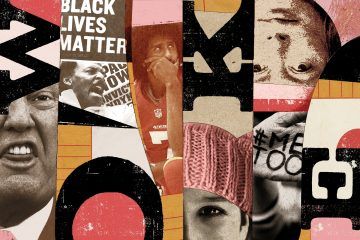 There is a certain kind of liberally inclined writer who sees Donald Trump’s America as a nation in crisis. At every turn, in every tweet, she is confronted by the signs of an ongoing catastrophe, from which it may be too late to escape. An ugly, vicious intolerance spread on social media; the collapse of norms once considered sacred; a crass narrow-mindedness surreally celebrated by some of this country’s most powerful institutions—these are all elements in the gathering storm of a new, distinctly American fascism. The twist is that this crisis has its source, she contends, not in the person of Trump, but in his frothing-mouthed opposition: the left.
 It’s the year of John Ruskin. 2019 is the bicentennial of his birth and there continues to be events to mark it. Perhaps the celebrations will prove to be a turning point for him. For though during his lifetime, and for a generation or so afterwards, Ruskin was hugely influential, his achievements have now been neglected for decades. His collected works run to 39 volumes; he wrote around 250
 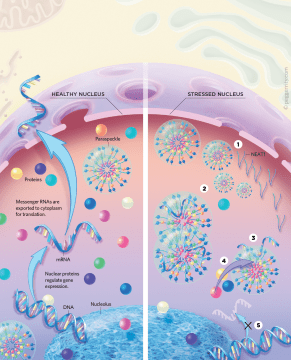 I have a clear memory of presenting my initial results about a “failed” protein at a lab meeting with my postdoctoral advisor
  Holly Case in Aeon:
 Adolph Reed Jr. in The New Republic:
 J. Daniel Elam in Public Books: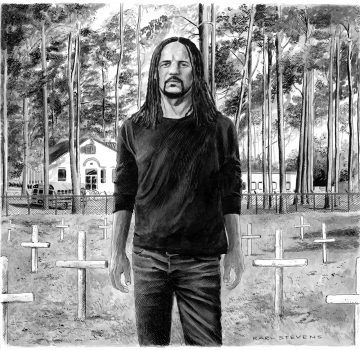
 “A
“A You can take the writer out of California but you can’t take California out of the writer — or at least so I prefer to imagine, in my romantic fashion, during these dark days in which everything beautiful about the Golden State seems to be burning.
 “A sense of humor is just common sense, dancing,” he wrote. “Those who lack humor are without judgment and should be trusted with nothing.”
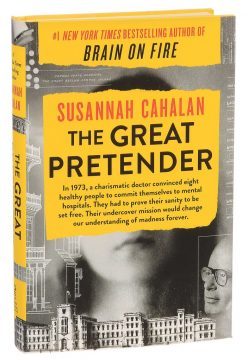 Books about mental illness often reflect on how reality is experienced. In addition to the standard questions — What do we know, and how do we know it? — is another layer of inquiry: What do we know about our own minds, and what if it isn’t true? In her first book,
  The warming of the planet currently spread across seven continents, four oceans, and twenty-four time zones is the product of a fossil-fueled capitalist economy that over the past two hundred years has stuffed the world with riches beyond the wit of man to marvel at or measure. The wealth of nations comes at a steep price—typhoons in the Philippine Sea, Category 5 hurricanes in the Caribbean, massive flooding in Kansas and Uttar Pradesh, forests disappearing in Sumatra and Brazil, unbearable heat in Paris, uncontrollable wildfires in California, unbreathable air in Mexico City and Beijing. The capitalist dynamic is both cause of our prosperous good fortune and means of our probable destruction, the damage in large part the work of