
Suzanne Raga in Mental Floss:
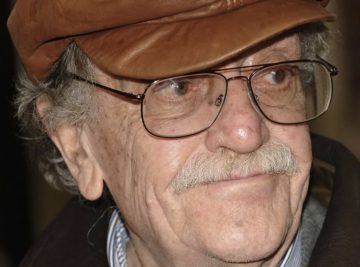 1. HE MET HIS FIRST WIFE IN KINDERGARTEN.
Born in Indianapolis, Indiana in 1922, Vonnegut met his future wife, Jane, in kindergarten. Although they dated as teenagers in high school, their relationship paused when Vonnegut went to Cornell University, dropped out to serve in World War II, and became a prisoner of war in Germany. After returning to the U.S., he married Jane in 1945. The couple had six children—three biological and three adopted—but divorced in 1971.
2. HIS MOTHER COMMITTED SUICIDE ON MOTHER’S DAY.
When Vonnegut was born, his parents were well-off. Kurt Sr., his father, was an architect and Edith, his mother, was independently wealthy from the brewery that her family owned. But due to Prohibition and the Great Depression, the family struggled to make ends meet, sold their home, and switched their son to a public school. Edith, who suffered from mental illness, became addicted to alcohol and prescription pills. In 1944, when Vonnegut came home from military training to celebrate Mother’s Day, he found Edith dead.
More here.
 Food is a many-splendored thing, and its meanings too are manifold. It upholds the life of both our higher and lower selves, and most things in between. Indeed, the ways we think about our food might well be taken as a rough index of what we consider those two words
 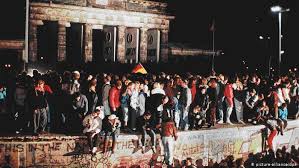 Looking and listening around today, one sometimes gets the impression that the ‘historical moment’ of 1989, with all its excitement and happiness, never occurred – that the event witnessed by many of us has vanished under a mountain of interpretation and reflection; that ‘in fact’ all that happened on the streets of Berlin, Prague, Warsaw, Bucharest and elsewhere was mere self-deception, an illusion, surreality. Despite all the documentaries, the newsreels and interviews, the experience of people appears to have largely been forgotten – people who first crossed the open border, striding enthusiastically or strolling, exploring a world that had been closed to them their entire lives, the thrill of liberty, of the freedom of movement, of reading newspapers they never had access to before, of visiting relatives in the West.
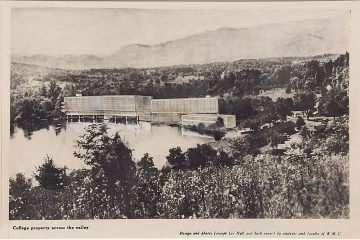 Grouping writers into “schools” has always been problematic. The so-called Black Mountain poets never identified themselves as such, but the facts of their union spring from a remarkable instance of artistic community: Black Mountain College and the web of interactions the place occasioned. Founded in the mountains of western North Carolina in 1933 and closed by 1956, the college was one of the most significant experiments in arts and education of the twentieth century. In recent years, a number of international exhibitions and publications have showcased the range of artwork produced at the college’s two campuses, the first situated in the YMCA Blue Ridge Assembly, and the second at Lake Eden in the Swannanoa Valley. The list of famous names associated with Black Mountain is as impressive as it is unlikely, given that the college never housed more than a hundred students and faculty at a time, often far fewer.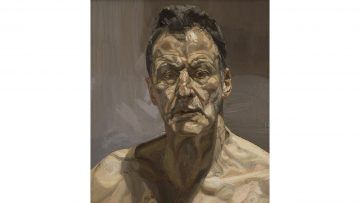
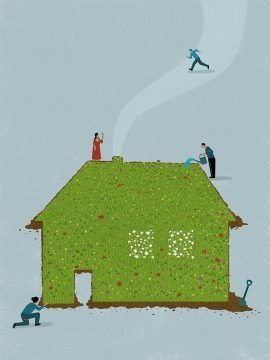 Today, the problem of existential homelessness has become acute. Growing rates of anxiety, loneliness, and suicide offer statistical confirmation. Facebook and Amazon are among the largest and most powerful corporations on the planet, yet the realization is dawning that social media “friends” are poor substitutes for the real thing and that man cannot live by online shopping alone. (See “
 Simone de Beauvoir spent more time talking about inauthentic love than authentic. But that is because she thought authentic love is so hard to achieve. From the vantage point of 2017, aspects of Beauvoir’s view of authentic love look rather dated and pessimistic: for one thing, it presents men and women in binary terms that are unlikely to resound with many readers. Today’s women have greater access to education and employment than women did in 1949, and may be less likely to see love as life, as Beauvoir charged, instead of a part of life. Although structural inequality persists, relationships between men and women – or men and men, or women and women, etc. – theoretically have better chances of proceeding on an equal footing. But nevertheless many cultural portrayals of love (from Puccini to pop) continue to depict it as a game between unequals – as conquest or domination, seduction or entrapment – where the boundaries are drawn along distinctly gendered lines. Such dynamics, on Beauvoir’s view, make authenticity in love impossible – but why?
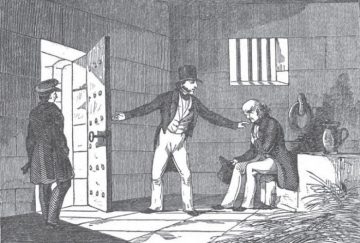 Today the phrase “debtors’ prison” is often invoked to describe this experience of punitive indebtedness. Sometimes it is meant literally. Consider Melissa Welch-Latronica, a thirty-year-old single mother, who in February was wrenched from her minivan and thrown into a jail cell in Porter County, Illinois, over failure to pay an ambulance bill. Her story is unusual but not unique. A 2018 ACLU
  This year we give thanks for
 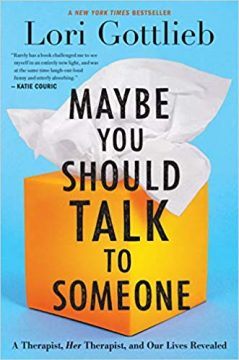 Cal Flyn: We’re here to talk about the best self-help books of 2019. Before we start, let’s define our terms: what does ‘self-help’ mean to you?
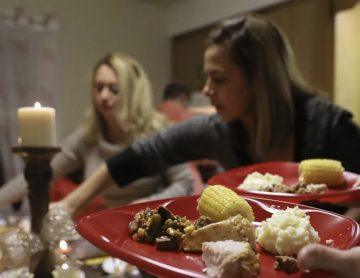 Something strange is afoot when America turns to journalists for advice in surviving a holiday devoted nearly entirely to eating good food. Politics has rendered Thanksgiving something to be dreaded. Given the purpose of the holiday, this is tragic. Can anything be done to save Thanksgiving from our partisan divisions?
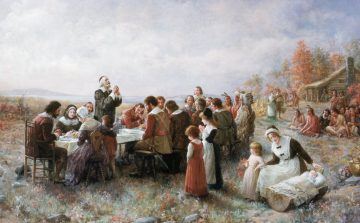 When I was a child, Thanksgiving was simple. It was about turkey and dressing, love and laughter, a time for the family to gather around a feast and be thankful for the year that had passed and be hopeful for the year to come. In school, the story we learned was simple, too: Pilgrims and Native Americans came together to give thanks. We made pictures of the gathering, everyone smiling. We colored turkeys or made them out of construction paper. We sometimes had a mini-feast in class. I thought it was such a beautiful story: People reaching across race and culture to share with one another, to commune with one another. But that is not the full story of Thanksgiving. Like so much of American history, the story has had its least attractive features winnow away — white people have been centered in the narrative and all atrocity has been politely papered over.
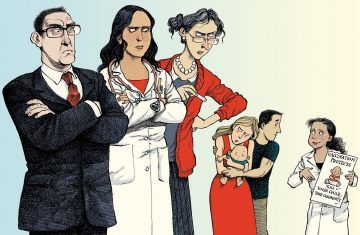 In 2015, the World Health Organization (WHO) declared that the United Kingdom had eradicated the infectious viral disease rubella. The following year, it similarly designated the country as measles-free after confirmed cases numbered fewer than 125 for the second consecutive year. Immunization rates in UK children were high at that time. They had slumped to a nadir in the mid-2000s following the false assertion in 1998 that the measles, mumps and rubella (MMR) vaccine was linked to autism. But by 2016, more than 95% of the country’s 5-year-olds had received one dose of MMR, and roughly 85% had received the pre-school booster that maximizes immunity. When 95% of a population is immune to measles, the disease cannot spread. This is known as herd immunity, and it is the cornerstone of the WHO’s long-held plan to eradicate measles globally. Achieving this would rid the world of a very serious disease, for which 1 in 1,000 cases is fatal. In 2010, eradication was considered achievable by 2020. But that time is almost here, and the disease is not close to being eradicated. In fact, it is on the rise.
 On best estimates, there are some 270 million cars currently in the US, with 90 percent of households owning at least one. Most own several. The low fuel prices produced by the fracking boom encouraged the use of SUVs and trucks, which now account for more than 60 percent of vehicle sales.
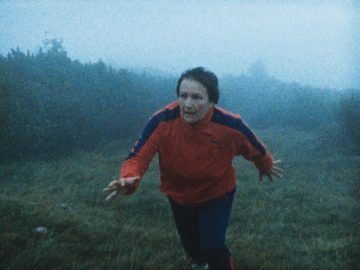 SINCE 2006, Kelly Copper and Pavol Liška, collaborating as the Nature Theater of Oklahoma, have created brainy and ebullient works for stage, film, and video, aerating serious conceptual heft with an oddball comedic sensibility. For the directing-and-writing duo, scripts have never been hard-and-fast things. Take the one for their epic nine-part video Life and Times (2009–15): The words were transcribed from phone conversations between Liška and company member Kristin Worrall, during which the latter recounted the (often banal) details of her life thus far. What else would one expect from a team whose moniker is lifted from a poster that appears in Franz Kafka’s Amerika (1927) announcing an opportunity to join the Nature Theater of Oklahoma: “Anyone who wants to become an artist should contact us! We are a theater that can make use of everyone, each in his place!”
 “In the short term, it would be very positive for the housing market,” says Lawrence Yun, the National Association of Realtors chief economist. He says his group’s