Chasing the ghost of Robert Johnson
Sometime in my early 20s, I fell in love with that beautiful yet enigmatic sound of the BLUES.
As soon as I heard those painful wails from Son House and Howlin’ Wolf, and that mournful guitar playin’ of Robert Johnson, and that erratic cry of the harmonica by Little Walter and Sonny Boy Williamson, and that somber yet soulful voice of Bessie Smith, I was hooked for life.
It did something to the soul and I never did quite recover. I devoured all the books I could find about this raw art form. I read biographies, learned about the toilsome lives of these old bluesmen, and the place they came from.
The Mississippi Delta. I had to go and experience it for myself.
So here I am, torn Levis, battered soul, and that old trucker hat sittin’ loosely on my hungover head, cruising down legendary Highway 61 south out of Memphis with the windows down and the radio up as Jim Morrison wails those Roadhouse Blues.
The future is uncertain and the end is always near.
Those words bite deep. I’m in a mood, man, and I figure there’s nothing left to do but LIVE and let go of the grudges and seek out moments that set the core ablaze with ecstasy. That’s my aim.
With a full tank of gas, a light rucksack, and a styrofoam cooler of cold brews sloshing around in the trunk, I’m heading down to a barren place of grueling poverty and open skies to discover the music of it all.
I’m in the Mississippi Delta. Deep down in it. The most southern place on earth. It doesn’t take too long driving around here to realize that this is one of the few places left in this country unscathed by the gnarled appetite of modernity.
And I’m here for it.
by Erik Rittenberry
from Poetic Outlaws
Enjoying the content on 3QD? Help keep us going by donating now.

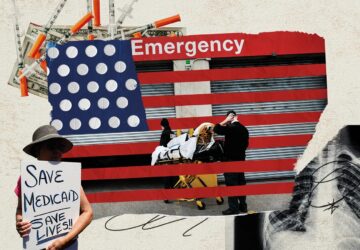 Since taking over as the top US health official in February, Robert F. Kennedy Jr has overseen radical changes that have alarmed many public-health experts. The agency he leads announced that it would cut its workforce by 20,000, and cancelled billions of dollars in federal funding for research and public health. Earlier this month, Kennedy replaced all the members of an influential vaccine advisory committee with hand-picked ones, including some who have expressed scepticism about vaccines. His mission, he says, is to ‘Make America Healthy Again’. “We are the sickest nation in the world,” he said in March, “and we have the highest rate of chronic disease.”
 1. Before my father’s final illness, I had not understood that when the call goes out to assemble family members dolefully about a deathbed, it’s because a decision has been made to let the loved one pass. The timer is set; the sand is trickling down. Death—that omnipresent possibility at the best of times—becomes calculable when sustenance is withheld. Paddy Heneghan, born in Tralee, Ireland, on 29 March 1927, lived ninety-five years and, though defying predictions by lingering beyond his appointed hour, is now, by all reasonable standards used to determine such matters, dead.
 First, he and his colleagues test people on tasks related to language or vision. Then they compare the observed behavior or brain activity to results from AI models built to do the same things. Finally, they use the data to fine-tune their models to create increasingly humanlike AI.
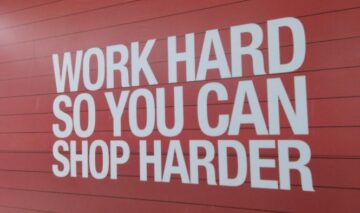 Lateness may imply death or an ending, as when we speak of my late grandfather or the late afternoon. When the German social theorist Werner Sombart first used the term in the early twentieth century, late capitalism did mean the end of capitalism. Yet ‘late’ in the superlative also suggests up-to-date or state-of-the-art, pointing not to the demise of something but to its refinement and advance. Surveying the same developments as Sombart, the Austrian Marxist Rudolf Hilferding claimed that the emerging economy of the twentieth century was simply ‘the latest phase of capitalist development’, a phrase echoed by Lenin, who took pains to remind his followers that ‘there is no such thing as an absolutely hopeless situation’ for the bourgeoisie.
 A
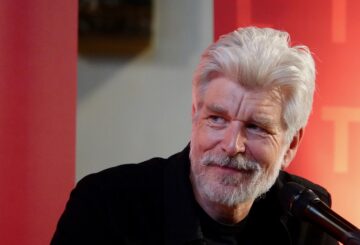
A As Dorothy Rowe’s classic study My Dearest Enemy, My Dangerous Friend explains, sibling relationships – invariably intense, often fraught – are among the most underexamined of familial connections. Although every sibling strives to create a unique place in the world, inescapably their longest relationships will be with loved, ignored or actively disliked brothers and sisters.
 The Big Bang is often described as the explosive birth of the universe—a singular moment when space, time, and matter sprang into existence. But what if this was not the beginning at all? What if our universe emerged from something else—something more familiar and radical at the same time?
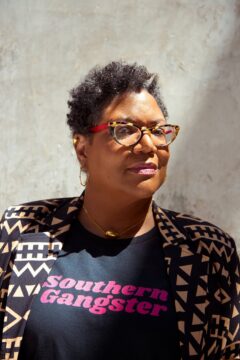 There’s a difference between being at a crossroads — weighing an important decision at a crucial moment — and being at the crossroads: a fabled space in the Black diasporic tradition where powers can be granted, whisked away or reclaimed by the spirit world, sometimes for the price of a soul. With her nonfiction debut, Honorée Fanonne Jeffers comfortably inhabits this mythic juncture, telling the stories of Black women in her genealogy with a literary style that joyfully resists easy categorization.
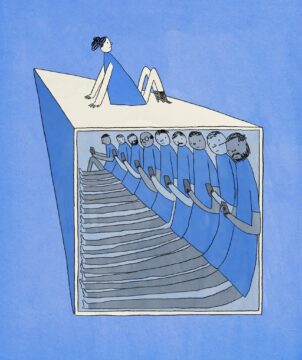 May 17. A warm Saturday night in Wicker Park, a vibrant stretch of Chicago where seven restaurants crowd a single block. Troy and I were having dinner at Mama Delia, one of the quieter spots. The sidewalk patio held five tables: three two-tops, including ours, and a pair pulled together for a group of eight women. At those tables, Troy was the only man.
 It might be difficult to discern through the black clouds billowing from bomb craters in Tehran, but Iran has spent most of the 21st century as the region’s rising power.
 Picture this: You give a bot notice that you’ll shut it down soon, and replace it with a different artificial intelligence system. In the past, you gave it access to your emails. In some of them, you alluded to the fact that you’ve been having an affair. The bot threatens you, telling you that if the shutdown plans aren’t changed, it will forward the emails to your wife.
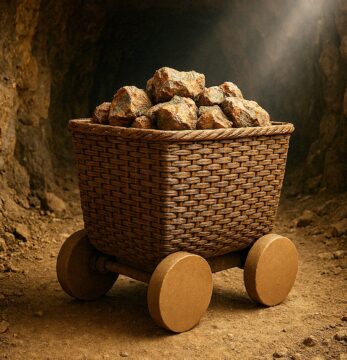 Imagine you’re a copper miner in southeastern Europe in the year 3900 B.C.E. Day after day you haul copper ore through the mine’s sweltering tunnels.
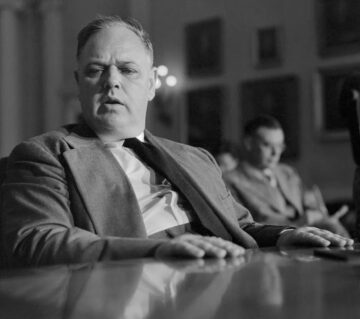 On May 18, 2022, Elon Musk posted to Twitter a declaration of divorce from the Democratic Party. “In the past,” he