
Holly Bass in The New York Times:
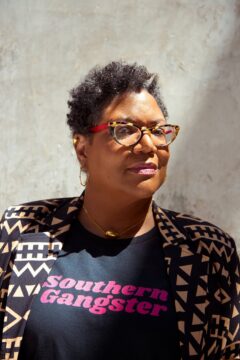 There’s a difference between being at a crossroads — weighing an important decision at a crucial moment — and being at the crossroads: a fabled space in the Black diasporic tradition where powers can be granted, whisked away or reclaimed by the spirit world, sometimes for the price of a soul. With her nonfiction debut, Honorée Fanonne Jeffers comfortably inhabits this mythic juncture, telling the stories of Black women in her genealogy with a literary style that joyfully resists easy categorization.
“Misbehaving at the Crossroads” is a matrilineal memoir that reaches back to the 1830s while incorporating slices of social history, political commentary and poetry. Jeffers uses census records and oral histories to excavate the stories of her foremothers, alongside wide-ranging essays on subjects like the 1965 Moynihan report on “The Negro Family,” Roe v. Wade and the election of President Obama. The result is two parallel accounts of the American patriarchal project that, in Jeffers’s words, was designed not to “cover any Indigenous peoples, or white women, or Black folks with the grace of liberty.”
More here.
Enjoying the content on 3QD? Help keep us going by donating now.