
Smriti Mallapaty in Nature:
‘Crazy’ experiment
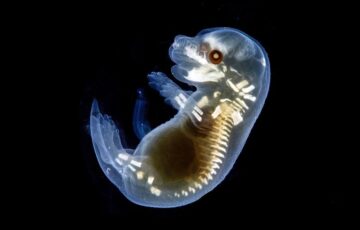 The team used reprogrammed stem cells to grow human organoids of the gut, liver and brain in a dish. Shen says the researchers then injected the organoids into the amniotic fluid of female mice carrying early-stage embryos. “We didn’t even break the embryonic wall” to introduce the cells to the embryos, says Shen. The female mice carried the embryos to term.
“It’s a crazy experiment; I didn’t expect anything,” says Shen.
Within days of being injected into the mouse amniotic fluid, the human cells begin to infiltrate the growing embryos and multiply, but only in the organ they belonged to: gut organoids in the intestines; liver organoids in the liver; and cerebral organoids in the cortex region of the brain. One month after the mouse pups were born, the researchers found that roughly 10% of them contained human cells in their intestines — making up about 1% of intestinal cells.
More here.
Enjoying the content on 3QD? Help keep us going by donating now.
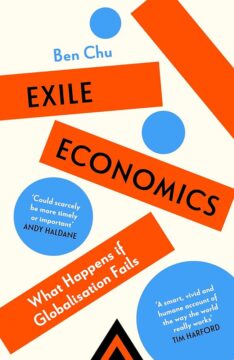 Yet it’s futile to deny that the impulse to self-sufficiency – to economic unsociability – also reaches very deep into our psyches and our history. What’s most striking about autarky is its adaptability as a programme and an ideology. It can appeal impressively across seemingly opposing political, social and ideological lines. It’s been adopted, at various times, by political movements on the Left and the Right, by believers and atheists, by nationalists and cosmopolitans, by fascists and communists, by rich states and poor states, by imperial powers and the colonised, by environmentalists and industrialists. It can be justified by the objective of peace or the demands of war. Any unit – from the individual, to the household, to the village, to the city, to the nation – can apparently aspire to self-sufficiency. It can be borne of a backward-looking nostalgia – a desire to turn the clock back or preserve the status quo – or of a belief that it’s a progressive and necessary programme to build the future. Like a historical El Niño weather pattern, the drive for self-sufficiency keeps returning, unpredictably but, also, seemingly inevitably.
 Dear Reader,
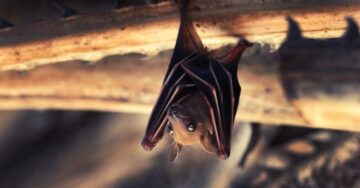 The scientific world has known for some time now that bats are impossible. They can live up to 25 years (
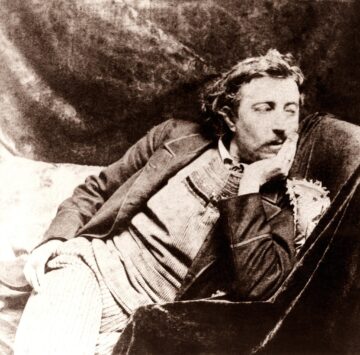 For much of his life, Paul Gauguin railed against the deadening effects of bourgeois domesticity. But as Sue Prideaux writes in “Wild Thing,” her terrific new biography of the artist, for about a decade early in his career the self-proclaimed “savage from Peru” enjoyed a stint as a happily married stockbroker in Paris.
 The outcome of quantum experiments is intrinsically unpredictable. Now physicists have combined that feature with blockchain techniques to generate random numbers in a fully transparent process for the first time
 In March 1988, the late Israeli historian Yehuda Elkana, an Auschwitz survivor, published an
  At this week’s U.N. Oceans Conference in the south of France, delegates need only glance outside the conference hall at the glittering Mediterranean for a stark reminder of the problem they are trying to solve. Scientists estimate there are now
 The cellular biology of reproduction is often depicted as an epic journey, in which millions of intrepid sperm fight to be the first to claim the ultimate prize: the chance to fertilize the egg, which has been passively waiting for the sperm to arrive. But is this an accurate picture? In a
  T
T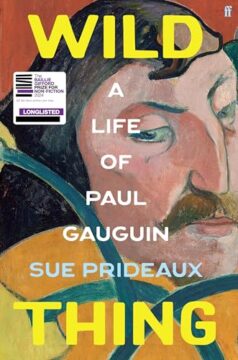 For much of his life, Paul Gauguin railed against the deadening effects of bourgeois domesticity. But as Sue Prideaux writes in “Wild Thing,” her terrific new biography of the artist, for about a decade early in his career the self-proclaimed “savage from Peru” enjoyed a stint as a happily married stockbroker in Paris.
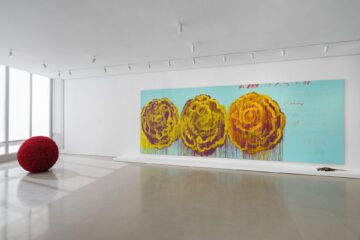 I begin with some questions. What is the difference between writing and drawing? What distinguishes seeing from reading? Can a painting be illegible? Can you write a drawing? In what ways can writing resist erasure and yet also be a mode of erasure? These are the dilemmas that haunt me when I think of the work of Cy Twombly, one of the United States’ most enigmatic artists.