
Enjoying the content on 3QD? Help keep us going by donating now.
Category: Recommended Reading
Andrew Cuomo and the Death of Centrism
Sarah Jones in New York Magazine:
 Mamdani didn’t have Cuomo’s money or institutional support, which may have freed him to run a transformative campaign. He didn’t shy away from his racial and religious identity, or from backing trans rights, or from supporting Palestine, and he didn’t have to because those positions are not inherently at odds with a “kitchen-table” campaign. He ran on affordability and championed meaningful economic proposals like universal child care and baby baskets, plus a rent freeze for regulated apartments. He told the obvious truth, which is that the city is crushing everyone who isn’t rich, and proposed solutions. With the laudatory assistance of Brad Lander, he modeled a new and more collaborative politics in contrast to Cuomo’s narcissism. He took that optimism to the streets and to social media with what seemed like boundless energy, and he redefined pragmatism for a new age in city politics. Maybe it’s radical to let child-care costs drive families out of the city. Maybe it’s Cuomo and his backers who are out of touch with real people.
More here.
Enjoying the content on 3QD? Help keep us going by donating now.
How fast is your brain ageing? Ordinary scans reveal the pace
Heidi Ledford in Nature:
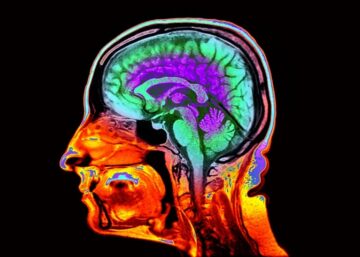 Telltale features visible in standard brain images can reveal how quickly a person is ageing, a study of more than 50,000 brain scans has shown1.
Pivotal features include the thickness of the cerebral cortex — a region that controls language and thinking — and the volume of grey matter that the cerebral cortex contains. These and other characteristics can predict the rate at which a person’s ability to think and remember will decline with age, as well as their risk of frailty, disease and death. Although it’s too soon to use the new results to assess people in the clinic, the test provides advantages over previously reported ageing ‘clocks’ — typically based on blood tests — that purport to measure how fast a person is ageing, says Madhi Moqri, a computational biologist who studies ageing at Harvard Medical School in Boston, Massachusetts.
More here.
Enjoying the content on 3QD? Help keep us going by donating now.
How Two Neuroscientists View Optical Illusions
Katrina Miller in The New York Times:
 Take a look at this video of a waiting room. Do you see anything strange?
Perhaps you saw the rug disappear, or the couch pillows transform, or a few ceiling panels evaporate. Or maybe you didn’t. In fact, dozens of objects change in this video, which won second place in the Best Illusion of the Year Contest in 2021. Voting for the latest version of the contest opened on Monday.
Illusions “are the phenomena in which the physical reality is divorced from perception,” said Stephen Macknik, a neuroscientist at SUNY Downstate Health Sciences University in Brooklyn. He helps run the contest with his colleague and spouse, Susana Martinez-Conde, a neuroscientist at the same institution and the primary organizer of the contest.
More here.
Enjoying the content on 3QD? Help keep us going by donating now.
Tuesday Poem
Unhealthy particulates were found throughout the home
—”The Toxic Homes of Los Angeles,” June 24, 2025
Reading the Times
So many things to be afraid of: the space junk of Damocles
orbiting in the troposphere, that worrisome spot
on my friend’s pancreas, the disappearance of the bagel man
& donut lady & farmworker to far-off destinations while the asylum
issues new protocols for the planet. There go the forests & trout streams
of your youth & here comes another blackout, your apartment gone dark
as a fresh coal on the tongue about to be fired like the one the pharaohs
offered Moses–the choice was that or gold, the story goes some angel shoved
his hand toward the coal so he ended up purified, but also stuttering
like the brother I spent my childhood hiding from in my father’s closet
below rows of suit coats, next to the electric buffer for his shoes. The buffers
were soft wool, & my brother the wolf raged through the house
like a man with a custom power tool through a federal grant program.
If Jesus saves, he must be saving up for something big, waiting for the last
possible moment which is what hardcore evangelicals think I guess but
those people really terrify me. In the City of Angels, chloride anions
in the light fixtures, cyanide in the sofas & baseboards & benzine in the air
while in the city of St. Francis, at sunset, a jobless man casts his line
from a dock to feed his family with fish that will kill them, hauling up bass
& white sturgeon from the shining blameless waters of the bay.
by Kim Addonizio
from Rattle Magazine
Enjoying the content on 3QD? Help keep us going by donating now.
Monday, June 30, 2025
A Celebration of Muriel Spark
Enjoying the content on 3QD? Help keep us going by donating now.
Mark Blyth: The World Economy Is on the Brink of Epochal Change
Mark Blyth in The Atlantic:
 The global economy is getting a hardware refit and trying out a new operating system—in effect, a full reboot, the likes of which we have not seen in nearly a century. To understand why this is happening and what it means, we need to abandon any illusion that the worldwide turn toward right-wing populism and economic nationalism is merely a temporary error, and that everything will eventually snap back to the relatively benign world of the late 1990s and early 2000s. The computer’s architecture is changing, but how this next version of capitalism will work depends a great deal on the software we choose to run on it. The governing ideas about the economy are in flux: We have to decide what the new economic order looks like and whose interests it will serve.
The last such force-quit, hard-restart period was in the 1930s. In the United States, the huge liquidity crunch caused by the 1929 Wall Street crash combined with the Smoot-Hawley Tariff Act of 1930 to kill commercial activity and trigger the Great Depression. Bank failures swiftly turned into a mass failure of firms and industries; wages tumbled and unemployment shot up, in some areas to a quarter of the workforce.
More here.
Enjoying the content on 3QD? Help keep us going by donating now.
The Unnerving Vision Of Muriel Spark
Frances Wilson at The Guardian:
 There is a supernatural process going on under the surface and within the substance of all things,” says a priest in Muriel Spark’s 1965 novel The Mandelbaum Gate. Spark believed herself wired into this process. The novelist was aware from the start of “a definite ‘something beyond myself’”, an “access to knowledge that I couldn’t possibly have gained through normal channels”.
“Somehow things happened, odd things, when Muriel was around,” recalled her friend Shirley Hazzard. “Everything that happened to Muriel,” according to her American editor Barbara Epler, “had been foreseen”, usually in her books themselves. If Spark wrote about blackmail, she too would be blackmailed; if she wrote about a burglary, she would then be burgled. Thirty years after toying with an idea for The Hothouse by the East River (1973), in which electrocution by lightning takes place down a telephone line, lightning struck Spark’s house in Italy, sending a current of electricity through the external wires and burning her upper lip.
more here.
Enjoying the content on 3QD? Help keep us going by donating now.
A Possible Connection Between Mental Illness and Diet
Gordy Slack at Undark:
In a report discussed in Psychiatry Redefined in 2022, Palmer and a small team of researchers at McLean had examined case studies of two patients who had suffered from schizophrenic symptoms for much of their lives. One, an 82-year-old woman who had suffered from schizophrenia for decades and was suicidal, started a ketogenic diet at age 70 and found her symptoms abated to the point she no longer needed medication; she no longer had hallucinations or paranoia and also lost 150 pounds. Another woman, age 39, also went onto the ketogenic diet and eventually stopped using medication after her symptoms subsided. Although she later suffered a severe psychotic episode and was hospitalized, she “slowly tapered off Haldol” after her release and remained symptom-free five years later, the journal reported.
In fact, ketogenic diets have long been used in conventional medicine to treat severe or intractable epilepsy. Several studies published in the past few years suggest that ketogenic metabolitc therapy, or KMT, may not only help control seizures, bipolar disorder, major depressive disorder, and schizophrenia — but may also reduce the sometimes devastating side effects that often accompany antipsychotic medications, said Palmer.
More here.
Enjoying the content on 3QD? Help keep us going by donating now.
What Is The Genius of Brian Wilson?
Sid Holt at The Nation:
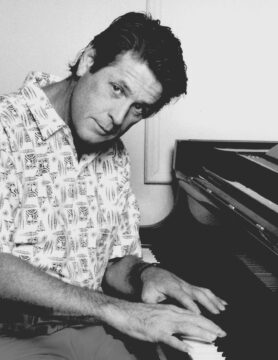
Wilson was strange—probably mad—and it was his strangeness that contributed as much as his music to his reputation as a genius. Even in videos of the Beach Boys performing in the early 1960s, he appears to be searching for an exit. The breakdown that led to his forsaking live performance; the piano in the living-room sandbox; his panicked abandonment of Smile (the intended, and soaringly ambitious, follow-up to Pet Sounds); his wandering the aisles of his very own health-food store, the Radiant Radish, in a bathrobe—all became part of his legend.
And now Brian is dead, far outliving his brothers—the 39-year-old Dennis, who drowned in 1983 after a day of drinking, and the dutiful Carl, who died of cancer, then 51, in 1998—and most of his bandmates. (Of the Beach Boys most will remember, only his cousin Mike Love and his high school friend Al Jardine, survive.) More to the point, he had outlived the times he helped define. Yet the 45s and the best of the LPs—The Beach Boys Today!, Summer Days (and Summer Nights!!), Pet Sounds, even Smiley Smile, which was definitely not Smile—endure. Come summer, the title of one of the Beach Boys’ greatest-hits albums, Spirit of America, never seems truer. It is the music my Gen X wife and millennial daughters (and as one day, I am sure, my Gen Beta grandson will) all demand with their hot dogs and Cokes.
more here.
Enjoying the content on 3QD? Help keep us going by donating now.
The rise of electric flight – with the Faraday Institution
Enjoying the content on 3QD? Help keep us going by donating now.
Sold to the Trump family: one of the last undeveloped islands in the Mediterranean
Marzio Mian in The Guardian:
 Albanians call Sazan Ishulli i Trumpëve – Trump Island. Until now mostly untrammelled by development, it is on the verge of becoming a mecca for ultra-luxury tourism, another addition to Ivanka Trump and Jared Kushner’s real-estate portfolio. Speaking on the Lex Fridman podcast in July 2024, Trump could barely conceal her excitement: “I’m working with my husband, we have this 1,400-acre island in the Mediterranean and we’re bringing in the best architects and the best brands,” she said. “It’s going to be extraordinary.”
When I reached Kushner by phone the same month, I detected brimming enthusiasm for Sazan, which he seemed to regard as something of a treasure. He said he plans “to create the ideal resort that I’d want to be at with my family and with my friends”.
Before I visited the island, I marvelled at the thought of traversing its roughly 40 miles of trails, climbing its mountains covered in rainforest and exploring its deep waterways with names such as the Bay of Paradise, Hell’s Gorge, Devil’s Gulf and Admiral’s Beach. I wanted to see it before the phrase “I’m going to Sazan” becomes the prerogative of the rich.
More here.
Enjoying the content on 3QD? Help keep us going by donating now.
When You Stop Seeking Approval, Everything Changes
Enjoying the content on 3QD? Help keep us going by donating now.
Demanding Pleasures: On the art of observation
Lydia Davis in Harper’s Magazine:
 A person once said to me, “You’re a writer. You must have a lot to say.” He was making an assumption. I’ve thought about his assumption many times. Is it that simple? Do I write because I have a lot to say? I do have a lot to say. No matter how much I have said, isn’t there always more to say? But then, I imagine everyone has a lot to say, writers and nonwriters alike. I can’t imagine anyone not having a lot to say—even if they keep their mouth closed.
Human beings with a lot to say like to make noise. So do crickets, dogs, mice, other insects, rabbits when frightened or being killed, moose, and many, many others. It is impressive to think of all the creatures on earth and all the different noises they make, for different reasons. Some of their noises are effective. Some fail to have an effect.
More here.
Enjoying the content on 3QD? Help keep us going by donating now.
Sunday, June 29, 2025
Mick Ralphs (1944 – 2025) Guitarist and Songwriter
Enjoying the content on 3QD? Help keep us going by donating now.
P. Adams Sitney (1944 – 2025) Historian of Cinema
Enjoying the content on 3QD? Help keep us going by donating now.
Can I tame my 4am terrors? a lifetime of insomnia – and a possible cure
Arifa Akbar in The Guardian:
 I can’t remember when I first stopped sleeping soundly. Maybe as a child, in the bedroom I initially shared with my brother, Tariq. I would wait for his breathing to quieten, then strain to listen beyond our room in the hope of being the last one awake, and feel myself expanding into the liberating space and solitude. By my early 20s, that childhood game of holding on to wakefulness while others slept began playing out against my will. Sound seemed to be the trigger. It was as if the silence I had tuned into as a child was now a requirement for sleep. Any sound was noise: the burr of the TV from next door, the ticking of a clock in another room. When one layer of sound reduced its volume, another rose from beneath it, each intrusive and underscored by my own unending thoughts. Noise blaring from without and within, until I felt too tired to sleep.
More here.
Enjoying the content on 3QD? Help keep us going by donating now.
There Will Be No Next Anna Wintour and That’s Just Fine
Amy Odell in The New York Times:
 The end of Anna Wintour’s 37-year run as editor in chief of Vogue was a lot less dramatic than its beginning. Back in 1988, magazines ruled fashion, anointing people and decreeing trends, and it was a cloistered world of high drama and higher expense accounts. When Ms. Wintour was chosen to replace the legendary editor, Grace Mirabella, it was a scandal — Ms. Mirabella learned she was fired from her husband, who called after he saw it on the evening news.
But when Ms. Wintour announced on June 26 that she was relinquishing the role, it felt more like a corporate governance move than a revolution that will shake the entire industry she has ruled over for decades now. For one thing, she retains her job as Vogue’s global editorial director, and will stay on as chief content officer for Condé Nast. It was less her retiring than the retiring of a once-imperial, no longer so powerful title: editor in chief.
More here.
Enjoying the content on 3QD? Help keep us going by donating now.
Léon Krier (1946 – 2025) Architect And Urbanist
Enjoying the content on 3QD? Help keep us going by donating now.
Through the Trapdoor
Steven Shapin in the LRB:
ger Penrose liked puzzles. In the 1950s, inspired by a catalogue of prints made by the paradoxical Dutch artist M.C. Escher, the young Penrose and his psychiatrist-geneticist father, Lionel, set out to produce drawings of ‘impossible objects’. Pictorial conventions cue us to perceive two-dimensional drawings as representations of three-dimensional things, but these conventions can also be used to deceive – for example, to depict things that could not exist in three dimensions. One of these objects became known as the ‘Penrose triangle’.
The Penroses were a family of puzzlers. Father and sons amused themselves by constructing polyhedra out of wood and cardboard that could be taken apart and put together in interesting ways. Everyone played chess: Lionel set puzzles and his wife, Margaret, like him a qualified physician, was a keen player; Oliver Penrose, Roger’s older brother, is a physicist and a proficient amateur player; and his younger brother, Jonathan, was a grandmaster and ten times British chess champion. But there was much more to Roger’s puzzling than this. People who know little else about what he did may be familiar with the Penrose triangle, which shares space with Escher’s prints on the walls of student bedrooms around the world, or with Penrose tiling – tessellated polygons that can cover an infinite plane without repeating patterns. The triangles and tiles have been taken up by mathematicians interested in algorithms for generating such things, by chemists investigating crystal structure, and by psychologists concerned with the way the mind makes sense of the external world, but for Penrose they were, for the most part, a bit of fun.
More here.
Enjoying the content on 3QD? Help keep us going by donating now.