
Paul Sutter in Undark Magazine:
 American science stands on the precipice. On one side is the administration of Donald Trump and MAGA political leaders threatening to push us over the cliff; on the other is the quick plunge to oblivion.
This is no exaggeration. While ostensibly the administration’s actions are couched in the dual language of budgetary concerns and the elimination of DEI initiatives, the reality is much more broad, and much more bleak. Science across the nation is getting strangled, with funding streams to universities being summarily cut off, staff members of national agencies dismissed, and budgets getting axed.
More here.
Enjoying the content on 3QD? Help keep us going by donating now.
 How does a woman writer make her own money? How does she find the time to write? As a young woman, I scoured every book-jacket biography trying to decipher this secret. My mother, a Depression baby, gave me sound advice: “Make sure you earn your own money. Especially if you’re married, do you hear me?” I did indeed. Once you’ve been poor, you’re forever hounded by the fear you’ll be poor again.
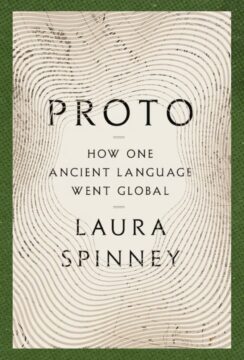 If we think of languages as belonging to families, this is like finding out that an acquaintance is really a distant cousin: It points to a shared ancestor, a unity — and a divergence — somewhere in the past. What would it mean for those cultural origin stories — for Who We Are — to speak not of European but of Indo-European? “Of what ancient and fantastic encounters were these the fading echoes?” asks Laura Spinney in her latest book,
 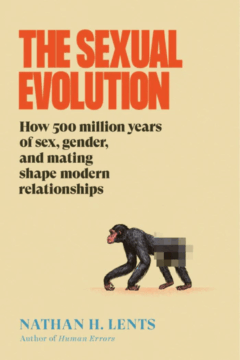 This book isn’t a directly political text, but its colourful tales from the animal world do have a point of view: biology, Lents argues here, comes down strongly against rigid categories. The story of sexual evolution is one of experimentation and constant improvisation, and that, he says, goes a long way to explaining why human sexual norms seem to be undergoing a transformation: “I assert that this moment of sexual turmoil is actually a rediscovery of the much more expansive relationship with sex that our ancestors once had and that other animals enjoy,” he writes.
 In thinking about the positive basis of nationalism for post-colonial India, Tagore and Gandhi found the nation-state of European history—characterized by a singular social, usually ethnic or linguistic, homogenizing principle, militarized borders and mobilization against ‘enemies’ both external and internal—unacceptable and unsuitable for India’s diverse and heterogeneous society. Their idea of India was not monolithic state-centric, but pluralistic and community- or society-centric.
 I first interviewed Toni Morrison about her work as a book editor in September 2005, in her office at Princeton. Though our meeting was scheduled for late afternoon, I took an early train from Washington to make sure I could situate myself in West College—which
  S
S Dear Reader,
 Some years ago, I saw a painting that knocked my sense of the sexes sideways. It was an 1884 work by an Impressionist named Gustave Caillebotte of a nude figure emerging from the bath — the same trope that Degas or Bonnard so often employ because it allows you to observe a woman’s naked body in motion, absorbed in a private ritual replete with sensual pleasure.
 On a weekend in mid-May, a clandestine mathematical conclave convened. Thirty of the world’s most renowned mathematicians traveled to Berkeley, Calif., with some coming from as far away as the U.K. The group’s members faced off in a showdown with
  The rapidly escalating military conflict between Israel and Iran represents a clash of ambitions. Iran seeks to become a nuclear power, and Israeli Prime Minister Binyamin Netanyahu longs to be remembered as the Israeli leader who categorically thwarted Iran’s nuclear program, which he views as an existential threat to Israel’s survival. Both dreams are as misguided as they are dangerous.
 There is probably not a second that goes by without an ABBA song being played somewhere in the world. A remix of “Gimme! Gimme! Gimme! (A Man After Midnight)” is pulsing through a club on a Mediterranean island, a Vietnamese grocery store is piping in “Happy New Year,” a Mexican radio station is playing the Spanish-language version of “Knowing Me, Knowing You.” Live performances, too, continue unabated, and not just in karaoke bars, or in stage productions of “