
 Peter E. Gordon and Sam Moyn debate if and how the “fascism” label is appropriate for Orbán, Erdoğan, Modi, or Trump, over at the NY Review of Books. Gordon:
Among all the terms that are available to us for historical comparison today it is hard to see why “fascism” alone should be stamped as impermissible. No differently than other terms, fascism now belongs to our common archive of political memory. Exceeding its own epoch, it stands as a common name for a style of institutionalized cruelty and authoritarian rule that recurs with remarkable frequency, albeit in different guises. In the United States, it would no doubt take a different form. As the historian of European fascism Robert Paxton has observed, “the language and symbols of an authentic American fascism would ultimately have little to do with the original European models.” In an American fascism, he writes, one would see not swastikas but “Christian crosses” and “Stars and Stripes.”
The true signs of fascism’s resurgence, however, would not be merely the symbols it deploys in its propaganda but its treatment of those who are most vulnerable. This is why the spectacle of migrants in cages should alarm us all, and why we cannot take comfort in the thought that things are not as bad as they once were.
Moyn:
America’s Resistance after the election of Donald Trump turned to analogy to abnormalize him: the US teetered on the edge of fascism, and with a Hitler on the make now at the helm.
That comparison requires a careful ethic is the lesson three years on, for the sake of understanding and mobilization alike. It is surely fodder for some future ironist that, after our era of fearing Trump’s actions, he appears set in the current pandemic to go down in history for a worse sin of inaction. For all his abuses of the powers accorded the presidency in the prior generation, his failure to deploy them now seems more glaring. His hijinks in flouting the rule of law, though inexcusable, have not concealed the continuity of American governance, for good and for ill. (The Republicans have gotten their conservative judges and tax cuts, just as before.) William Barr is the reincarnation of Carl Schmitt, the evil genius of National Socialism, wrote Tamsin Shaw in these pages, except that our attorney general has done his worst by letting some louts out of their lies and pursuing causes with roots deep in American history. No analogy to Hitler or fascism is needed to explain these results.
 Stephen Nash in Sapiens:
 O
O
 Christian Barry and Seth Lazar in Ethics and International Affairs:
 To untangle the Omegaverse fight, it helps to understand its origins in a parallel literary universe — the vast, unruly, diverse, exuberant and often pornographic world of fan fiction.
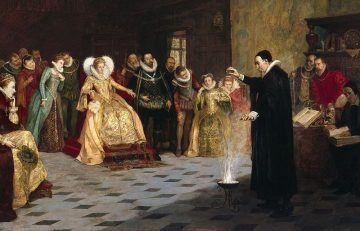 Physicist Richard Feynman had the following advice for those interested in science: “So I hope you can accept Nature as She is—absurd.”
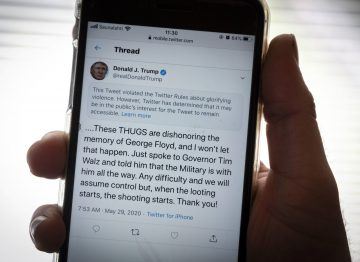 President Trump told reporters Friday evening that he didn’t know the racially charged history behind the phrase “when the looting starts, the shooting starts.” Trump tweeted the phrase Friday morning in reference to the
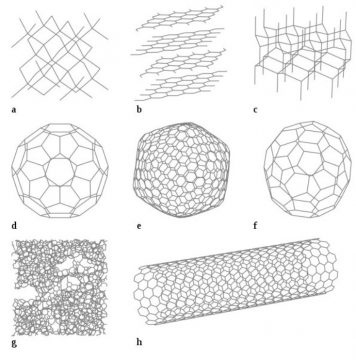 Emergence occurs when there is a conceptual discontinuity between two descriptions targeting the same phenomenon. This does not mean that emergence is a purely subjective phenomenon — only that scientific ‘double coverage’ may be a good place to look for emergent phenomena.
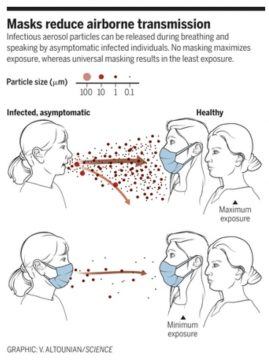 Respiratory infections occur through the transmission of virus-containing droplets (>5 to 10 μm) and aerosols (≤5 μm) exhaled from infected individuals during breathing, speaking, coughing, and sneezing. Traditional respiratory disease control measures are designed to reduce transmission by droplets produced in the sneezes and coughs of infected individuals. However, a large proportion of the spread of coronavirus disease 2019 (COVID-19) appears to be occurring through airborne transmission of aerosols produced by asymptomatic individuals during breathing and speaking (
 The amazing thing about Faiz Ahmed Faiz is that you can never leave him behind. Witness how he emerged in the midst of the recent protests in India with ‘Hum Dekhenge’ being sung in half a dozen languages to the point where flummoxed authorities were forced to treat a man, dead for a good 35 years, as a threat to national security.
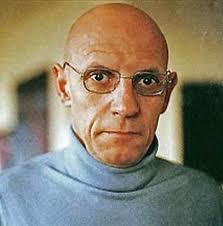 For his part, however, Foucault moved on, somewhat singularly among his generation. Rather than staying in the world of words, in the 1970s he shifted his philosophical attention to power, an idea that promises to help explain how words, or anything else for that matter, come to give things the order that they have. But Foucault’s lasting importance is not in his having found some new master-concept that can explain all the others. Power, in Foucault, is not another philosophical godhead. For Foucault’s most crucial claim about power is that we must refuse to treat it as philosophers have always treated their central concepts, namely as a unitary and homogenous thing that is so at home with itself that it can explain everything else.
 Selina Todd’s biography of Delaney does two things well. It helps us understand how someone the press insisted on calling a ‘Salford teenager’ was able to create this remarkable work – and it shows how hard the people who brought the play to stage and screen worked to shift the spotlight away from that intense mother-daughter dynamic. There was a script, too, for ‘new writers’ in the late 1950s and 1960s: they were to be young, authentic and, if possible, working class; they were to be masculine, rebellious and shocking. When, in April 1958, Delaney sent her play to Joan Littlewood, the director of the avant-garde Theatre Workshop in East London, she adopted a naive, Northern persona that was more than a little misleading. ‘A fortnight ago I didn’t know the theatre existed,’ she gushed to Littlewood – but then a friend had taken her to see a play and she had discovered ‘something that meant more to me than myself’. She now knew she wanted to write plays, and in two weeks had produced the enclosed ‘epic’. ‘Please can you help me? I’m willing enough to help myself.’ Christened plain ‘Sheila’, she signed the letter ‘Shelagh Delaney’, the name by which she would be known from then on.
 On Sunday, on Tuesday, and again on Wednesday, President
 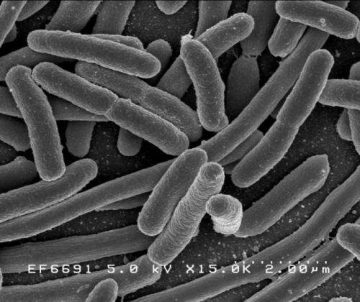 Bacteria have a cunning ability to survive in unfriendly environments. For example, through a complicated series of interactions, they can identify—and then build resistance to—