
Maddie Crowell in the Virginia Quarterly Review:

The offices of Caravan, a small but influential Indian monthly magazine, are housed on the third floor of a Soviet-style building in New Delhi. For a long time, Vinod Jose, the magazine’s executive editor, didn’t give much thought to the view outside his window: a budding thicket of gulmohar trees where, down below, smokers convened in small circles on their lunch break. But then, a few years ago, the view began to change. The netted steel cage of a new building began to rise out of the foliage, piquing Jose’s interest: It would be, he soon found out, the New Delhi headquarters for the Rashtriya Swayamsevak Sangh (RSS), India’s most powerful right-wing Hindu-nationalist organization, and a longtime fixation of Jose’s journalistic career.
“A colleague once told me that if he were writing a profile of me, that this would be the opening scene,” Jose said, gesturing to his view of the RSS headquarters, when we met in April 2019. Jose, who is forty and speaks in tranquil bursts, carries himself with a calm authority that can often feel out of place in Delhi’s cacophony.
More here.
 There are some problems for which it’s very hard to find the answer, but very easy to check the answer if someone gives it to you. At least, we think there are such problems; whether or not they really exist is the famous
  One of the least expected aspects of 2020 has been the fact that epidemiological models have become both front-page news and a political football. Public health officials have consulted with epidemiological modelers for decades as they’ve attempted to handle diseases ranging from HIV to the seasonal flu. Before 2020, it had been rare for the role these models play to be recognized outside of this small circle of health policymakers.
 Published shortly after his death in 1633,
 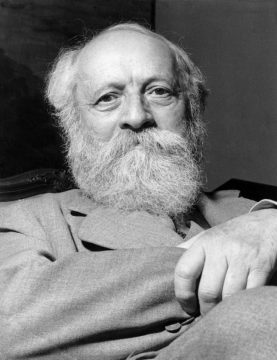 “I am unfortunately a complicated and difficult subject.” With these words of Martin Buber, Paul Mendes-Flohr lays down the challenge for his meticulous biography of the distinguished Jewish scholar, humanist, and author of I and Thou. “Complicated,” to be sure, and “difficult,” certainly; that goes with the territory of Buber’s at times maze-like philosophical explorations and heavily Germanic articulation. And one may add to these challenges the fact that—to quote this biographer—Buber was a “contested figure who evoked passionate, conflicting opinions about his person and his thought.” Yet these obstacles are by no means insurmountable, thanks to Mendes-Flohr’s philosophical acumen and gift for succinct expression. Indeed, in his capable hands Buber’s life makes for an engrossing, instructive tale, and an exemplary contribution to Yale’s “Jewish Lives Series.”
 As universities face major changes, their financial outlook is becoming dire. Revenues are plummeting as students (particularly international ones) remain home or rethink future plans, and endowment funds implode as stock markets drop.
 Writing from a Birmingham jail, Martin Luther King Jr famously told his anxious fellow clergymen that his non-violent protests would force those in power to negotiate for racial justice. “The time is always ripe to do right,” he wrote. On an early summer evening, two generations later,
 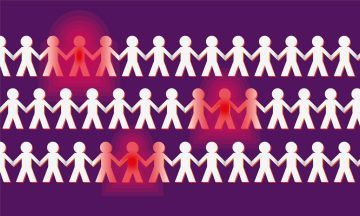 Epidemiological studies are now revealing that the number of individuals who carry and can pass on the infection, yet remain completely asymptomatic, is larger than originally thought. Scientists believe these people have contributed to the spread of the virus in care homes, and they are central in the debate regarding face mask policies, as health officials attempt to avoid new waves of infections while societies reopen.
 What’s your reaction when you see the term “double-entry book-keeping”? Do you associate it with cool, societal-changing innovations like the Internet, Google, social media, laptops, and smartphones? Probably not. Neither did I—until I was asked to write a brief article about the fifteenth century Italian mathematician Luca Pacioli, to go into the sale catalog for the upcoming (June) Christie’s auction of an original first edition of his famous book Summa de arithmetica, geometria, proportioni et proportionalita (“Summary of arithmetic, geometry, proportions and proportionality”), published in 1494, which I referred to in
  Each of us is different, in some way or another, from every other person. But some are more different than others — and the rest of the world never stops letting them know. Societies set up “norms” that define what constitute acceptable standards of behavior, appearance, and even belief. But there will always be those who find themselves, intentionally or not, in violation of those norms — people who we might label “weird.” Olga Khazan was weird in one particular way, growing up in a Russian immigrant family in the middle of Texas. Now as an established writer, she has been exploring what it means to be weird, and the senses in which that quality can both harm you and provide you with hidden advantages.
 Albert Memmi, the great Tunisian-born French Jewish intellectual,
  The moralizing has begun.
 You’d be forgiven if you hadn’t noticed. His verbal bombshells are louder than ever, but Donald J Trump is no longer president of the United States. By having no constructive response to any of the monumental crises now convulsing America, Trump has abdicated his office. He is not governing. He’s golfing, watching cable TV and tweeting. How has Trump responded to the widespread unrest following the murder in Minneapolis of George Floyd, a black man who died after a white police officer knelt on his neck for minutes as he was handcuffed on the ground? Trump called the protesters “thugs” and threatened to have them shot. “When the looting starts, the shooting starts,” he tweeted, parroting a former Miami police chief whose words spurred race riots in the late 1960s. On Saturday, he gloated about “the most vicious dogs, and most ominous weapons” awaiting protesters outside the White House, should they ever break through Secret Service lines.