The Beatles in Time

Dominic Green at Literary Review:

If a German raid had not compelled Jim McCartney and Mary Mohin to get to know each other better, would Paul McCartney have been born? If Paul had passed his Latin O level, he wouldn’t have stayed down a year, befriended George Harrison and introduced him to John Lennon. Would any of us be the same if Ringo had never emerged from a ten-week coma as a child, or if his grandmother hadn’t then forced him to write with his right hand instead of naturally with his left, which gave his drumming ‘the idiosyncratic style that countless Beatles tribute acts still find hard to duplicate’? When Lennon beats up Bob Wooler, MC at the Cavern, for calling him a ‘bloody queer’, Brown provides fourteen differing accounts of what happened, four from Lennon himself. A similar chorus speculates on whether Lennon and Brian Epstein had sex, with Brown again providing differing accounts from Lennon, and Yoko adding that she thought John fancied Paul.

more here.

The 19th Century Roots of Modern Medical Denialism

John Charpentier in Undark:

MIRACLE CURES, detox cleanses, and vaccine denial may seem to be the products of Hollywood and the social media age, but the truth is that medical pseudoscience has been a cultural touchstone in the U.S. since nearly its founding. At the dawn of the 19th century, when medical journals were still written almost entirely in Latin and only a handful of medical schools existed in the country, the populist fervor that animated the Revolutionary War came to the clinic. And while there was no shortage of cranks peddling phony medicine on a raft of dubious conspiracy theories in the early 1800s, none was more successful and celebrated than Samuel Thomson.

Portraying himself as an illiterate pig farmer (he was neither), Thomson barnstormed the Northeast telling rapt audiences things they wanted to hear: that “natural” remedies were superior to toxic “chemical” drugs; that all disease had a single cause, despite its many manifestations; that intuition and divine providence had guided him to botanical panaceas; that corrupt medical elites, blinded by class condescension and education, were persecuting him, a humble, ordinary man, because of the threat his ideas and discoveries posed to their profits. For decades, Thomson peddled his dubious system of alternative medicine to Americans by playing to their cultural, political, and religious identities. Two centuries later, the era of Thomsonian medicine isn’t just a historical curiosity; it continues to provide a playbook for grifters and dissembling politicians peddling pseudoscientific solutions to everything from cancer to Covid-19.

More here.

Can a Battery of New COVID Tests Stem the US Debacle?

Robert Bazell in Nautilus:

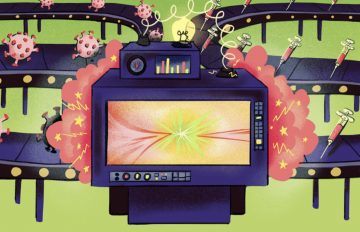
Can we leap beyond flattening the curve and eliminate COVID-19 as a public health threat—not years from now but weeks? “It’s a war we should fight to win,” declared Harvey V. Fineberg, former Dean of the Harvard School of Public Health, in the New England Journal of Medicine.War metaphors applied to health—“War on Drugs,” “War on Cancer”—are tiresome and often counterproductive. But considering the attempt to overcome COVID-19, the metaphor could not be more apt. Hundreds of thousands, perhaps millions, of lives are at risk. The economy of much of the world depends on the outcome. If it’s improperly managed, the effort to contain the pandemic could drag on for months or years longer than necessary. As in all wars, the battles are complex, varied and ever-changing. High priority must go to health care workers to get them personal protective equipment, ventilators, and all the tools they need. Efforts to develop effective treatments and a protective vaccine must proceed with maximum haste.

The first battlefield to be joined in an encounter with a new pathogen is medical testing. On this front, the United States lost miserably. The White House, Centers for Disease Control and Prevention, and the Food and Drug Administration, failed to identify those who are infected so they and their contacts can be isolated, possibly stopping the epidemic before it spreads. It was the Pearl Harbor of COVID-19. But like the real defeat in World War II, it is only one battle. The disaster can mobilize the U.S. to triumph, provided it has learned from its mistakes, and now acts with alacrity on the best information. This is starting to happen, but not quickly enough. Public health officials across the country still decry a massive shortage of tests. Only a portion of people told they have COVID-19 get tested. On Monday, Chrissie Juliano, executive director of the Big Cities Health Coalition, which represents 30 urban public health departments, told The New York Times, “Many local communities are flying blind, making decisions in the absence of full information largely due to the failure of the federal government to provide sufficient testing capacity.”

More here.

Friday Poem

Serpent Dialogues (Extract)

When the woman realised the snake was scared of her too, she went back to the balcony, where she’d at first mistaken him for a spool of brightly-coloured rope. She lay down on the ground there and waited, watching as fear took hold of her body: whirlpools of sickness through her limbs, sweat like black ice, her breath sprinting ahead of her and her inability to catch up . She kept wanting to flee, her ears full of fabricated rattle-hiss, but she remembered the way he’d flashed out of sight, back into the encroaching wilderness as soon as she’d taken a step too close. The thought of the snake being afraid somehow helped her stay put till lunch . He did not come back that day, but she decided to repeat the ritual every morning at the same hour. To give him time, even if he needed a thousand years, allowing him to make all the decisions. She lay always in the same spot, on her side, still as a mountain, her hip pointy as a snowy peak . The snake watched sideways, from a safe distance, and slinked a little closer each day, trying to work out if the woman was a threat.

A long time passed before she was able even to unclench her jaw and allow sound to come out. When she finally did, she asked all manner of absurd questions, and the snake, to her surprise, responded.

WOMAN: Snake, what do you think of monotheism? Since everything is holy, I mean

SNAKE: Men – humans – need to organize everything. Messages need to be packaged in an intelligible way for them, otherwise they’d be lost

W: That’s why the Mass is didactic in structure, like a theatre play, is what you’re saying

S: Yes, but the sacred element is also built through repetition. Repetition is much loved by men

W: You don’t dislike it either, since you come here to see me every day

S: It’s nice on this rock

W: There are countless others to choose from

S: What about you, why are you here every morning?

W: Gives me a good vantage point .

by Juana Adcock
From:
Split
Blue Diode Press, Leith, Scotland, 2019

Thursday, April 9, 2020

Amsterdam to embrace ‘doughnut’ model to mend post-coronavirus economy

Daniel Boffey in The Guardian:

A doughnut cooked up in Oxford will guide Amsterdam out of the economic mess left by the coronavirus pandemic.

While straining to keep citizens safe in the Dutch capital, municipality officials and the British economist Kate Raworth from Oxford University’s Environmental Change Institute have also been plotting how the city will rebuild in a post-Covid-19 world.

The conclusion? Out with the global attachment to economic growth and laws of supply and demand, and in with the so-called doughnut model devised by Raworth as a guide to what it means for countries, cities and people to thrive in balance with the planet.

Raworth’s 2017 bestselling book, Doughnut Economics: Seven Ways to Think Like a 21st-Century Economist, has graced the bedside table of people ranging from the former Brexit secretary David Davis to the Guardian columnist George Monbiot, who described it as a “breakthrough alternative to growth economics”.

More here.

Rilke’s Legacy: Laura La Rosa on Writing

Laura La Rosa in the Sydney Review of Books:

Growing up, ours was a typical post-eighties Western Sydney household: instant cuppas, Wonder White, three channels and the Daily Tele. We were Blackfellas on my mother’s side and working class migrant Italian farmers on my father’s. We survived, just, but the arts were as foreign to me as the city was.

I remember the day we got dial-up internet. I was fourteen. By then, my brother had been shafted to a caravan out the back, with mum claiming the third bedroom as her office where she ran a small cleaning supplies business. She studied bookkeeping and built herself a website. Her then-husband bailed her out financially more than once; even so her efforts to harness late-nineties innovation were a feat for a suburban mum.

By the time I was seventeen, I had been kicked out of school and home. I went to TAFE and studied business management, surviving through clerical work and progressing from friend’s couches to a granny flat rental of my own. Later, well into my twenties, I put myself through design school where I learned to think, an experience that would eventually compel me to write.

More here.

COVID-19 and the Global Economy

John Feffer in Inference Review:

THE MODERN GLOBAL economy rests on the foundation of modern medicine. The transactions that sustain the global trade of goods and services require an implicit assurance that merchants and financiers are not infecting one another when they meet to conduct business. Economic globalization requires that the nodes of international distribution—ports, airline terminals, railway stations, intermodal hubs—do not function as distribution points for pathogens. Otherwise, the transaction costs in disrupted operations, emergency health care, and labor turnover would outweigh overseas investment, and resources would stay closer to home.

Before the modern era, global transactions in the marketplace or around the field of battle carried a significant risk of infection. The global circulation of pathogens, hitching a ride on explorers, soldiers, and traders, has periodically devastated civilizations. Plagues played a role in undermining the Roman Empire. Disease carried by the conquistadors devastated indigenous communities throughout the Americas. The influenza outbreak at the end of World War I was the final factor in suppressing the first wave of modern economic globalization, which had gathered force at the beginning of the twentieth century thanks to the telegraph, railroads, and modern shipping.

More here.

The World of The Dardenne Brothers

Lydia Wilson at the TLS:

This close framing, at times claustrophobic, often anxiety-provoking, is key to all the films made by the Dardenne brothers, Luc and Jean-Pierre. The Son, too, opens by closely tracking the protagonist, Olivier, so we almost see what he does; we can observe Olivier’s desperation to see, to spy, but we don’t quite know what or who or why. Tension is established and maintained, but not for its own sake: “Finding the ‘wrong place’ for the camera”, says Luc in his diaries, On the Back of Our Images, Volume 1 (translated by Jeffrey Zuckerman and Sammi Skolmoski), “is our way of creating the secret for the viewer all while bestowing the secret, and consequently an existence, upon our characters.”

more here.

Simone de Beauvoir

Joanna Biggs at the LRB:

But since April 1986, when Beauvoir died, the idea of her as a feminist heroine has faded. Her letters to Sartre, published four years later, showed her seducing her pupils and then passing them on to Sartre, in a bad modernist version of Les Liaisons dangereuses. She carried on a ten-year affair with the husband of one of her female lovers without the woman knowing. The publication of her letters to Nelson Algren in 1997 made the relationship she had with Sartre look passionless, as did the photo that emerged in 2008 of Beauvoir at 42, pinning her hair up in Algren’s bathroom wearing just a pair of heels. And her insistence that Sartre was the philosopher, not her – because she hadn’t invented a new system as he had done – looks too modest: he often took ideas from her novels, it now seems, not the other way round. The newest volume in the Illinois series of her uncollected writings shows Beauvoir at the beginning of her mythic pact with Sartre wavering between three men; the new memoir by Bair describes a cold, drunk, grumpy old woman; Kate Kirkpatrick’s biography uses the posthumous sources to show where Beauvoir was inconsistent, obfuscatory or even mendacious in her own accounts of herself.

more here.

Experimental Drug Has Broad Spectrum Antiviral Activity against Multiple Coronaviruses

From Science News:

EIDD-2801 is an orally available form of the antiviral compound EIDD-1931 (β-D-N4-hydroxycytidine). It can be taken as a pill and can be properly absorbed to travel to the lungs. When given as a treatment 12 or 24 hours after infection has begun, EIDD-2801 can reduce the degree of lung damage and weight loss in mice. This window of opportunity is expected to be longer in humans, because the period between coronavirus disease onset and death is generally extended in humans compared to mice. “This new drug not only has high potential for treating COVID-19 patients, but also appears effective for the treatment of other serious coronavirus infections,” said study senior author Professor Ralph Baric, a virologist at the University of North Carolina at Chapel Hill.

Compared with other potential COVID-19 treatments that must be administered intravenously, EIDD-2801 can be delivered by mouth as a pill. In addition to ease of treatment, this offers a potential advantage for treating less-ill patients or for prophylaxis — for example, in a nursing home where many people have been exposed but are not yet sick. “We are amazed at the ability of EIDD-1931 and EIDD-2801 to inhibit all tested coronaviruses and the potential for oral treatment of COVID-19,” said study co-author Dr. Andrea Pruijssers, an antiviral scientist at the Vanderbilt University Medical Center.

In 2019, the researchers reported that EIDD-1931 blocked the replication of a broad spectrum of coronaviruses. They also performed the preclinical development of remdesivir, another antiviral drug currently in clinical trials of patients with COVID-19. In the new study, they demonstrated that viruses that show resistance to remdesivir experience higher inhibition from EIDD-1931. “Viruses that carry remdesivir resistance mutations are actually more susceptible to EIDD-1931 and vice versa, suggesting that the two drugs could be combined for greater efficacy and to prevent the emergence of resistance,” said study co-author Dr. George Painter, from Emory University and the Drug Innovation Ventures at Emory (DRIVE).

More here.

The pandemic is a portal

Arundhati Roy in Financial Times:

Who can use the term “gone viral” now without shuddering a little? Who can look at anything any more — a door handle, a cardboard carton, a bag of vegetables — without imagining it swarming with those unseeable, undead, unliving blobs dotted with suction pads waiting to fasten themselves on to our lungs?

Who can think of kissing a stranger, jumping on to a bus or sending their child to school without feeling real fear? Who can think of ordinary pleasure and not assess its risk? Who among us is not a quack epidemiologist, virologist, statistician and prophet? Which scientist or doctor is not secretly praying for a miracle? Which priest is not — secretly, at least — submitting to science?  And even while the virus proliferates, who could not be thrilled by the swell of birdsong in cities, peacocks dancing at traffic crossings and the silence in the skies? The number of cases worldwide this week crept over a million. More than 50,000 people have died already. Projections suggest that number will swell to hundreds of thousands, perhaps more. The virus has moved freely along the pathways of trade and international capital, and the terrible illness it has brought in its wake has locked humans down in their countries, their cities and their homes.

But unlike the flow of capital, this virus seeks proliferation, not profit, and has, therefore, inadvertently, to some extent, reversed the direction of the flow. It has mocked immigration controls, biometrics, digital surveillance and every other kind of data analytics, and struck hardest — thus far — in the richest, most powerful nations of the world, bringing the engine of capitalism to a juddering halt. Temporarily perhaps, but at least long enough for us to examine its parts, make an assessment and decide whether we want to help fix it, or look for a better engine. The mandarins who are managing this pandemic are fond of speaking of war. They don’t even use war as a metaphor, they use it literally. But if it really were a war, then who would be better prepared than the US? If it were not masks and gloves that its frontline soldiers needed, but guns, smart bombs, bunker busters, submarines, fighter jets and nuclear bombs, would there be a shortage?

More here.

Thursday Poem

Ya Lateef!

A lot more malaise and a little more grief every day,
aware that all seasons, the stormy, the sunlit, are brief every day.

I don’t know the name of the hundredth drowned child, just the names
of the oligarchs trampling the green, eating beef every day,

while luminous creatures flick, stymied, above and around
the plastic detritus that’s piling up over the reef every day.

A tiny white cup of black coffee in afternoon shade,
while an oud or a sax plays brings breath and relief every day.

Another beginning, no useful conclusion in sight‚—
another first draft that I tear out and add to the sheaf every day.

One name, three-in-one, ninety-nine, or a matrix of tales
that are one story only, well-springs of belief every day.

But I wake before dawn to read news that arrived overnight
on a minuscule screen , and exclaim Ya Lateef!* every day.

by Marilyn Hacker
from the Academy of American Poets
, 4/9/2020

*Ya Lateef: Good God!

Wednesday, April 8, 2020

Sickness and Stoicism

Roy Wayne Meredith III in Quillette:

In less than three months, COVID-19 has changed from a peripheral concern, barely registering in presidential debates, to the greatest global crisis since World War II. We are living in extraordinary times, and there is scarcely an industry or country that has escaped the impact of the new virus. In the United States, the Federal Reserve estimates that the unemployment rate could briefly skyrocket to 32 percent—higher than anything the country experienced during the Great Depression. People have lost their livelihoods. Many others are scared about what is to come when they develop a fever or cough.

Illness, financial hardship, and loneliness are, nevertheless, well-trodden paths. One man who can guide us along the way is Seneca the Younger, a Roman philosopher and statesman and contemporary of Jesus. Seneca suffered from asthma, and his condition sometimes left him bedridden and gasping for air. As he grew older, he even contemplated suicide because his affliction was so severe. Seneca’s lifelong illness, as well as his background in Stoic philosophy, gave him the insight he needed to find dignity and joy in periods of extended hardship. “There are times,” he once wrote, “when even to live is an act of bravery.”

You don’t have to test positive for COVID-19 to appreciate the consolation offered by Seneca’s wisdom.

More here.

Anti-Parasitic Drug Halts Coronavirus Replication in Lab-Grown Cells within 48 Hours

From Gen Eng News:

An anti-parasitic drug that is available around the world stops SARS-CoV-2 coronavirus from replicating in cells within a couple of days, according to findings from in vitro studies by Monash University’s Biomedicine Discovery Institute (BDI), working with the Peter Doherty Institute of Infection and Immunity.

BDI research lead Kylie Wagstaff, PhD, said the studies showed that the drug, ivermectin, started to become effective against SARS-CoV-2 in lab-grown cells within just a day. “We found that even a single dose could essentially remove all viral RNA by 48 hours and that even at 24 hours there was a really significant reduction in it,” Wagstaff commented. The researchers’ report is available as a pre-proof paper in Antiviral Research, titled, “The FDA-approved drug ivermectin inhibits the replication of SARS-CoV-2 in vitro.”

Ivermectin is approved by the FDA for treating a number of parasitic infections, and the drug has an established safety profile, the authors wrote. Studies have suggested that ivermectin may also be effective in vitro against a broad range of viruses, including HIV, Dengue, influenza, and Zika virus. Wagstaff made a previous breakthrough finding on ivermectin in 2012, when, in collaboration with BDI co-author David Jans, PhD, she identified antiviral activity of ivermectin. Jans and his team have been researching the antiviral effects of ivermectin for more than 10 years.

More here.

Trump, Scorsese, and the Frankfurt School’s Theory of Racket Society

Martin Jay in the Los Angeles Review of Books:

“THE FRANKFURT SCHOOL Knew Trump was Coming” announced an essay by Alex Ross in The New Yorker on December 5, 2016. Much, in fact, has been made of late of the prescience of the Frankfurt School in anticipating the rise of populist nationalism in general and Donald Trump in particular. By and large, the focus has been on their critiques of the culture industry, the authoritarian personality, the techniques of right-wing agitators, and antisemitism. Another aspect of their legacy has, however, been largely ignored, which supplements their insights into the psychological and cultural sources of the problem, and deepens their analysis of the demagogic techniques of the agitator. I’m referring here to their oft-neglected analysis of what they called a “racket society” to explain the unexpected rise of fascism.

Its current relevance can be fully appreciated if we take a detour through Martin Scorsese’s widely acclaimed 2019 film The Irishman, which chronicles the career of mob hit man Frank Sheeran, among whose most notable victims — or so he claimed to his biographer Charles Brandt in I Heard You Paint Houses — was Teamster Union president Jimmy Hoffa. Whether or not the movie convincingly solves the mystery of Hoffa’s disappearance in 1975, it brilliantly succeeds in painting a vivid picture of a violent, amoral world in which power relations are transactional and the threat of betrayal haunts even the most seemingly loyal friendships.

More here.

Fernanda Melchor’s Many-Voiced Mexican Noir

Ana Cecilia Alvarez at Bookforum:

Melchor’s sentences ensnare the reader within the characters’ delusions, their small, persistent faiths, their regrets, their resentments. Her prose is as ornate as Sebald’s, turning in on itself, forming fractal spirals of meaning. But while Sebald’s sentences have a stately, lecture-hall air to them, Melchor’s sound more like a drunk’s slurred tale. It’s the breathless monologue of good gossip or the bitter outpouring of religious profession, with no paragraph break, no gasp for air. What makes the writing mesmerizing is the almost imperceptible way that Melchor is able to inflect each character’s voice within the novel’s sustained tone of a close, omniscient third-person narration. The effect, subtle yet transfixing, is of a narrator slipping into each character as if slipping into a new skin, without collapsing into any stable “I.”

more here.