The Problem With Promoting ‘Gold Standard Science’

Jonathan Scaccia in Undark Magazine:

Federal agencies have been branding some of their research and policy work as “gold standard science,” a trend that gained new force after an executive order on the term was issued in May 2025. The phrase now appears in speeches and guidance documents from agencies such as the National Science Foundation and the National Institutes of Health. It shows up in social media posts intended to signal credibility, rigor, and authority. The message is clear: This is science you can trust.

The intention may be to reassure the public, but the framing is misleading. The executive order outlines principles that are broadly consistent with good scientific practice, such as transparency, reproducibility, and peer review. These are not controversial. The problem arises in how those principles are translated into a simplified label that suggests a single hierarchy of evidence.

More here.

Enjoying the content on 3QD? Help keep us going by donating now.
Thursday, March 19, 2026

Amitava Kumar’s Shout-out to the poet Mikko Harvey

Amitava Kumar at his Substack:

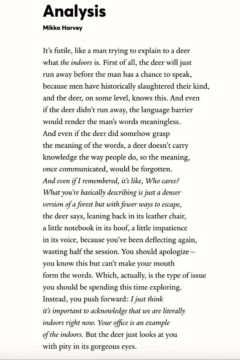
There are always deer in my backyard and I try to draw them. In recent days when making those drawings, I have often thought of a poem I read recently by Mikko Harvey.

I love the turn midway through the poem, the deer is no longer the dumb animal but the suave and sophisticated analyst. There are other layers. The man or the “you” can’t make his mouth form the words—and that is the type of issue he should spend his time exploring. A profound, mischievous clue that the poet has dropped in the middle of the beautiful mystery that is this poem.

More here.

Enjoying the content on 3QD? Help keep us going by donating now.

I challenged ChatGPT to a writing competition. Could it actually replace me?

Rhik Samadder in The Guardian:

Every writer I know is in despair at the prospect being replaced by AI. Many of them say they never use it on principle; I know all of them do.

So this week, as part of my AI diary, I’m conducting the forbidden experiment in plain sight. I’m going toe to toe with ChatGPT as a creative writer. Can it truly match me, and might it replace me? Let’s settle this.

We do battle using writing prompts, selected at random from an excellent new guide called A Year of Creative Thinking by Jessica Swale. The first page I flip to has us inventing new words for existing things. It’s very fun. A cheese grater, I decide, could easily be known as a “stinkchizzle”. A very long road would be better as a “slodgepuff”. A fart becomes a “piffsnut”, and a dream an “asterfantastic”. I’m pleased with that one. But how does the machine do?

For cheesegrater it has scritchygrater, which is obviously crap. Very long road? Neverendipath. Bit literal. Trumpelsnort is pretty good, as is slumberwhim. I like nibblink for mouse. For some reason, I could only come up with “pimpsquint”.

I think I’ve got the edge – with a caveat. We’re both doing pastiche. What about more complex writing?

More here.

Enjoying the content on 3QD? Help keep us going by donating now.

Antisemitism’s Afterlives

Benjamin Balthaser at the Boston Review:

The German state has staked redemption for the Shoah on unquestionable support for Israel even as the far-right party Alternative for Deutschland, with an alarming record of antisemitism and Holocaust denial, increases its share of power in the Bundestag. Jews being arrested for insufficient loyalty to a Jewish state stands as a strange emblem of an absurdist present and a menacing echo of a fast-encroaching past.

It is this sense of inversion that historian Mark Mazower’s new book, On Antisemitism: A Word in History, seeks to chronicle and explain. Opening with Victor Klemperer’s account of the way language became “an instrument of power” under the Third Reich, Mazower suggests we are witnessing a similar kind of transformation today: a nationalist and imperialist right in Israel, Europe, and the United States—abetted by timid or overtly complicit liberals—changing the meaning of words not to capture a new reality but to transform it in the service of holding onto and furthering their power. The term “antisemitism,” coined by a far right eager to couch its own Judeophobia in the modern language of scientific racism and later used as a term of condemnation to name that deadly form of bigotry, is now widely associated with hostility to the state of Israel, especially from Arab and Islamic quarters. How did a word originally intended to justify the exercise of state power over a long-persecuted Jewish minority come to serve as a tool for justifying the power of the Jewish state to persecute vulnerable and stateless Palestinians? That is the story Mazower wants to tell: the way the word tracks the history of state power as much as the history of Jews themselves.

More here.

Enjoying the content on 3QD? Help keep us going by donating now.

Can Tattoos Cause Cancer?

Andrea Lius in The Scientist:

Metallica’s lead vocalist James Hetfield often lauds Motörhead’s Lemmy Kilmister as one of his biggest inspirations. In 2024, nine years after Kilmister passed away, Hetfield tattooed the ace of spades (the title of one of Motörhead’s most popular tracks) on his right middle finger. But what made Hetfield’s tribute so heartfelt—and eccentric—is the fact that he didn’t just use any tattoo ink but one mixed with a pinch of Kilmister’s ashes.

As morbid as they may sound, cremation tattoos are more common than one might expect. Tattoo parlors, crematoriums, and companies specializing in the production of cremation tattoo inks claim that the practice is safe, or at least that it’s no riskier than conventional tattooing. However, no regulatory body actually governs what can go into tattoo ink and under people’s skin. From human ashes to industrial paint used on cars, just about anything goes.

More here.

Enjoying the content on 3QD? Help keep us going by donating now.

What Are Psychedelic Entities?

Joanna Steinhardt at Noema Magazine:

In 1960, the beat poet Allen Ginsberg wrote about his ayahuasca experience in Peru: “Began to sense a strange Presence in the hut—a Blind Being—or a being I am blind to habitually—like a science-fiction Radiotelepathy Beast from another Universe.” Decades later, subjects in clinical psilocybin studies describe “spirit guides” who help them navigate their trips. Last May, a Muslim religious leader told The New Yorker that she had “felt God right behind her” while under the influence of psilocybin for a study on the effects of the drug in clergy.

There are qualities to these encounters that are consistent across a range of contexts and substances, although interpreted in vastly different ways. Oftentimes, beings deliver messages or try to communicate with the user; they’re perceived as autonomous, sentient and helpful or loving; the encounters are viewed retrospectively as deeply meaningful; and they feel hyperreal, revealing a reality that is truer than our everyday experience. My experience reflected all these qualities. Over time, I began to seriously wonder: What are these entities?

more here.

Enjoying the content on 3QD? Help keep us going by donating now.

The Real Joseph Beuys?

Emily Watlington at Art in America:

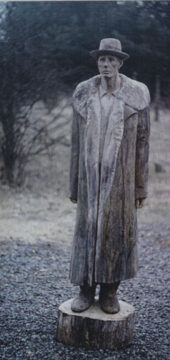
ALL THE DOUBLING MAKES Beuys a tricky figure. And it’s not clear how intentional it all was: Was his healer persona a clever conceptual act, or proof of his repression and self‑delusion? Probably both; and Spaulding does not—and presumably cannot—parse this out. Instead, he focuses on what the doubling does. Taken in good faith, Beuys’s evasive equivocating risked obstructing rather than enabling an honest reckoning with the past, Germany’s or his own. But it did something else too. Spaulding’s book centers around Beuys’s “economimeses,” a term borrowed from Derrida to describe how his work mimicked capital in order to critique it. Capital, after all, is an abstraction that mediates all social relations; Beuys wagered that art could also do this, and do it better. He made work attempting to prove this point.

Where his contemporaries, like Andy Warhol, turned to commodities and readymades as capitalism’s metonyms, Beuys focused on capitalism as a system and on money as a mediator, signing bank notes and writing “Kunst = Kapital” (“Art = Capital”) on them.

more here.

Enjoying the content on 3QD? Help keep us going by donating now.

Thursday Poem

Sonnet

All we need is fourteen lines, well, thirteen now,
and after this one just a dozen
to launch a little ship on love’s storm-tossed seas,
then only ten more left like rows of beans.
How easily it goes unless you get Elizabethan
and insist the iambic bongos must be played
and rhymes positioned at the ends of lines,
one for every station of the cross.
But hang on here while we make the turn
into the final six where all will be resolved,
where longing and heartache will find an end,
where Laura will tell Petrarch to put down his pen,
take off those crazy medieval tights,
blow out the lights, and come at last to bed.

by Billy Collins
from Sailing alone Around the Room
Random House, 2001

Wednesday, March 18, 2026

American Diner Gothic

Robert Mariani at The New Atlantis:

You’re not hallucinating the great weirding of America. The visual evidence is everywhere. Start with what you can see.

You’re in a small town in Wisconsin, the heart of Normal America. The transgender assistant manager at CVS has a septum piercing, a wolf cut, and a nametag that reads “Finn.” A block away, the 4channer construction worker in the Sam Hyde shooter shirt listens to Bladee and plots his impending virality. At Target, the anime section has metastasized from one shelf to an entire aisle.

These aren’t random weirdos and they aren’t teenagers in a phase. Walk through any office park and you’ll find the same aesthetic bleeding through the cubicles: anime stickers on laptops, Discord running on second monitors. They’re a new American type, young but trans-generational, as distinctive as the organization man or the valley girl once were. I call them dinergoths: what you get when economic mobility dies, suburbs become psychic deserts, and Discord becomes more real than your cul-de-sac.

The term came to me when I was trying to identify what had, over the past decade, silently washed over the 95 percent of America that lived outside of the superstar cities.

More here.

Enjoying the content on 3QD? Help keep us going by donating now.

AIs say false things for the same reason you do

Scott Alexander at Astral Codex Ten:

I hate the term “hallucinations” for when AIs say false things. It’s perfectly calculated to mislead the reader – to make them think AIs are crazy, or maybe just have incomprehensible failure modes.

AIs say false things for the same reason you do.

At least, I did. In school, I would take multiple choice tests. When I didn’t know the answer to a question, I would guess. Schoolchild urban legend said that “C” was the best bet, so I would fill in bubble C. It was fine. Probably got a couple extra points that way, maybe raised my GPA by 0.1 over the counterfactual.

Some kids never guessed. They thought it was dishonest. I had trouble understanding them, but when I think back on it, I had limits too. I would guess on multiple choice questions, but never the short answer section. “Who invented the cotton gin?” For any “who invented” question in US History, there’s a 10% chance it’s Thomas Edison. Still, I never put down his name.

More here.

Enjoying the content on 3QD? Help keep us going by donating now.

Sean Carroll’s Mindscape Podcast: Andrew Guthrie Ferguson on How Your Data Will Be Used Against You

Sean Carroll at Preposterous Universe:

In the 18th century, philosopher Jeremy Bentham suggested the Panopticon as a model of a prison where inmates could be constantly observed by just a single prison guard. Although his original idea was never built, the word has come to indicate any system of social control through constant surveillance. Nowadays, we are close to creating such a system, not for prisons, but for our everyday lives. The data about our whereabouts and doings is collected by our smart devices, and available for search by the authorities. I talk with law professor Andrew Guthrie Ferguson about the new reality, as discussed in his book Your Data Will Be Used Against You: Policing in the Age of Self-Surveillance.

More here.

Enjoying the content on 3QD? Help keep us going by donating now.

Medical Research Is Hopelessly Caught in Red Tape

Ruxandra Teslo at Persuasion:

A story about Paul Conyngham, an AI entrepreneur from Sydney who treated his dog Rosie’s cancer with a personalized mRNA vaccine, has been circulating on X this week. What makes the story inspiring is the initiative the owner showed: he used AI to teach himself about how a personalized vaccine could work, designed much of the process himself, and approached top researchers to take it forward.
Whether the treatment itself was curative and how much of an improvement it represents over the current state of the art is not the point here. What interests me instead is the bureaucratic absurdity Conyngham encountered while trying to pursue the treatment. In The Australian he described the long and frustrating process required simply to test the drug in his dog: “The red tape was actually harder than the vaccine creation, and I was trying to get an Australian ethics approval and run a dog trial on Rosie. It took me three months, putting two hours aside every single night, just typing the 100 page document.” Even in a small and urgent case, where the owner was fully willing to fund the treatment himself, the effort was slowed by layers of procedure.

Of course, this kind of red tape is not confined to Australia, nor to veterinary medicine. In fact, in the United States, the red tape is even worse, at least for human trials.

More here.

Enjoying the content on 3QD? Help keep us going by donating now.

Wednesday Poem

Black Forest

Sometimes my mind goes back to certain things.
Like everyone’s.
Like to the woman who asked me
What keeps you awake at night?
She wanted a writerly, magical answer.
A black forest, a shining maid walking through it.
The woman—she was a guest, a visiting artist.
I was a guest to her visitingness: polite guest
at an affable table.
My neck, I said, meaning pain
of the basest physical kind. Meaning also
sadness, and worry—
though I didn’t say so.
I’d done enough, I’d said the neck thing
as if I were snapping a chicken for supper.
The woman smiled through it, a pro.
Oh, I’m sorry, she said, pushing the shining maid
into a closet and shutting the door in a hushed
and magical way.I wanted to bind her with rope.
I wanted to watch her struggle, if just for a minute.
The mind goes back, the heart goes with it, the forest
whirls all around. Instead
I was kind to her husband, whose life
had had something to do with flight.
He was quiet, the husband. Like someone
whose part in the world was done.
He seemed to expect
no one.
He was the husband.
He was like light on the leaves of night.

by Laura Newbern
from
Poets Daily

Enjoying the content on 3QD? Help keep us going by donating now.

António Lobo Antunes’s Exhilarating Novels

Yagnishsing Dawoor at The Guardian:

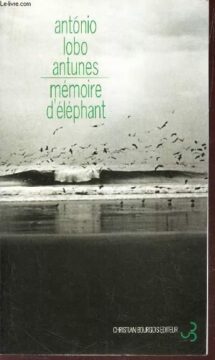
António Lobo Antunes, the Portuguese novelist who died this week in Lisbon at 83, had little patience for discussing his craft. The mechanics of writing were, he liked to say, “such a bore!”. Yet few writers of his generation showed greater stylistic daring – when José Saramago was awarded the 1998 Nobel prize in Literature, many in Portugal felt the honour had gone to the wrong writer.

Over the course of more than 30 novels, Lobo Antunes honed an exacting modernist style all his own, using it to explore Portugal’s relationship with its fascist past, and to confront the tragic futility of its final colonial campaigns in Africa. Often dismissed as a difficult writer, Lobo Antunes crafted prose that was stubbornly flirtatious, at once inviting and resisting the reader. His sentences, lush with intricate metaphors and similes, bristly with ideas and provocations, brazenly flout the rules of grammar, syntax and punctuation, determined to preserve their idiosyncrasy. Texturally, his stories are a feat, combining discordant elements to exhilarating effects: nihilism paired with political gusto; farce shot through with horror; realism grading into the weird and the surreal.

more here.

Enjoying the content on 3QD? Help keep us going by donating now.

America’s Former Presidents Should Protect the Oath of Office

Scott Curran in Time Magazine:

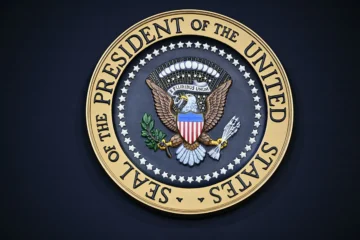
The road up to and through the White House is a partisan one. But when a President retires from the Oval Office, their path becomes much less so. That’s why the institution of the post-presidency has traditionally functioned as a genteel club in which constraints of professional courtesy restrain former presidents from commenting on the work of the current officeholder. And rightfully so: the underlying assumption has always been that while the sitting president may be doing things differently, he is nonetheless doing his best to serve the American people.

In our current political climate, it’s worth reconsidering that unspoken rule. What happens if the presidential oath of office appears to have been forgotten? If the President ignores the core tenets and basic functions of the job? Or worse, if he is the one flouting the rule of law, undermining democracy, seeming hell-bent on pivoting America’s standing as the world’s leader to the world’s boss and, as of last week, starting a war without congressional approval?
More here.

Enjoying the content on 3QD? Help keep us going by donating now.