
Ruxandra Teslo at Persuasion:
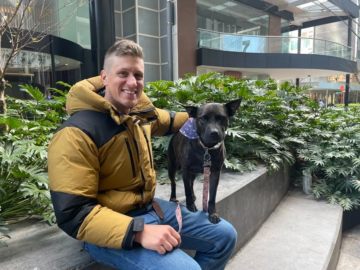 A story about Paul Conyngham, an AI entrepreneur from Sydney who treated his dog Rosie’s cancer with a personalized mRNA vaccine, has been circulating on X this week. What makes the story inspiring is the initiative the owner showed: he used AI to teach himself about how a personalized vaccine could work, designed much of the process himself, and approached top researchers to take it forward.
Whether the treatment itself was curative and how much of an improvement it represents over the current state of the art is not the point here. What interests me instead is the bureaucratic absurdity Conyngham encountered while trying to pursue the treatment. In The Australian he described the long and frustrating process required simply to test the drug in his dog: “The red tape was actually harder than the vaccine creation, and I was trying to get an Australian ethics approval and run a dog trial on Rosie. It took me three months, putting two hours aside every single night, just typing the 100 page document.” Even in a small and urgent case, where the owner was fully willing to fund the treatment himself, the effort was slowed by layers of procedure.
Of course, this kind of red tape is not confined to Australia, nor to veterinary medicine. In fact, in the United States, the red tape is even worse, at least for human trials.
More here.
Enjoying the content on 3QD? Help keep us going by donating now.