
Rita Ahmadi at Aeon:
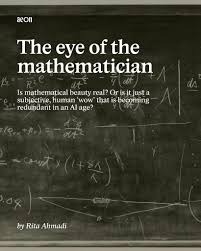 Interest in an AI-driven approach to mathematics has been exponential, and many mathematicians have left traditional academic research to explore its potential. Recently, one group of distinguished mathematicians designed 10 active, research-level questions for AI to tackle. At the time of writing, various AI companies and researchers had claimed to find solutions, which were under evaluation by the community.
Sitting in the room in Bloomsbury, I stared at the Hardy plaque and wondered: would Hardy find proofs generated by AI beautiful? I wasn’t sure. He believed there should be a strong aesthetic judgment in mathematics, drawing parallels with poetry, and argued that beauty is the first test of good mathematics. He went as far as to say that there is no permanent place in the world for ugly mathematics.
If asked, many mathematicians today still talk about the aesthetic appeal of one approach over another.
Yet we live in a different century to Hardy and his Bloomsbury peers, with different technologies and techniques, so perhaps we need a clearer definition of what mathematical beauty actually is.
More here.
Enjoying the content on 3QD? Help keep us going by donating now.
 The photo above is from the Battle of Khalkhin Gol in 1939. This “battle” lasted four months, and was actually just the main phase of an undeclared war between Imperial Japan and the Soviet Union that
 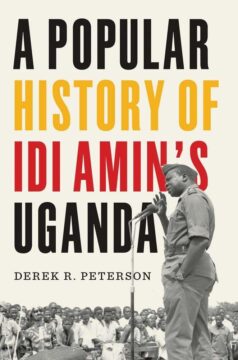 It isn’t a coincidence that two of the most celebrated scholars of Africa in the United States both published books about Idi Amin in the past year. Only Peterson makes the comparison to Trump explicit, but Mahmood Mamdani’s portrait of the general in Slow Poison: Idi Amin, Yoweri Museveni, and the Making of the Ugandan State is hard not to read through the lens of the United States, where Mamdani has lived since the 1990s. Peterson’s book is a social history of the regime, focusing on the people who made it work; Mamdani’s is a personal account of Uganda’s last half century, covering both Amin and the autocrats who followed him. Both depict Amin not as the buffoon that many remember but as a savvy political operator who knew what people wanted and what they feared. Neither Mamdani nor Peterson denies that Amin was violent and cruel, and neither is out to rehabilitate him. While his legacy means different things to them, they both take him more seriously than most who have written about him.
 There are understandable reasons why liberal and leftist intellectuals are cautious about discussing the good life. A core tenet of modern liberal theory holds that the job of a just political system is not to tell anyone how to live but rather to give them the freedom and, in its more left-leaning versions, the economic wherewithal, to live as they please. Although there are
 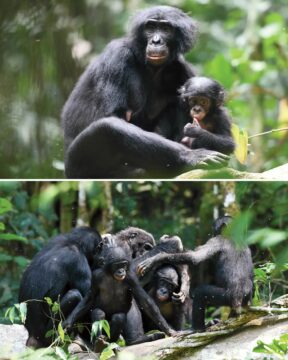 Scientists have long been interested in bonobos, a highly intelligent, socially sophisticated species that, along with chimpanzees, are our closest living relatives. Found only in the jungles of the DRC, they are the smallest living great apes, standing between three and four feet tall when upright and weighing upwards of 86 pounds. They form social groups ranging from eight to 25 adults and engage in complex forms of communication, including the use of symbols, gestures, and vocalizations.
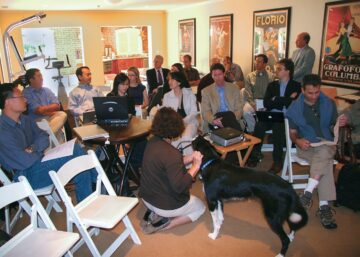 Robin Richards Donohoe, a venture capitalist in Silicon Valley, remembers 2005 as the year her charming, outgoing mother, Alice, “just went mute.”
 Generations of soccer supporters thought that the defeat of totalitarianism would mean that people could play and celebrate when, where, and how they wanted. They thought we could finally achieve the exalted vision of early enthusiasts like Jules Rimet, FIFA’s longest-serving president (1921–54), his successor Sir Stanley Rous (1961–74), and those hopeful Uruguayans of 1930, who hosted the first tournament and had to overcome complex logistics of travel and politics to mount the event. They thought that the fall of the Soviet empire would bring the sunshine of rule-of-law democracy to the world, and that the injection of compassionate capital would give people the means to build a more justly competitive global order. Instead, we got parasites thirsting for money, power, and influence, venal creeps like
  Two and a half millennia ago,
  Researchers determined that the bacterium interferes with signalling along sensory nerves that connect to the brain.
 The Florida peninsula looks like a sore thumb. It juts into the Gulf of Mexico and the Atlantic, where the water is getting warmer year on year, prompting fiercer hurricanes that can blow down houses like collapsing decks of cards. Climate scientists are convinced all hell will break loose sooner or later when a monster-sized, property-destroying storm makes a direct hit on Miami or Tampa-
 In Nick Shirley’s
  A
A A
A A
A