
Jonathan Scaccia in Undark Magazine:
 Federal agencies have been branding some of their research and policy work as “gold standard science,” a trend that gained new force after an executive order on the term was issued in May 2025. The phrase now appears in speeches and guidance documents from agencies such as the National Science Foundation and the National Institutes of Health. It shows up in social media posts intended to signal credibility, rigor, and authority. The message is clear: This is science you can trust.
The intention may be to reassure the public, but the framing is misleading. The executive order outlines principles that are broadly consistent with good scientific practice, such as transparency, reproducibility, and peer review. These are not controversial. The problem arises in how those principles are translated into a simplified label that suggests a single hierarchy of evidence.
More here.
Enjoying the content on 3QD? Help keep us going by donating now.
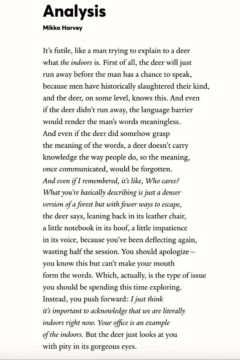
 Every writer I know is in despair at the prospect being replaced by AI. Many of them say they never use it on principle; I know all of them do.
 The German state has staked redemption for the Shoah on unquestionable support for Israel even as the far-right party Alternative for Deutschland, with an alarming record of antisemitism and Holocaust denial, increases its share of power in the Bundestag. Jews being arrested for insufficient loyalty to a Jewish state stands as a strange emblem of an absurdist present and a menacing echo of a fast-encroaching past.
 M
M In 1960, the beat poet Allen Ginsberg
  ALL THE DOUBLING MAKES Beuys a tricky figure. And it’s not clear how intentional it all was: Was his healer persona a clever conceptual act, or proof of his repression and self‑delusion? Probably both; and Spaulding does not—and presumably cannot—parse this out. Instead, he focuses on what the doubling does. Taken in good faith, Beuys’s evasive equivocating risked obstructing rather than enabling an honest reckoning with the past, Germany’s or his own. But it did something else too. Spaulding’s book centers around Beuys’s “economimeses,” a term borrowed from Derrida to describe how his work mimicked capital in order to critique it. Capital, after all, is an abstraction that mediates all social relations; Beuys wagered that art could also do this, and do it better. He made work attempting to prove this point.
 You’re not hallucinating the great weirding of America. The visual evidence is everywhere. Start with what you can see.
 A story about Paul Conyngham, an AI entrepreneur from Sydney who treated his dog Rosie’s cancer with a personalized mRNA vaccine,
  A
A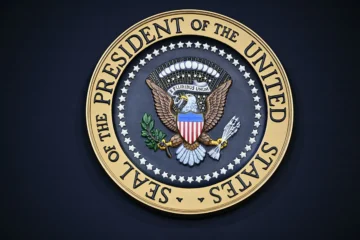 The road up to and through the White House is a partisan one. But when a President retires from the Oval Office, their path becomes much less so. That’s why the institution of the post-presidency has traditionally functioned as a genteel club in which constraints of professional courtesy restrain former presidents from commenting on the work of the current officeholder. And rightfully so: the underlying assumption has always been that while the sitting president may be doing things differently, he is nonetheless doing his best to serve the American people.