
Chang Che in The Guardian:
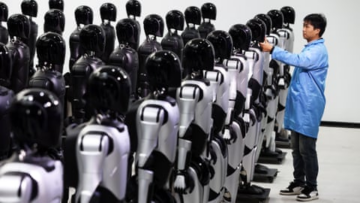 As in much of the world, AI has become part of everyday life in China. But what most excites Chinese politicians and industrialists are the strides being made in the field of robotics, which, when combined with advances in AI, could revolutionise the world of work. The technology behind China’s current robotics boom is deep learning, the mathematical engine behind large language models such as ChatGPT, which learn by discerning patterns from huge datasets. Many researchers believe that machines can learn to navigate the physical world the way ChatGPT learned to navigate language: not by following rules, but by absorbing enough data for something like human dexterity to emerge. The aim, for many technologists, is the development of humanoid robots capable of performing factory labour – work that employs hundreds of millions of people worldwide.
The resources being pumped into achieving this goal are staggering. In 2025, China announced a £100bn fund for strategic technologies including quantum computing, clean energy and robotics. Major cities have invested their own resources into robotics projects, too. There are now roughly 140 Chinese firms hoping to build humanoids.
More here.
Enjoying the content on 3QD? Help keep us going by donating now.
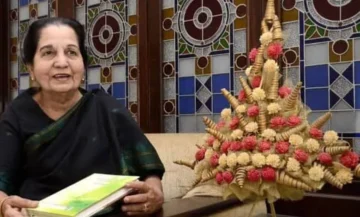 The world of literature has lost one of its most luminous stars. Jeelani Bano, a titan of Urdu literature and a fierce advocate for the marginalized, passed away on Sunday (March 1), leaving behind a legacy that stretched far beyond the borders of her beloved Hyderabad. According to her family sources, she was a social architect who used her pen to bridge the gap between tradition and modernity. From her first short story in 1954 to her crowning achievements as a Padma Shri recipient and Doctor of Literature, Bano’s career spanned seven decades of relentless creative output. Jeelani Bano’s impact was global. Her stories—deeply rooted in the soil of the Deccan—found home in the hearts of readers from Moscow to Madison.
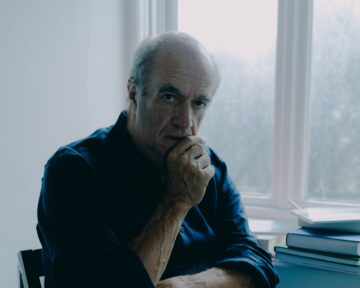 In the early years of this century, I worked for a semester at various American universities in cities where I will not live again. Thus, in a story called Barton Springs, I could conjure up Austin in Texas, and in Five Bridges, the city of San Francisco. In Sleep, I could venture into an apartment I sublet near Columbia University in 2012 and 2013. I could put my hero in my bed. I could have him watch from the same window as I watched from, with a view of the George Washington Bridge. When I take him back to Dublin, I have him spend time in the long living room in Ranelagh that belonged to the feminist writer June Levine and her husband the psychiatrist Ivor Browne. The bar in Barcelona in A Free Man is a place I once knew well. The story The News from Dublin opens in the back room of the house where I was raised, a house that has long been sold. I won’t go back there.
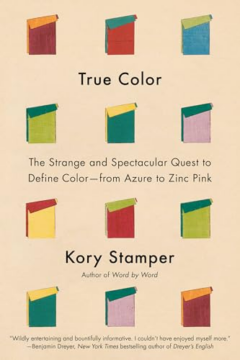 When I was hired by Merriam-Webster in 1998, it was ostensibly to revise the Big Book, Webster’s Third New International Dictionary, Unabridged. The Third, or W3 as it’s called in the office, was released in 1961 and it made a splash. A dictionary written for the nuclear age, it’s 2,662 pages of six-point type, 10 pounds of knowledge stuffed between two buckram-covered boards, the result of tens of thousands of editorial hours by more than a hundred in-house editors and two hundred outside experts. It’s a nonpareil of twentieth-century American lexicography, notable for its almost scientific, systematic approach to what belongs in a dictionary and how the words inside it should be defined. Every modern American dictionary that you’ve consulted owes something to the Third—even if that something is that the dictionary you’re consulting is not the Third.
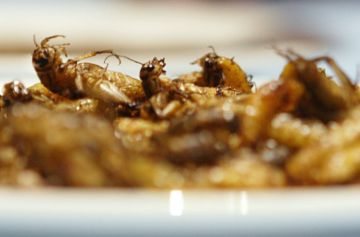 You personally might recoil at the thought of eating fried crickets or roasted mealworms, but
 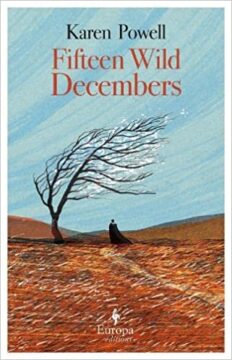 One of the novel’s quietly devastating moments comes when Branwell, in the middle of one of his cycles of resolve, tells Emily he is done with laudanum and alcohol. He is pale and hollow-eyed but composed, eating bread and butter at the kitchen table. Emily looks at him and thinks about the difference between his suffering and the suffering she has witnessed in others—illness that actually corrupts the body, pain that has no switch. His suffering is real, she does not doubt that. But he could, in theory, simply decide to stop. She knows this and also knows, from her own experience of a darkness that once swallowed her at school, that it is not so simple. She thinks of the bottomless black hole she’d poured herself into at Roe Head, and the argument she’s been building against him quietly dissolves. She goes downstairs to fetch her bonnet. She comes back. She keeps showing up.
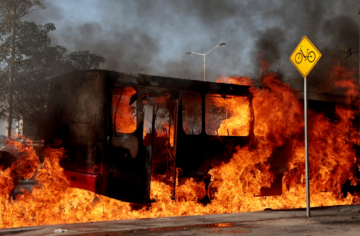 Two decades have passed, with operations, clashes, and the arrest of drug lords. And yet the same questions remain. What is the true nature of this conflict? How can we understand a phenomenon that seems to repeat itself over and over? How might it change as the US attempts to assume a new role in the world?
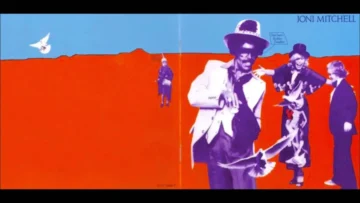 When Don Juan came out, the lyrics were printed on the album sleeve. Included in the lyrics for “Paprika Plains” was a 72-line passage of stream-of-consciousness imagery which was meant to be read while listening to ‘The Medallion’ section of “Paprika Plains”. Drawn from a dream Mitchell had, this lyrical tableau further explored Mitchell’s childhood but, this time, these memories of indigenous Canadian prairie folk were presented as a post-apocalyptic vision.
 Sara Suleri Goodyear died peacefully at home on Sunday, March 20, 2022 of pulmonary failure. She was 68 years old. She was my friend. Sara disliked being called exotic; except that she was. Hugely so. Dazzling, elegant, glamorous, charmingly imperious, impossibly intelligent. And most of all, fabulously, hilariously, screamingly funny.