A.I. Is Writing Fiction and Publishers Are Unprepared

Alexandra Alter in the New York Times:
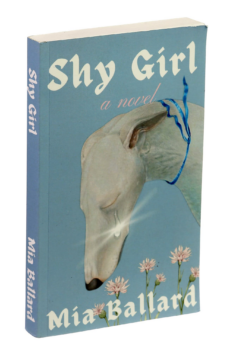
Many publishers don’t explicitly prohibit authors from using A.I. in their book contracts. Instead, they rely on longstanding contractual clauses that require writers to affirm that their work is “original,” which many people in the book business now interpret as effectively banning the use of A.I. for text or image creation.

Publishers are also wary of A.I. content because currently, A.I.-generated text and art can’t be protected by copyright. Still, given the widespread uses for A.I. during research, outlining and other parts of the writing process, there’s little clarity on what constitutes its appropriate use. Many in the industry worry that publishers are leaving themselves vulnerable to scammers — or even writers who believe their A.I. use doesn’t cross any lines.

One problem in regulating authors’ A.I. use is that most corporate publishing houses don’t want to ban it outright.

More here.

Enjoying the content on 3QD? Help keep us going by donating now.

Bill Gates: The next generation of electricity is almost here

Bill Gates at Gates Notes:

If you’re an electricity nerd like me, this is an exciting moment. Earlier this month, TerraPower—the next-generation nuclear power company I created in 2008—received federal approval to start building the nuclear reactor at its Kemmerer, Wyoming plant. Wind and solar are reportedly generating more electricity than fossil fuels in the EU for the first time. We’re seeing a clear shift as the world’s electricity system is becoming more diverse, more innovative, and more dynamic than ever before.

Here are three of the coolest technologies people will be talking about this week:

Geothermal. Geothermal power has been around for more than a century, but new approaches are unlocking greater potential for the technology. Most geothermal power plants today are located near the boundary between two tectonic plates, where you don’t have to drill as deep to find usable heat that can be pumped to the surface to turn a turbine and generate electricity.

More here.

Enjoying the content on 3QD? Help keep us going by donating now.

The Anywhere–Somewhere Value Divide

Yascha Mounk interviews David Goodhart:

David Goodhart: The anywhere–somewhere value divide clearly contributed enormously to both the Brexit vote in 2016 in the UK and Trump’s first election in that same year, and indeed his reelection. The anywhere worldview, as you implied, is that of the highly educated, people comfortable with mobility, partly because they have often experienced it by attending residential universities. They are part of a world where change is something they can take in stride. Openness and autonomy come naturally because of their experiences as mobile graduates. It leans toward a natural kind of liberalism. Of course, they then go on into jobs that pay them well and confer high status.

It is a basic psychological point, isn’t it? The more secure you are, the more open and liberal-minded you are likely to be, and vice versa. The somewhere grouping is larger but less influential. These are people who tended to be less well educated, more rooted, and whose identities were often much more connected to place and group, making them more susceptible to being discomforted by social change, in contrast to the anywheres who are more adapted to it. That had been brewing beneath the surface for 20 or 30 years, probably since the late 1980s or early 1990s, and the inchoate somewhere pushback erupted in 2016.

More here.

Enjoying the content on 3QD? Help keep us going by donating now.

‘No Kings’ Protests May Draw Biggest—and Most Diverse—Anti-Trump Crowds Ever

Philip Elliott in Time Magazine:

The next widespread protest against President Donald Trump is set to draw big numbers. As missiles continue flying across the Middle East, gas prices keep rising, and airport security lines continue stretching ever longer, there is no reason to think Saturday’s third nationwide No Kings protest will be anything smaller than the one in October that drew millions. In fact, all signs point to March 28 potentially being the single largest day of domestic political protest in history.

After all, Trump has the highest disapproval rating of any President at this point in his presidency in this century.

But for those looking for meaning in the venting, the makeup of those coming out to protest should draw just as much attention as their size. As they’ve grown bigger, these millions-strong protests are shifting from partisan echo chambers venting rage into something somewhat closer to the broader electorate. If the trend continues this Saturday, Republicans should be terrified.

More here.

Enjoying the content on 3QD? Help keep us going by donating now.

Plastic-Eating Microbes Work Better in Teams

Laura Tran in The Scientist:

Plastic pollution has spread across the land and into the deepest parts of the ocean. Many plastics contain additives such as phthalic acid esters (PAEs), which act as plasticizers to make materials more flexible. But as plastic waste accumulates, these chemicals can leach into the environment, where they have been linked to endocrine disruption.

Although researchers have identified microbes capable of breaking down plastics, using them to clean polluted environments has proved challenging. Microbial digestion is often slow, it sometimes requires extreme temperatures, and many strains can degrade only a single type of plastic. In principle, a combination of different species with an appetite for plastic could tackle bioremediation more effectively than any one microbe alone.

Motivated by this idea, researchers from the Helmholtz Centre for Environmental Research (UFZ) studied how a bacterial consortium might collectively degrade plastics. Their findings, published in Frontiers in Microbiology, showed that three bacterial species work together by ‘cross-feeding,’ where one microbe releases metabolic byproducts that another takes up as nutrients, to break down PAEs.1 Alone, these microbes could not degrade plastic. “Introducing these bacteria into polluted natural environments, a process known as bioaugmentation, could potentially help reduce PAE contamination in real-world settings,” said coauthor and microbiologist Hermann Heipieper at UFZ, in a press release.

More here.

Enjoying the content on 3QD? Help keep us going by donating now.

Wednesday Poem

Theme for English B

The Instructor  said
Go home and write
      a page tonight.
      And let that page come out of you—
      Then, it will be true.
……..
I wonder if it’s that simple?
I am twenty-two, colored, born in Winston-Salem.
I went to school there, then Durham, then here
to this college on the hill above Harlem.
I am the only colored student in my class.
The steps from the hill lead down into Harlem,
through a park, then I cross St. Nicholas,
Eighth Avenue, Seventh, and I come to the Y,
the Harlem Branch Y, where I take the elevator
up to my room, sit down, and write this page:
……..
It’s not easy to know what is true for you or me
at twenty-two, my age. But I guess I’m what
I feel and see and hear, Harlem, I hear you:
hear you, hear me—we two—you, me, talk on this page.
(I hear New York, too.) Me—who?
Well, I like to eat, sleep, drink, and be in love.
I like to work, read, learn, and understand life.
I like a pipe for a Christmas present,
or records—Bessie, bop, or Bach.
I guess being colored doesn’t make me not like
the same things other folks like who are other races.
So will my page be colored that I write?
……..
Being me, it will not be white.
But it will be
a part of you, instructor.
You are white—
yet a part of me, as I am a part of you.
That’s American.
Sometimes perhaps you don’t want to be a part of me.
Nor do I often want to be a part of you.
But we are, that’s true!
As I learn from you,
I guess you learn from me—
although you’re older—and white—
and somewhat more free.
……..
This is my page for English B.
……..
by Langston Hughes
from the Poetry Foundation
……..

Enjoying the content on 3QD? Help keep us going by donating now.

Tuesday, March 24, 2026

The Mysterious Case of Gothic Verse Narratives

Brian Brodeur at The Hudson Review:

Much of literary culture regards the Gothic genre as an archaic embarrassment—gloomy ruins and paranormal lovers that serious practitioners have learned to dismiss. Yet such dismissals neglect a basic fact of literary history. Intimations of demonic realms and spectral forces emerged in tandem with the English novel, several early examples of which featured devil pacts, reanimation, ghost ships, and homunculi. Furthermore, neither British Romanticism nor French Symbolism would have been as consequential or interesting without Gothic writings by Johann Wolfgang von Goethe and Samuel Taylor Coleridge, Edgar Allan Poe and Charles Baudelaire. Indeed, one could argue that a nascent version of European Modernism emerged in the mid-1800s when Baudelaire began publishing his translations of Poe’s fiction, an enterprise foundational to the composition of Les Fleurs du mal (first published in 1857, definitive edition posthumously in 1868).

 
Gothic was always a risk. In the US, a country founded on Enlightenment principles of rationalism and scientific progress, it provided a nightmarish counterpoint to the American dream. An “art of exciting surprise and horror,” as Walter Scott construed the genre, Gothic was refined in the young republic when Poe fired three shots across the bow of Victorian respectability by publishing “Berenice” (1835), “Ligeia” (1838) and “The Fall of the House of Usher” (1839).

more here.

Enjoying the content on 3QD? Help keep us going by donating now.

Bitch: a history

Karen Stollznow at Aeon:

“Bitch” is a word with bite. Once a straightforward insult, it is now used in so many different ways that it’s no longer clear what it means. Bitch is a linguistic chameleon: there are good bitches and bad bitches; boss bitches and perfect bitches; sexy, difficult, dangerous or even psycho bitches. After so many variations and attempts to reject or reclaim the word, some now wear the label defiantly, while others still have it thrown at them. Its evolution is messy, complicated and revealing.
A single word can tell us a great deal. The journey of bitch, from a literal term for a female dog to one of the most charged words in the English language, shows how language shifts alongside changing ideas about gender, power and identity. In this case, it suggests that sometimes you really can teach an old dog new tricks.

More here.

Enjoying the content on 3QD? Help keep us going by donating now.

Gerd Faltings Wins Abel Prize for Number Theory Work

Kenneth Chang in the New York Times:

A German mathematician, Gerd Faltings, is this year’s winner of the Abel Prize, an honor that is regarded as mathematics’ version of the Nobel Prize. Dr. Faltings, 71, is best known for solving a problem that had puzzled mathematicians for decades. He showed that a class of equations possessed a finite number of solutions.
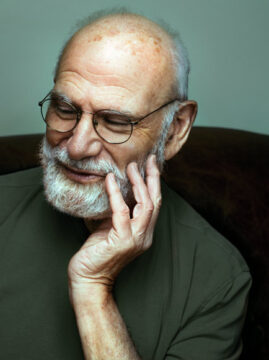
The Norwegian Academy of Science and Letters, which manages the Abel Prize, announced the honor on Thursday morning.

“He’s a towering figure in number theory,” said Helge Holden, chairman of the prize committee.

Number theory is a branch of mathematics that studies the properties and relationships of integers.

“His ideas and results have reshaped the field, settling major longstanding conjectures while also establishing new frameworks that have guided decades of subsequent work,” the prize citation said.

More here.

Enjoying the content on 3QD? Help keep us going by donating now.

What Oliver Sacks Jotted Down In His Books

Bill Hayes at The American Scholar:

In Immanuel Kant’s Prolegomena to Any Future Metaphysics (1783), Oliver sounded almost comically exasperated as he responded to a rambling critique Kant makes of David Hume (whom Oliver revered): “Immanuel,” he wrote, as if speaking directly to the philosopher across the centuries, “you are totally confused!”

He had conflicted feelings about Sigmund Freud, all of whose published works lined his shelves. Oliver recognized Freud as the genius and groundbreaker he was. And as a writer, Oliver was clearly inspired by Freud’s published case histories. But he did not always agree with Freud’s theories, often commenting “No!” in the margins of a book and stating why he felt Freud had gotten something utterly wrong.

Sometimes, Oliver was moved enough by what he read to suggest to Freud a concept of his own. In the margins of Jokes and Their Relation to the Unconscious, Oliver responded to the closing of chapter four, “The Mechanism of Pleasure and the Psychogenesis of Jokes,” by posing a provocative question (which he revised, striking through one word and replacing it with another): “Beside ‘conceptual’ jokes can one (not) have ‘natural’ jokes—jokes in Nature. … One can certainly have Humour, Wit, and Fun—which are certainly infinitely economical: indeed this is the heart of the world—its wit, its fun. … But this is not a Freudian ‘unconscious’ of depressed affect; but a primordial ‘preconscious’ of polymorphous potential—an Original Jest.”

more here.

Enjoying the content on 3QD? Help keep us going by donating now.

How to measure a good life – tips for moving beyond GDP

Richard Heys, Himanshi Bhardwaj & Cliodhna Taylor in Nature:

For decades, economists have known that using gross domestic product (GDP) alone to guide policy is problematic. The metric is mainly a measure of market production, albeit one with strong marketing and branding, and misses key elements of what makes a good life. Nevertheless, failure to agree on alternatives has held back the debate over what should replace it.

This year will be pivotal for changing how policymakers use data to guide decision-making. In May 2025, the United Nations secretary-general António Guterres commissioned a High-Level Expert Group to consider alternatives to GDP. The group’s final report is expected by the end of April and will stimulate great debate about how countries will use its proposed alternatives.

While the world awaits those recommendations, it is worth reflecting on three questions: why is GDP a poor metric, do the data exist to deliver improvements and how could better metrics provoke better policies?

Here, we offer insights from UK efforts to build on GDP to measure economic welfare using readily available national statistics and standard economic tools.

More here.

Enjoying the content on 3QD? Help keep us going by donating now.

Pakistan Negotiating An End to Iran War? Kind of Makes Sense

Kathy Gannon in Substack:

Pakistan as a possible mediator in America’s war against Iran is not a surprise. Pakistan and its powerful military leader, Gen. Asim Munir, has held meetings with both Iran and Saudi Arabia, spoke out against the war in Iran, while ensuring Saudi Arabia the security pact the two have signed is airtight and inviolable.
Powerfully Pakistan is also a nuclear power, the only one in the Islamic world. Since its inception in 1947, when carved by the departing British from a larger India, Pakistan has also had to navigate a complicated and complex neighborhood rife with border disputes, religious and economic rivalries, great wealth and great poverty. In the larger world Pakistan has maneuvered a windy and often treacherous middle road between its long-time ally China and its often fair weathered friend America.

No it is not a surprise that Pakistan could emerge to negotiate an off ramp to America and Israel’s war with Iran. As for the United States, history has shown that democratic America has never met a Pakistani General it didn’t like, whether it was military dictator Gen. Mohammad Zia-ul Haq during the 1980s Soviet Union’s invasion of neighboring Afghanistan, or Gen. Pervez Musharraf in 2001 following the 9/11 attacks on the United States. That’s not even counting President John F. Kennedy’s fond relationship with one of the country’s first military dictators. Gen. Ayub Khan.

More here.

Enjoying the content on 3QD? Help keep us going by donating now.

Tuesday Poem

Practicing Art

“The arts are not a way to make a living. They’re
a very human way of making life more bearable.
Practicing an art, no matter how well or not, is a
way to make your soul grow,
for heaven’s sake,

Sing in the shower. Dance to the radio. Tell stories.
Write a poem to a friend, even a lousy one.
Do it as well as you possibly can. You will get an
enormous reward. You will have
created something.”

Kurt Vonnegut
from Poetic Outlaws


Enjoying the content on 3QD? Help keep us going by donating now.

Reviving Brain Activity After ‘Cryosleep’ Inches Closer in Pioneering Study

Shelly Fan in Singularity Hub:

Floating in a warm, nutritious bath, the slices of mouse brain buzzed with electrical activity. Researchers gave them a few zaps, and parts of the hippocampus strengthened their wiring.

This type of experiment is an extremely common way to decipher how the brain works. The slices, not so much. Preserved in a deep freeze for roughly a week, they restarted some basic processes after being thawed. Neurons lit up, boosted their metabolism, and adjusted connections in the same way our brains do when forming new memories and recalling old ones. “While the brain is considered exceptionally sensitive, we show that the hippocampus can resume electrophysiological activity after being rendered completely immobile in a cryogenic glass,” wrote University of Erlangen‐Nuremberg scientists in a paper describing the work.

In traditional freezing techniques, ice crystals shred delicate neurons and the connections between them. There would be no chance of recovering memories stored within. The new study used a method called vitrification, which rapidly cools tissue before crystals can form. An improved thawing process protected cells from toxic chemicals in their cryogenic bath. Both pre-sliced and whole mouse brains recovered after warming, although some neural activity was slightly off-kilter. To be clear, brains can’t be completely revived like in the movies. But the approach pushes the known frontier of what brain tissue can tolerate, wrote the team.

More here.

Enjoying the content on 3QD? Help keep us going by donating now.

Monday, March 23, 2026

In Search of Banksy

Simon Gardner, James Pearson and Blake Morrison at Reuters:

In late 2022, an ambulance pulled up to a bombed-out apartment building in this village outside Kyiv. Three people emerged. One wore a gray hoodie, another a baseball cap. Both had masks covering their faces.

The third was more easily identifiable: He was unmasked, and had one arm and two prosthetic legs, witnesses told Reuters.

The masked men carried cardboard stencils from the ambulance and taped them to what had been an interior wall of an apartment before the Russians obliterated the place. Then they pulled out cans of spray paint and got to work. An absurd image appeared in minutes: a bearded man in a bathtub, scrubbing his back amid the wreckage.

Its creator was Banksy, one of the world’s most popular and enigmatic artists, whose identity has been debated and closely guarded for decades. Banksy is best known for simple yet sophisticated stencil paintings with searing social commentary. His work has generated tens of millions of dollars in sales over the years.

More here.

Enjoying the content on 3QD? Help keep us going by donating now.

The Math That Explains Why Bell Curves Are Everywhere

Joseph Howlett in Quanta:

Place a measuring cup in your backyard every time it rains and note the height of the water when it stops: Your data will conform to a bell curve. Record 100 people’s guesses at the number of jelly beans in a jar, and they’ll follow a bell curve. Measure enough women’s heights, men’s weights, SAT scores, marathon times — you’ll always get the same smooth, rounded hump that tapers at the edges.

Why does the bell curve pop up in so many datasets?

The answer boils down to the central limit theorem, a mathematical truth so powerful that it often strikes newcomers as impossible, like a magic trick of nature.

More here.

Enjoying the content on 3QD? Help keep us going by donating now.