
Tom Standage in 1843 Magazine:
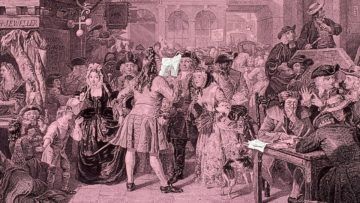 As Twitter and Facebook become more acrimonious and less trusted, an older means to get information has made a comeback: the email newsletter. Chances are that newsletters make up a larger part of your media diet than they did a couple of years ago. You may even be paying for some of them. In recent months several journalists have left jobs at established publications to earn a living by asking their most loyal readers to subscribe to a personal email newsletter instead. Entrepreneurs, cookery writers and academics have also embraced this model. Who needs a publisher if you can sell your writing straight to your readers? Most of these people are established experts in a particular field. They have chosen to bypass the involvement of advertisers and algorithms in favour of the pleasingly straightforward approach of delivering their thoughts directly to the inboxes of paying subscribers. Writers with large online followings can earn a respectable income even if only a small fraction of their fans sign up (typically for $5 a month, or $50 a year).
Substack, the newsletter-publishing platform that has championed this new model, takes 10% of the proceeds in return for handling distribution and billing. Launching a Substack newsletter today is like launching a blog 20 years ago, or a podcast five years ago, with one important difference: people are actually getting paid.
There are some enviable success stories. Heather Cox Richardson, a history professor at Boston College, is thought to make more than $1m a year from her politics newsletter, “Letters from an American”. The New York Times recently described her as “by accident the most successful independent journalist in America”. Substack paid Matthew Yglesias, co-founder of Vox, an American news website, an advance of $250,000 when he left his job to concentrate on his newsletter, “Slow Boring”. Other journalists who’ve gone solo include Andrew Sullivan, Glenn Greenwald and Haley Nahman. In January Twitter bought Revue, a Dutch startup and rival to Substack. Your inbox could soon be stuffed with new newsletters.
More here.
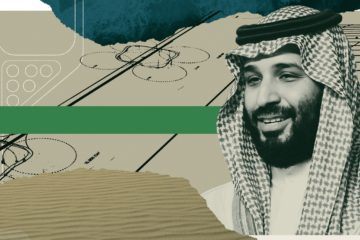 To the rest of the world, Saudi Arabia may look like a quasi-medieval kingdom where women still struggle for basic rights, where bearded clerics run the courts and where convicts are routinely beheaded by sword in public. But the Saudi monarchy — like its neighbors in Dubai and Abu Dhabi — has long cherished dreams of leapfrogging into a high-tech future. The last Saudi king created plans for six new cities in the desert, all billed as transformative steps toward a world beyond oil.
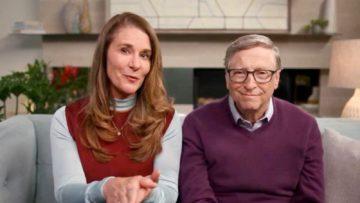 We are writing this letter after a year unlike any other in our lifetimes.
 Can the world meet the challenge of climate change?
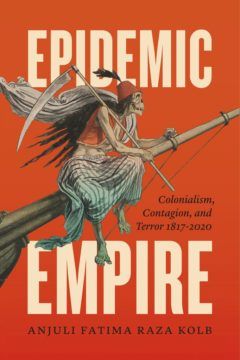 Terrorism has often been described as a cancer, an infection, an epidemic, a plague. In her new book,
 One of the more difficult parts of raising a Black child in the United States of America—and it bears mentioning from the beginning that the joys are innumerable—is the question of where they will go to school. Most of us know, through both memory and a wealth of empirical data testifying to this difficult truth, that the classroom is a battleground. It is a site of suffering. It is, in the first instance, a space wherein our hair, our diction, our social practices and modes of cognition are denigrated as a matter of institutional mission and everyday protocol. The Black aesthetic tradition, in one sense, is a single front in an ongoing war against this and other forms of asymmetrical violence against our children. In the poems and plays, stories and essays, we are mapping out a set of alternatives. Another world, another way that things might eventually be if we are brave.
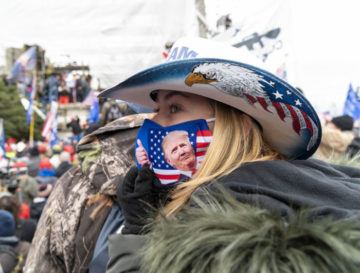 If anyone is tried for sedition after this whole wretched ordeal, it should be Donald Trump and the repellent congressional creatures who cravenly believed they could direct the QAnon crowd and keep them in their control. The fact of their failure, their monumental miscalculation, does not absolve them of their culpability. We’re already seeing figures like the pusillanimous Missouri Senator Josh Hawley
 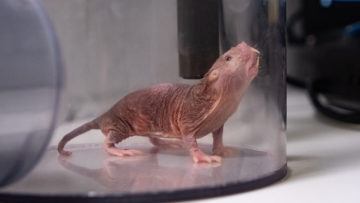 The naked mole-rat may not be the most attractive rodent on the block, but it’s still a social butterfly. These hairless, mostly blind and deaf animals live in colonies of up to 300 individuals, which communicate with high-pitched squeaks. Now, researchers have discovered that, like humans and many birds, mole-rat communities have their own dialect, which is kept alive by their queen. “The study is exciting because it provides the first evidence for vocal learning in a rodent,” says evolutionary biologist Tecumseh Fitch at the University of Vienna, who was not part of the work. More research, he says, may help scientists better understand how complex vocalizations evolved in social animals, including humans.
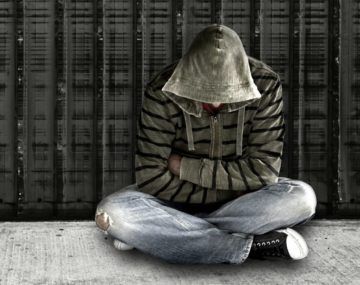 We all yearn for happiness, and yet so many Americans are unhappy. Polls document a rising tide of unhappiness — especially now, as the pandemic has upended life, with 23% of Americans claiming to be unhappy. This represents the highest figure on record since 1972. Yet even in 2019, with the economy humming, levels of unhappiness had been rising for some time.
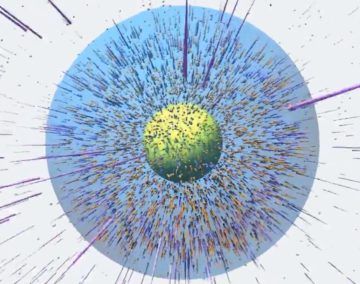 In 1987, A
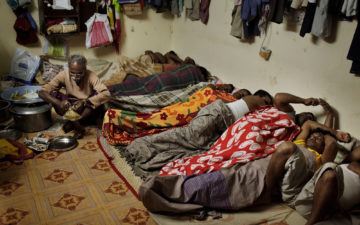 The six city-states on the Arab side of the Persian Gulf, each formerly a sleepy, pristine fishing village, are now all glitzy and futuristic wonderlands. In each of these city-states one finds large tracts of ultramodern architecture, gleaming skyscrapers, world-class air-conditioned retail markets and malls, buzzing highways, giant, busy and efficient airports and seaports, luxury tourist attractions, game parks, children’s playgrounds, museums, gorgeous beachfront hotels and vast, opulent villas housing fabulously affluent denizens. The six city-states – Dubai and Abu Dhabi in the United Arab Emirates (UAE), Manama in Bahrain, Dammam in Saudi Arabia, Doha in Qatar, and Kuwait City in Kuwait – grew into these luminous metropolises beginning in the 1970s, fuelled by the discovery of oil and gas, an oligarchic accumulation of wealth, and unconditional grants of political independence from the United Kingdom, the former colonial master of the region. Thereafter, the family-run polities that took control of these city-states began to attract huge amounts of financial capital from all over the world. Abu Dhabi, the capital of the UAE, has been described as ‘the richest city in the world’, with wealth rivalling that seen in Singapore, Hong Kong or Shanghai. Like those cities, Abu Dhabi is swimming in over-the-top affluence. According to a 2007 report in Fortune magazine, Abu Dhabi’s
 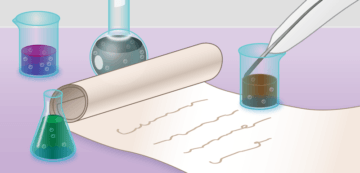 Today, poetry and science are often considered to be mutually exclusive career paths. But that wasn’t always the case. The mathematician Ada Lovelace and the physicist James Clerk Maxwell were both accomplished poets who wrote rhymes about rainbows and verse about scientific societies. Conversely, the poet John Keats was a licensed surgeon. Combining the two practices fell out of favor in the 1800s, when science moved from a hobby of the elite to a legitimate profession. But translating research into lyrics, haiku, and other poetic forms is resurging among scientists as they look for alternative ways to inspire others with their findings.
 When I was growing up in Chicago during the Cold War, my parents taught me to revere my Lithuanian heritage. We sang Lithuanian songs and recited Lithuanian poems; after Lithuanian school on Saturdays, I would eat Lithuanian-style potato pancakes. My grandfather, Jonas Noreika, was a particularly important part of my family story: He was the mastermind of a 1945-1946 revolt against the Soviet Union, and was executed. A picture of him in his military uniform hung in our living room. Today, he is a hero not just in my family. He has streets, plaques and a school named after him. He was awarded the Cross of the Vytis, Lithuania’s highest posthumous honor.
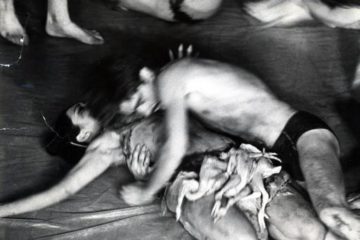 In communicating with Carolee Schneemann in the last months of her life there was a sense that the artist was in a race against time. Schneemann — now regarded as one of the most important artists of the 20th century — knew that death was approaching and there was still so much to clear up, to articulate and to preserve. In the last years before her passing in 2019, Schneemann had finally overcome decades of rejection and neglect of her work to receive the art world’s recognition and adulation in its fullness. There were major retrospectives at the Museum der Moderne Salzburg, the Museum für Moderne Kunst in Frankfurt, and MoMA Ps1 in New York. In 2017, Schneemann received the Golden Lion award for lifetime achievement at the Venice Biennale. And yet it wasn’t always easy for the artist to enjoy this newfound respect. The path had been hard.