
Patrick J. Deneen in American Affairs:
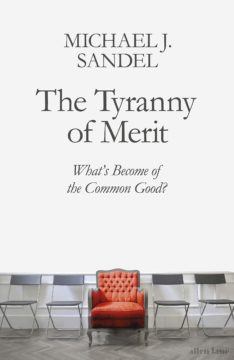 A distinguishing mark of classical political philosophy is its focus on the ruling claims of regimes. Classical philosophers sifted and evaluated the distinctive qualities invoked to legitimate governance by some number of people—one, few, or many. Not only the number of rulers but the stated ruling principles could vary widely across places and times, reflecting profound variety and disagreement over the nature and aims of government. Some regimes based political rule on virtue (aristocracy), others on wealth (oligarchy), others on the interests of a majority of citizens (democracy). Plato argued that philosophic wisdom should form the basis of good rule, while Confucius described the benefits of rule by those of greatest age and experience. Prophets, soldiers, and elders have all been rulers in various eras. Classical political philosophy sought to discern noble claims to rule, and how to achieve the best, or at least better, forms of governance.
In his latest book, political theorist Michael Sandel subjects our present form of governance—“meritocracy”—to the same analysis. While our meritocracy has no exact equivalent in classical philosophy’s catalogue of regimes, Sandel finds it increasingly tyrannical. For the most part, however, Sandel’s prescriptions seem inadequate to this bracing indictment.
More here.
 Shortly after 335 B.C., within a newly built library tucked just east of Athens’ limestone city walls, a free-thinking Greek polymath by the name of Aristotle gathered up an armful of old theater scripts. As he pored over their delicate papyrus in the amber flicker of a sesame lamp, he was struck by a revolutionary idea: What if literature was an invention for making us happier and healthier? The idea made intuitive sense; when people felt bored, or unhappy, or at a loss for meaning, they frequently turned to plays or poetry. And afterwards, they often reported feeling better. But what could be the secret to literature’s feel-better power? What hidden nuts-and-bolts conveyed its psychological benefits?
 “That’s really all I write about, is hope and despair,” says Anne Lamott. Clearly, she was born into the era she was meant for. The bestselling author of durable classics like “Bird by Bird” and “Operating Instructions” is back once more with a new book, a new(ish) marriage and very much the same curiosity, humanity and sense of humor that been her brand for nearly 30 years.
 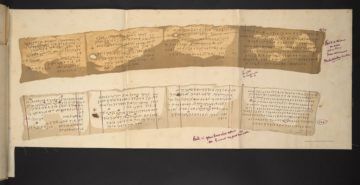 In 1883, a Jerusalem antiquities dealer named Moses Wilhelm Shapira announced the discovery of a remarkable artifact: 15 manuscript fragments, supposedly discovered in a cave near the Dead Sea. Blackened with a pitchlike substance, their paleo-Hebrew script nearly illegible, they contained what Shapira claimed was the “original” Book of Deuteronomy, perhaps even Moses’ own copy.
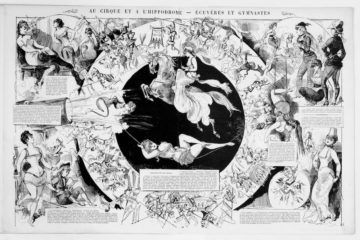 There is a dual quality to Émilie’s life at this time: her bravado in the ring and her celebrity are ranged against repeated accounts of a modest, single-minded loner. After her mother’s death in 1880 and Clotilde’s retirement from the circus, she traveled only with a maid and a huge, white shaggy dog called Turc who followed her everywhere and slept at the foot of her bed. She would live alone in a small apartment near the circus at which she was engaged, and was said to enjoy books, music, and art, and receive few guests. She would only permit admirers to give her flowers—she had no interest in jewelry or more lucrative tokens. When her followers crammed into the circus stables to see her, she offered them only “banal” smiles calculated to be polite but not enticing. Not that that mattered. The circus managers issued invitations to every aristocrat in town as soon as her first performance was scheduled, feeding on Clotilde’s notoriety. Some of the writing about her is feverish: “Our little queen!” “The most beautiful will-o-the-wisp anyone could imagine!” “A female centaur!” “The diva of equitation, the Patti of haute école, the most intrepid amazone, the most charming, the most dizzying experience since the advent of the Amazons!”
 In 1768, the German philosopher Johann Gottfried Herder paid a visit to the French city of Nantes. “I am getting to know the French language and ways of thinking,” he wrote to fellow-philosopher Johann Georg Hamann. But, “the closer my acquaintance with them is, the greater my sense of alienation becomes”.
 …although I’ve written tens of thousands
 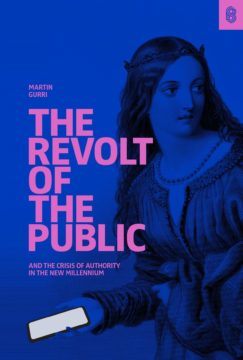 I entered Martin Gurri’s world on August 1, 2015. Though I hadn’t read
  “Kan kun være malet af en gal Mand!” (“Can only have been painted by a madman!”) appears on Norwegian artist Edvard Munch’s most famous painting The Scream.
 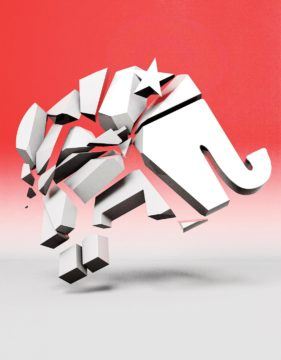 One of the oldest imperatives of American electoral politics is to define your opponents before they can define themselves. So it was not surprising when, in the summer of 1963, Nelson Rockefeller, a centrist Republican governor from New York, launched a preëmptive attack against Barry Goldwater, a right-wing Arizona senator, as both men were preparing to run for the Presidential nomination of the Republican Party. But the nature of Rockefeller’s attack was noteworthy. If the G.O.P. embraced Goldwater, an opponent of civil-rights legislation, Rockefeller suggested that it would be pursuing a “program based on racism and sectionalism.” Such a turn toward the elements that Rockefeller saw as “fantastically short-sighted” would be potentially destructive to a party that had held the White House for eight years, owing to the popularity of Dwight Eisenhower, but had been languishing in the minority in Congress for the better part of three decades. Some moderates in the Republican Party thought that Rockefeller was overstating the threat, but he was hardly alone in his concern. Richard Nixon, the former Vice-President, who had received substantial Black support in his 1960 Presidential bid, against John F. Kennedy, told a reporter for Ebony that “if Goldwater wins his fight, our party would eventually become the first major all-white political party.” The Chicago Defender, the premier Black newspaper of the era, concurred, stating bluntly that the G.O.P. was en route to becoming a “white man’s party.”
 The singer and guitarist Julien Baker makes raw, ghostly rock music that’s rooted in personal confession. But, unlike some artists operating in that mode, she’s figured out how to turn fragility into a display of fortitude. Baker’s songs—which explore themes of self-sabotage, atonement, and restitution—are aching but tough. This stems, in part, from Baker’s spiritual upbringing. She was raised in a devout Christian family near Memphis, Tennessee, and sang in church. When she came out as gay, at seventeen, she prepared herself for a swift denunciation, but her parents were compassionate. (Her father began scouring the Bible for passages about acceptance.) It’s possible to hear the echoes of Christian hymnals in her first two albums—ideas of love and grace, mentions of God and rejoicing. Baker has a tattoo that reads “God exists” and has said that she senses a kind of divine presence in art, or, as she once put it, evidence of “the possibility of man to be good.”
 There is a story about René Descartes according to which the philosopher once owned a female automaton so convincing that a superstitious mariner, seeing the machine in operation, declared it the work of the devil and threw it into the sea. In some versions, Descartes is said to have built the automaton to replace his illegitimate daughter, Francine, who died in childhood. Though apocryphal, the tale persists because it combines a moving human tragedy with an intellectual problem – the relationship between mind and matter – that was central to Descartes’s own philosophy. It is a thought experiment disguised as a fairy tale, or perhaps vice versa.
 I stumbled upon the legend of Nanda Devi and Nanda Kot and the lost CIA plutonium on a cold October night in 1987, sitting with friends, swilling cheap malt liquor around a roaring campfire in Yosemite. To my best recollection, Tucker recounted the most outrageous climbing yarn I’d ever heard. Tucker, whose low-slung build lent him an authoritative air, was one of those whose expression becomes more earnest and animated with each drink.
 Historian Adam Tooze has argued that COVID-19 is the first economic crisis of the Anthropocene, a term encapsulating the idea that human impact on the environment and climate is so extreme that it has moved us out of the Holocene into a new geological epoch. While this argument remains the subject of deep disagreement among experts, those advocating for the Anthropocene emphasize that humans have so drastically altered the environment that we have become agents of transformations we cannot reliably control. Indeed, we are daily reminded of these effects by extreme weather events, species extinctions, and new global health emergencies.