
Jennifer Wilson at The Nation:
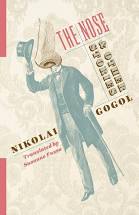 In a new collection of Gogol’s short stories, translated by Susanne Fusso, a professor of Russian studies at Wesleyan University, readers are reintroduced to the familiar cast of characters—identified by their rank, of course—that populate many of the Ukrainian author’s most celebrated works, including “The Nose” and “The Overcoat.” There are the titular councillors, the collegiate assessors, the section heads of unnamed departments, the recently promoted (and thus insufferable). In short, the book’s stories cover nearly all manner of pompous, status-obsessed, careerist bureaucrats. It could be said that the Table of Ranks defined Gogol’s narrative landscape, but what is also true is that Gogol in turn redefined the Table of Ranks for his readers, then and now. As the scholar Irina Reyfman notes, “To a large degree, the way people now think of the world of state service is determined by Gogol’s portrayal of it in his fiction.”
more here.
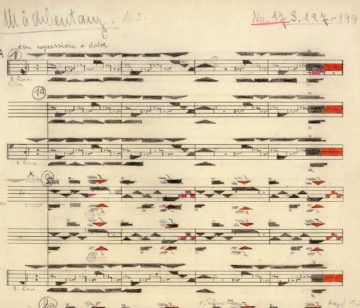 To the untrained eye, Kinetography looks esoteric and occult, but to the few who can read it the complex strips of hieroglyphs allow them to recreate dances much as their original choreographers imagined them. Dance notation was invented in seventeenth-century France to score court dances and classical ballet, but it recorded only formal footsteps and by Laban’s time it was largely forgotten. Laban’s dream was to create a “universally applicable” notation that could capture the frenzy and nuance of modern dance, and he developed a system of 1,421 abstract symbols to record the dancer’s every movement in space, as well as the energy level and timing with which they were made. He hoped that his code would elevate dance to its rightful place in the hierarchy of arts, “alongside literature and music,” and that one day everyone would be able to read it fluently.
 One of the most intriguing moments in Claude Lévi-Strauss’s magisterial
  Telling a story seems like the most natural, human thing in the world. We all do it, all the time. And who amongst us doesn’t think we could be a fairly competent novelist, if we just bothered to take the time? But storytelling is a craft like any other, with its own secret techniques and best practices. Charlie Jane Anders is a multiple-award-winning novelist and story writer, but also someone who has thought carefully about all the ingredients of a good story, from plot and conflict to characters and relationships. This will be a useful conversation for anyone who tells stories, reads books, or watches movies. Maybe you’ll be inspired to finally write that novel.
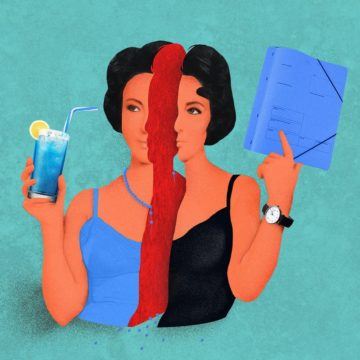 Efficient folk have come up with a range of productivity techniques. Benjamin Franklin was an early advocate of the modern to-do list. Each morning America’s Founding Father jotted down tasks and asked himself: “What good shall I do this day?” Office grunts take a less virtuous approach to planning. Some practise the Pomodoro technique, a strategy of slicing your day into 25-minute chunks of intense focus with five-minute breaks in between. Many people use a task-management app as a “second brain”, storing their thoughts in the cloud for safekeeping. Productivity tools can also have the opposite effect. You may spend so long managing your time that you never get to the work itself. “Yak shaving” is a term for tasks that lead on to further tasks which distract you from your original goal. If you want to become a time-management master, don’t go anywhere near a yak with a razor.
 He Jiankui seemed nervous. At the time, he was an obscure researcher working at the Southern University of Science and Technology in Shenzhen, China. But he had been working on a top-secret project for the last two years – and he was about to take to the podium at the International Summit on Human Genome Editing to announce the results. There was a general buzz of excitement in the air. The audience looked on anxiously. People started filming on their phones. Jiankui had made the first genetically modified babies in the history of humankind. After 3.7 billion years of continuous, undisturbed evolution by natural selection, a life form had taken its innate biology into its own hands. The result was twin baby girls who were born with altered copies of a gene known as CCR5, which the scientist hoped would make them immune to HIV.
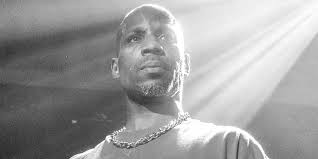 DMX CLOSES OUT HIS SONG
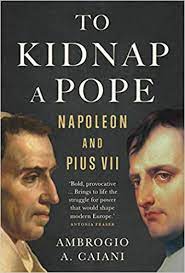 This 5 May will mark the bicentenary of Napoleon’s death on St Helena. The occasion will no doubt be marked, as was the bicentenary of the Battle of Waterloo six years ago, by a flood of new books about the emperor, adding yet more to the estimated 200,000 already written. Given this saturation, one wonders if there is anything left to say. This fascinating book proves that there is. It does so by focusing on a crucial yet neglected aspect of Napoleon’s rule: his bitter, decade-long confrontation with Pope Pius VII. This marked an important step both in the emperor’s decline and fall, and in the evolution of the Catholic Church.
 Catherine Menon was born in Perth, Western Australia, where her British mother and Malaysian father met. She lectures in robotics and has a PhD in pure mathematics as well as an MA in creative writing. Fragile Monsters, her first novel, is set in rural Malaysia and unpicks a family’s story from 1920 to the present day. At its centre are Mary, “sharp tongued and ferocious”, and her visiting granddaughter, Durga, who tussle over the demons and dark memories that distort their past and warp the present. Hilary Mantel has described Menon’s writing as “supple, artful, skilful storytelling” and she has won awards for her short stories. She is married to a fellow mathematician and lives in north London.
 A massive landslide—the worst in decades—struck Du Fangming’s home in south China’s Hunan province on July 6. “My house collapsed. My goats were swept away by the mud,” he told Chinese media outlets shortly after the catastrophe. Fortunately, though, he was safe—one of 33 villagers who had been evacuated thanks to early warnings enabled by advanced positioning technologies that can provide more accurate readings than ever before.
 In the view of most historians, the original sin of Rwanda came from the colonial policy of making artificial ethnic distinctions through a caste-like system. Belgian administrators deemed those who were taller and herded cattle, the Tutsis, to be smarter than the Hutu, who were generally shorter and raised crops. So one group got all the privileges of helping the Belgians extract coffee and animal hides and were treated as sub-royals, while their countrymen were deemed slow and stupid. The story was fixed; the Goods and Bads had been preselected, and the inevitable resentments would explode in the 1994 genocide.