
Song of Winnie Mandela
Yet I know
that I am Poet!
I pass you my Poem.
A poem doesn’t do everything for you.
You are supposed to go on with your thinking.
You are supposed to enrich
the other person’s poem with your extensions,
your uniquely personal understandings,
thus making the poem serve you.
I pass you my Poem! — to tell you
we are all vulnerable —
the midget, the Mighty,
the richest, the poor.
Men, women, children, and trees.
I am vulnerable.
Hector Pieterson was vulnerable.
My Poem is life, and not finished.
It shall never be finished.
My Poem is life, and can grow.
Wherever life can grow, it will.
It will sprout out,
and do the best it can.
I give you what I have.
You don’t get all your questions answered in this world.
How many answers shall be found
in the developing world of my Poem?
I don’t know. Nevertheless I put my Poem,
which is my life, into your hands, where it will do the best it can.
I am not a tight-faced Poet.
I am tired of little tight-faced poets sitting down to
shape perfect unimportant pieces.
Poems that cough lightly — catch back a sneeze.
This is the time for Big Poems,
roaring up out of sleaze,
poems from ice, from vomit, and from tainted blood.
This is the time for stiff or viscous poems.
Big, and Big.
by Gwendolyn Brook
from Kinna Reads
—for reading by the poet click link above
 At the Hennepin County Government Center on Tuesday afternoon, Judge Peter Cahill opened a yellow envelope and read out the verdict against Derek Chauvin, the former Minneapolis police officer who, last May, kneeled on the neck of George Floyd for nine minutes and twenty-nine seconds, killing Floyd and igniting a nationwide uprising against police abuse and systemic racism. Chauvin wore a pale-blue face mask. His eyes darted from side to side. The verdict was guilty on charges of second-degree unintentional murder, third-degree murder, and second-degree manslaughter. And, within just a few minutes, it was over. Chauvin, now a convicted murderer, was handcuffed and led out of the courtroom. Cahill thanked the jury for its “heavy-duty service.” Bail was revoked. The sentence will be handed down in eight weeks.
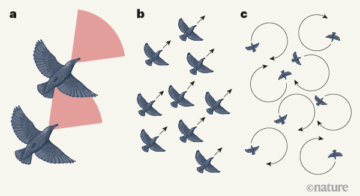 Strongly non-reciprocal interactions and non-conservative forces can arise in social interactions, such as those that occur when pedestrians avoid each other, or when birds fly together as a flock
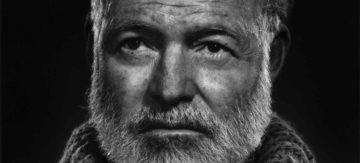 When I visited Ernest Hemingway’s home in Key West, I took only three photographs. One of his writing studio (which the house’s caretakers claim remains undisturbed), one of the two Coca-Cola machines outside the public bathrooms and one of the little houses built for the dozens of six-toed cats roaming the property. On the roofs of those little houses are placards reading, “Hemingway Home Cats Get Revolution Plus Every Month.”
 Mom, apple pie, and rationality — all things that are unquestionably good, right? But rationality, as much as we might value it, is easier to aspire to than to achieve. And there are more than a few hot takes on the market suggesting that we shouldn’t even want to be rational — that it’s inefficient or maladaptive. Julia Galef is here to both stand up for the value of being rational, and to explain how we can better achieve it. She distinguishes between the “soldier mindset,” where we believe what we’re told about the world and march toward a goal, and the “scout mindset,” where we’re open-minded about what’s out there and always asking questions. She makes a compelling case that all things considered, it’s better to be a scout.
 In less than a month, things began to unravel. India was in the grips of a devastating second wave of the virus and cities were facing fresh lockdowns. By mid-April, the country was averaging more than 100,000 cases a day. On Sunday, India recorded more than 270,000 cases and over 1,600 deaths, both new single-day records. If the runway infection was not checked, India could be recording more than 2,300 deaths every day by first week of June, according to a
 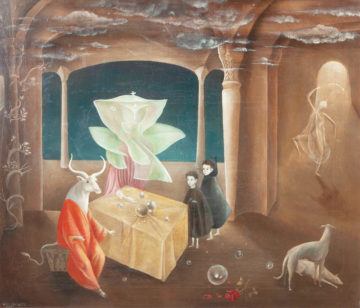 Carrington made The High Priestess, one of only two cards to have been dated, in 1955, around the same time she and her friend Remedios Varo were haunting the metaphysical clubs established by the disciples of Russian mystics P. D. Ouspensky and G. I. Gurdjieff. Esoterica had long been fashionable in Mexico City. Diego Rivera, when called on by the Communist Party in 1954 to justify his membership in the Ancient Mystical Order Rosae Crucis, said the group was “essentially materialist.” But Carrington and Varo’s occultism was especially committed, prodigious, and syncretic, encompassing tarot, alchemy, witchcraft, Kabbalah, and indigenous Mexican magic and healing practices. Carrington’s library included at least thirteen titles on cartomancy by authors including Ouspensky, A. E. Waite, Joseph Oswald Wirth, and her friend Kurt Seligmann (who reportedly fell out with André Breton after correcting his interpretation of a tarot card). A March 1943 issue of the Surrealist journal VVV records, alongside Carrington’s recipe for stuffed beef in sherry wine, her aborted attempt with Roberto Matta to invent a new divinatory system that would be to tarot “what non-Euclidian geometry is to Euclidian geometry.”
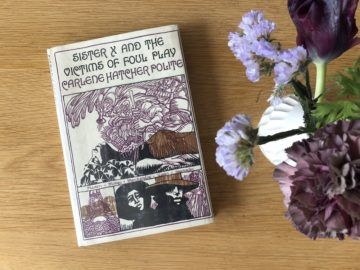 The Flagellants, the American writer Carlene Hatcher Polite’s debut novel, is one of those out-of-print books that’s been lurking in the corner of my eye for the past few years. First published by Christian Bourgois éditeur as Les Flagellants in Pierre Alien’s 1966 French translation, and then in its original English the following year by Farrar, Straus and Giroux, the book details the stormy relationship between Ideal and Jimson, a Black couple in New York City. The narrative is largely made up of a series of stream of consciousness orations. Polite’s prose is frenetic and loquacious, and her characters fling both physical and verbal violence back and forth across the page. The French edition received much praise. Polite was deemed “a poet of the weird, an angel of the bizarre,” and the novel was described as “so haunting, so rich in thoughts, sensations, so well located in a poetic chiaroscuro that one [could] savor its ineffaceable harshness.” And while certain American critics weren’t so impressed—“Miss Polite’s narrative creaks with the stresses of literary uncertainty,” wrote Frederic Raphael in the New York Times, summing the novel up as a “dialectical diatribe”—others recognized this young Black woman’s singular, if still rather raw and emergent, talent. Malcolm Boyd, for example, declared the novel “a work of lush imagery and exciting semantic exploration.” It won Polite—then in her midthirties and living in Paris with the youngest of her two daughters—fellowships from the National Foundation for the Arts and Humanities (1967) and the Rockefeller Foundation (1968).
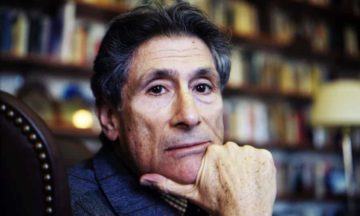 Long after his death in 2003, Edward W Said remains a partner in many imaginary conversations.” The opening line of Tim Brennan’s biography of Said is true – it’s hard to come up with another thinker who remains so present in his absence. Some 50 or so books have been written about him. His writings are taught in universities across the world. Look on social media and you’ll find him constantly referred to, in easy, familiar terms, by the young across the globe. His portrait is on the walls of the old cities of Palestine, in the company of the martyrs. The events of the past years, not least the Arab uprisings and the counter-revolutionary triumphs that followed them, have been for many of us occasions where we turned to his ideas and his example.
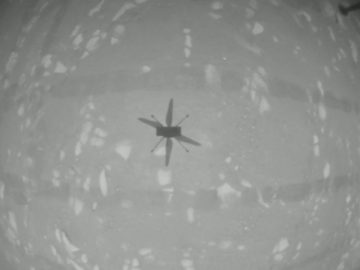 NASA has pulled off the first powered flight on another world. Ingenuity, the robot rotorcraft that is part of the agency’s Perseverance mission, lifted off from the surface of Mars on 19 April, in a 39.1-second flight that is a landmark in interplanetary aviation. “We can now say that human beings have flown a rotorcraft on another planet,” says MiMi Aung, the project’s lead engineer at the Jet Propulsion Laboratory (JPL) in Pasadena, California.
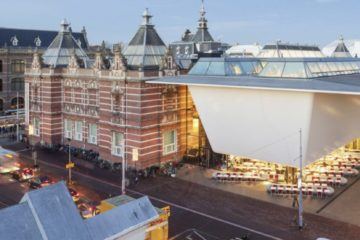 Buildings’ nicknames are the public’s attempt to make sense of the incomprehensible. Several odd-looking London skyscrapers have cheekily illustrative monikers: the Gherkin, the Cheesegrater, the Walkie-Talkie. Angelenos call the mammoth Pacific Design Center the Blue Whale. Beijingites offhandedly refer to the headquarters of China Central Television as Big Underpants. A Shanghai skyscraper with an aperture at the top is the Bottle Opener, and Bilbao has the Artichoke, Frank Gehry’s titanium Guggenheim museum. My favorite is the nickname of an addition to the Stedelijk Museum in Amsterdam—the Bathtub.
 Buy me a drink and I’ll break down for you my new obsession: the abuse documentary. It’s a new genre, it’s everywhere on streaming media, and I’ve watched them all.
 In February, the rover Perseverance arrived on Mars after an almost eight-month journey, tasked with looking for signs of ancient life. Though no firm evidence of life beyond Earth has yet been found, the English language is already full of words to talk about it. The search for life on other planets is part of the science of astrobiology. The prefix astro- is “star” in Latin and Greek and, predictably, appears in astronomy, the study of objects beyond the Earth’s atmosphere.