
From The Guardian:
 There were 38 minutes left when eight very disparate Israeli opposition parties announced, just before midnight on Wednesday, that they could form a government to eject Benjamin Netanyahu from the prime ministership he has held for 12 bitter years. This last-minute outcome underscores two things. First, it says the eight-party grouping, which ranges from the leftwing Meretz to the small and ultra-nationalist Yamina of the prospective prime minister Naftali Bennett, and which will be supported by the Arab Islamist Ra’am party, is an exceptionally fragile coalition even by modern Israeli standards. Second, it shows that, in spite of Israel’s successful Covid campaign and the heightened national feeling arising from its recent conflict with Hamas, a very wide range of political groups from very different traditions nevertheless believe they have an overriding shared interest in ousting the country’s longest-serving and still ruthless leader.
This is not surprising. Mr Netanyahu may have dominated Israeli politics for a generation. But his militant divisiveness at home and abroad, and his stridently anti-Palestinian policies, have taken the country into a political blind alley. The defeat of Donald Trump has left Mr Netanyahu without his strongest international backer. He is also currently on trial for corruption, facing bribery and fraud charges arising out of three different cases of trading political favours for cash. Each of the last four general elections has ended in stalemate or something very close, most recently in March 2021. If the country was not to waste another few months under yet another unsuccessful Netanyahu regime, there had to be some sort of break. The March election has provided that opportunity – just.
More here.
 It has been said that “the eyes are the window to the soul,” but new research suggests that they may be a window to the brain as well.
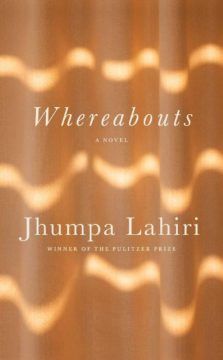 WHEN WRITERS BEGIN to learn our craft, we’re told to write for ourselves. As one becomes further embedded in the creative process, it can be difficult to work with this pure impulse in mind. Write for ourselves, yes, but if the work never finds readers, what does that say about us? Do stories that exist in a one-sided conversation with their authors have as much value as stories that take on a life of their own?
 The hydra is a simple creature. Less than half an inch long, its tubular body has a foot at one end and a mouth at the other. The foot clings to a surface underwater — a plant or a rock, perhaps — and the mouth, ringed with tentacles, ensnares passing water fleas. It does not have a brain, or even much of a nervous system.
 Israel’s attempt to justify its latest brutal assault on Gaza rings hollow to anybody familiar with events in Israel, where the government of Prime Minister Binyamin Netanyahu, backed by anti-Arab racists, has systematically, cruelly, and persistently violated the basic human rights of the Arab population. Human Rights Watch, a global NGO with many Jewish leaders, has recently condemned Israel for
 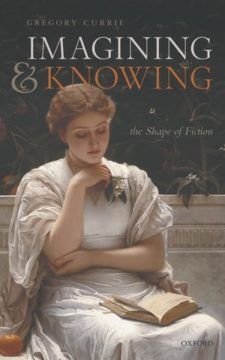 Few would dispute that, all things considered, some exposure to works of imaginative literature (novels, plays, poems) as part of a rounded education is better than no such exposure. Beyond that, disagreements are rife. Culture wars loom, with anxieties over curriculum choice, gender and racial bias, elitism, contested pedagogic methods, and a disconcerting vagueness about aims sought.
 As we traveled from Nabi Saleh to Ramallah by bus, we engaged in a vigorous discussion about the military occupation of the West Bank and whether it resembled apartheid. Yehuda Shaul of BtS told us he had escorted Barbara Hogan, an ANC member and former South African political prisoner, around the occupied territories. Hogan had declared after her tour that apartheid was in fact not an appropriate comparison, because what Hogan saw of Israel’s military occupation of the West Bank was so much more extreme than what she knew of apartheid South Africa. Whatever the correct descriptor might be, the military occupation of the West Bank is hard to understand until you see it. You might be surprised at your own intolerance of the idea of a democracy maintaining an open-air prison for 2.7 million people. Before going there myself, I had heard this phrase, open-air prison, and figured it was not literally a prison. (As someone who spends a fair amount of time in prisons, I’m sensitive to its use as a metaphor.) But everywhere I went I saw guard towers and concrete barriers and razor wire—truly an open-air prison—except where there were settlements, which featured posh, Beverly Hills–style landscaping: little blooming flowers, fragile and bright, the guard towers in the far distance.
 P
P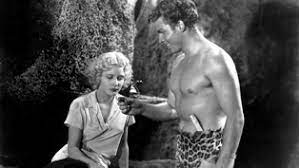 Elaine Morgan had sass. In Descent of Woman, published in 1972, she asked her readers to take science into their own hands. “Try a bit of fieldwork,” she suggested. “Go out of your front door and try to spot some live specimens of Homo sapiens in his natural habitat. It shouldn’t be difficult because the species is protected by law and in no immediate danger of extinction.” After completing observations of 20 random people, she suggested, substitute them when you are reading statements about universal human nature. The result?
 Coates made his name as a journalist and commentator at The Atlantic, writing articles and essays that explored how America’s history of systemic racism continues to affect politics, housing, and other aspects of American life. Marvel reached out to him with the opportunity to write Black Panther in 2015, and those initial scripts would become the first fictional work he’d publish. (He’d been working on his novel,
  A co-worker accuses you of lying during an important client meeting, and you’re furious because you didn’t lie. Expressing that anger, however, isn’t the best way to prove your innocence, according to new research.
 It is the oldest profession, I say. No, someone reminds me, hunting is the oldest profession. Exactly. But if the quarry is willing, is the hunt ethical? I cannot decide. Does a woman have the right to sell her body freely and legally? Models do. Lady Gaga sells her vocal cords. LeBron James sells his height. In a world that tells us to forge a personal brand and sell ourselves, surely a woman skilled in the art of physical pleasure ought to be able to use that talent to make a living?
 W
W We’ve all felt the fog come over us when we mistake someone’s name right after being introduced, fail to remember where we left our car in the parking lot or tell a friend the same story twice. Our memory is rarely as reliable as we’d like. But at times, it also surprises us. We may somehow remember family stories told to us long ago, the names of our middle school teachers or trivia facts buried deep in back of our brain. Despite the standard glitches, our memory can retain far more than either experts or we expect. Conclusions about its reliability vary tremendously. Some studies conclude that memory is extremely accurate, whereas others conclude that it is not only faulty but utterly unreliable. Even memory experts can struggle to predict how accurate our recollections are. In a recent study at the University of Toronto, such experts were asked to