
John McWhorter in the New York Times:
 This article contains obscenities and racial slurs, fully spelled out. Ezekiel Kweku, the Opinion politics editor, and Kathleen Kingsbury, the Opinion editor, wrote about how and why we came to the decision to publish these words in Friday’s edition of the Opinion Today newsletter.
In 1934, Allen Walker Read, an etymologist and lexicographer, laid out the history of the word that, then, had “the deepest stigma of any in the language.” In the entire article, in line with the strength of the taboo he was referring to, he never actually wrote the word itself. The obscenity to which he referred, “fuck,” though not used in polite company (or, typically, in this newspaper), is no longer verboten. These days, there are two other words that an American writer would treat as Mr. Read did. One is “cunt,” and the other is “nigger.” The latter, though, has become more than a slur. It has become taboo.
Just writing the word here, I sense myself as pushing the envelope, even though I am Black — and feel a need to state that for the sake of clarity and concision, I will be writing the word freely, rather than “the N-word.” I will not use the word gratuitously, but that will nevertheless leave a great many times I do spell it out, love it though I shall not.
More here.
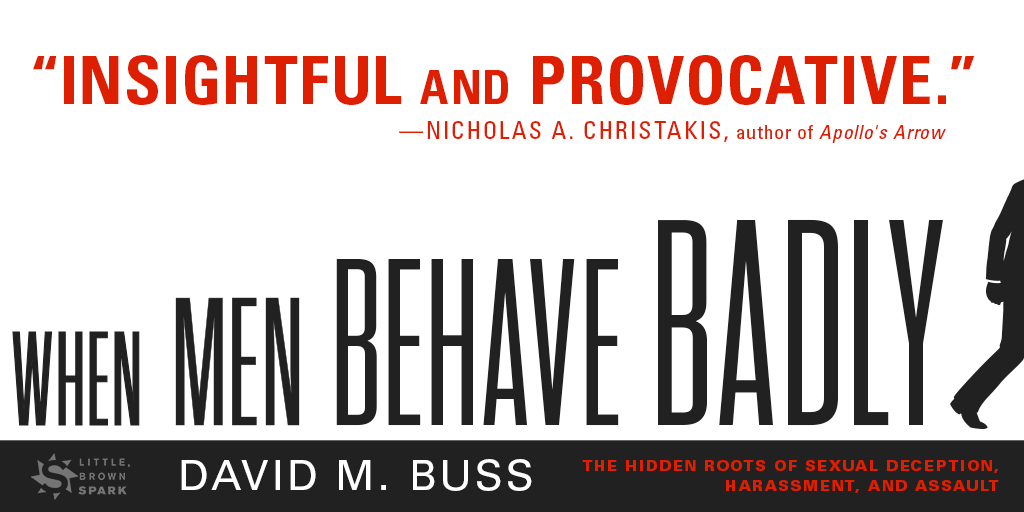 Professor David M. Buss, a leading evolutionary psychologist, states in the introduction of his fascinating new book that it “uncovers the hidden roots of sexual conflict.” Though the book focuses on male misbehavior, it also contains a broad and fascinating overview of mating psychology.
 THE DAY BEFORE
 GET BIG FAST was an early Amazon motto. The slogan sounds like a fratty refrain tossed around at the gym. Jeff Bezos had it printed on T-shirts. More than twenty-five years after leaving his position as a Wall Street hedge-fund executive to found Amazon, Bezos’s size anxiety is long gone. (At least as it pertains to his company; the CEO’s Washington, DC, house has eleven bedrooms and twenty-five bathrooms, a bedroom-to-bathroom ratio that raises both architectural and scatological questions.) Bezos is now worth $180 billion. Amazon, were it a country, would have a larger GDP than Australia.
 Zachary D. Carter in the New York Times:
 Gregory Kaebnick in Boston Review:
 Katie Kheriji-Watts in Hyperallergic:
 Jennifer Wilson in The Nation:
 Adam Shatz in the LRB:
 F
F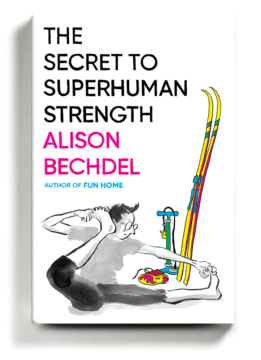 Early in her career, Alison Bechdel, then a cult cartoonist — “at the pinnacle of my bitterness,” she would later say — was invited to contribute to a special gay pride issue of Seattle’s alternative newspaper The Stranger. She fired off a comic strip titled “Oppressed Minority Cartoonist.” She drew herself at her desk, flanked by a bottle of Scotch, mid-tirade. Why had her work been pigeonholed? And why had she complied so willingly, chronicling only lesbians, her “oppressed minority group”? In the last panel, her rant is interrupted by a phone call inviting her to contribute to that very gay pride issue. “I’d be honored,” she capitulates.
 To get this out of the way: Destroying the coronavirus is, without question, paramount. Millions of people are dead, and tens of thousands more die every week. At the same time, the majority of the trillions of microbes that inhabit our skin and gut—collectively, our microbiome—are either
 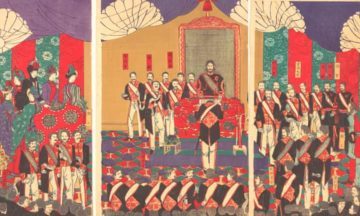 Few documents are venerated as much as the American constitution. Until recently, one million people a year filed past the original copy on display in the Rotunda for the Charters of Freedom in Washington DC. Yet, as Linda Colley’s brilliant new book shows, viewing constitutions as national tablets of stone tells us more about their contemporary charisma than the complex histories from which they were wrought. In this compelling study of constitutions produced around the world between the mid-18th century and the outbreak of the first world war, she upends the familiar version of history at every turn. Out goes the myth that constitutions were the product of democratic aspirations or revolution – rather they arose from the ashes of war or the threat of invasion. Nations may have been girded by constitutional documents, but these were borderless texts, available for adaptation across time and space. Above all, constitutions were “protean and volatile pieces of technology” that travelled far and wide, assisted by the expansion of print media and the speeding-up of long-distance travel and communication.