John Vincler in The Paris Review:
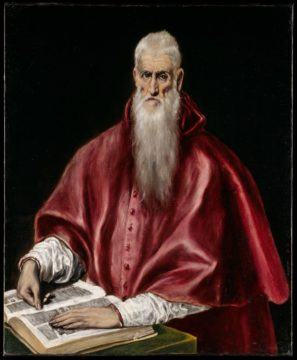 I will remember 2020 not as a year of looking but as a year of listening. For months as the pandemic overtook New York, ambulance sirens sounded at all hours in strange choruses. When the sound of the sirens would break occasionally or fade into the distance after dawn, it was replaced not by eerie silence but by birdsong: the shrieks of the blue jays, the playful cheeps of the sparrows in the bushes, the eeks, chirps, and oddly varied sounds of the grackles everywhere. I wondered then, Were these sounds always here, and it was we who were made quiet? I rarely left my neighborhood of Ditmas Park, in Brooklyn, except to take my partner, Kate, pregnant with our second child, to appointments at the Manhattan hospital complex that was itself a hive of sirens that grew louder each time we approached. In my memory the sirens and birdsong were followed by police helicopters seemingly always overhead, as the city erupted in Black Lives Matter protests and the violent police response that only ensured they should continue. The helicopters loomed in the skies above as I ran circles over the same patch of weeds in the small plot of our shared backyard, playing a game my four-year-old daughter, Leo, calls “dinosaur chase” (she is the dinosaur, I am her lunch). Half the year was marked by interrupted sleep—first the constant fireworks at all hours of the night and then, by the end of the summer, the squawking and cooing of the baby, unaware of the distinction between day and night. As I write this, collecting a year, it is spring again. The neighborhood seems to be returning to some approximation of the old sounds from before. That is, if we can recall the way it used to sound. Even the old sounds are heard differently now. With my daughter in her mud boots, bird book and binoculars in hand, as the baby sleeps at home on Kate, we begin each day our circuit. Leo collects sticks, rocks, and seed pods, stomps in puddles, and pauses to track blue jays in a tree, following their noisy stutter.
More here.

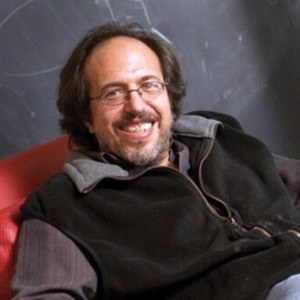 The challenge to a theoretical physicist pushing beyond our best current theories is that there are too many ways to go. What parts of the existing paradigm do you keep, which do you discard, and why make those choices? Among today’s theorists, Lee Smolin is unusually reflective about what principles should guide us in the construction of new theories. And he is happy to suggest radical revisions to well-established ideas, in areas from the nature of time to the workings of quantum mechanics. We talk about time, the universe, the role of philosophy, a new picture of spacetime, and the future of physics.
 The first time I drank alcohol, it was red rum straight from a quarter bottle – riding pillion as my boyfriend took us around a secluded part of the city of Lucknow, in provincial northern India. It was spring 2010, I was in the third year of law school, and
 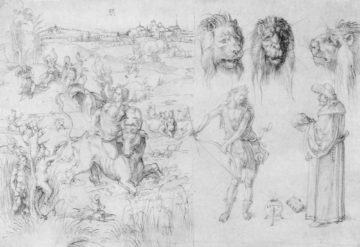 Does anything in this sprawling catalog of rewritten myth redeem the figure of Europa, for our purposes? Will these contradictory lineages be summoned, however dimly, in our readers’ minds? Stuart Hall acknowledged that the myth could be read in emancipatory or pluralistic ways, but was anyone really doing it? “The figure is certainly not being used,” he concluded, “to remind contemporaries that much of what we now think of as Europe’s achievements were originally external to Europe and had non-European, Asian, African and Islamic roots.” Yet Hall’s critique is itself canonical now, at least in some circles, and the myth can be activated accordingly. In Citizens of Nowhere: How Europe Can Be Saved from Itself (2018), Lorenzo Marsili and Niccolo Milanese can invoke a postcolonial, postnational Europa as a matter of course.
 I
I 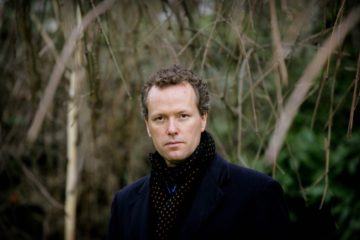 By the time Edward St. Aubyn completed the last of his
 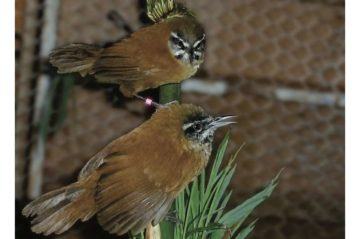 Art Garfunkel once described his legendary musical chemistry with Paul Simon, “We meet somewhere in the air through the vocal cords … .” But a new study of duetting songbirds from Ecuador, the plain-tail wren (Pheugopedius euophrys), has offered another tune explaining the mysterious connection between successful performing duos. It’s a link of their minds, and it happens, in fact, as each singer mutes the brain of the other as they coordinate their duets. In a study published May 31 in Proceedings of the National Academy of Sciences, a team of researchers studying
 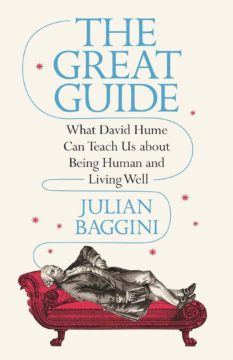 Philosophy has a vexed relationship with the business of self-help. On the one hand, philosophers offer systematic visions of how to live; on the other hand, these visions are meant to be argued with, not deferred to or chosen off the rack. Though it runs deep, this tension has not slowed the flood of titles, published in the last few years, that take a dead philosopher as a guide to life. These books will teach you How to Be a Stoic, How to Be an Epicurean, and How William James Can Save Your Life; you can take The Socrates Express to Aristotle’s Way and go Hiking with Nietzsche.
 Economics is one of the better-funded and more scientific social sciences, but in some critical ways it is failing us. The main problem, as I see it, is standards: They are either too high or too low. In both cases, the result is less daring and creativity.
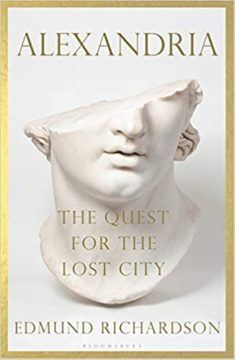 In the hot summer of 1840, the young orientalist Henry Rawlinson arrived in Karachi and began anxiously searching for his mentor, the pioneering archaeologist of Afghanistan, Charles Masson. The rumours he had heard profoundly alarmed him.
 The first public literary reading I ever gave was at Manhattan’s Le Poisson Rouge for a now-defunct magazine’s issue showcase. I was 21 years old and had never read my poems in front of a live audience. More important, I had never built up the requisite nerves to read my poems aloud, and, as a way of coping, I had spent that afternoon day drinking in nearby Washington Square Park with a group of strangers from the Bronx who could have been troubadours from Kentucky. By the time I got to the venue, drunk on whiskey siphoned from their flasks and cheap beer from the local bodega, I was shocked to see that some of my friends and professional peers had shown up to watch me perform. If it wasn’t enough to want to impress them by reading at a public space, I had also trained myself to recite the poems, sans paper. Hours earlier, I had even been so bold as to crumple the printed poems and pour beer on them as a final act of humiliation. Now, in the impractically lit basement that functioned as a lounge, a bar, and a performance space, the lines of the poems melted away and the humiliation was turned inward. Once I was called up to the stage, I looked into the far recesses of the dim basement for something—call it a friendly face, call it a sign—to look back. But I saw nothing; I heard only applause and a couple glasses clink as they were placed on the bar. I put my sweaty palms inside my pocket in an attempt to dig out poems that were no longer there.
 Adam Shatz in the LRB: