
Christina Pazzanese in The Harvard Gazette:
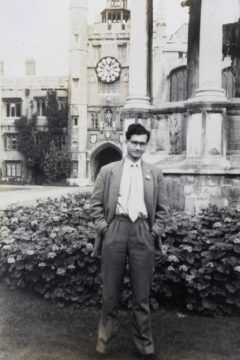 Coming from a long line of Hindu intellectuals and teachers, Amartya Sen enjoyed advantages and freedoms that few others did in a deeply-stratified India of the 1930s, during the waning days of the British empire. Teaching was in his blood, and from an early age, Sen was struck by the stark economic inequities he saw all around him under the British raj. Identifying and understanding the causes and effects that inequalities, like those surrounding poverty or gender, had on people’s lives would become a lifelong intellectual lodestar for the political economist, moral philosopher, and social theorist. Many economists focus on explaining and predicting what is happening in the world. But Sen, considered the key figure at the convergence of economics and philosophy, turned his attention instead to what the reality should be and why we fall short. “I think he’s the greatest living figure in normative economics, which asks not ‘What do we see?’ but ‘What should we aspire to?’ and ‘How do we even work out what we should aspire to?’” said Eric S. Maskin ’72, Ph.D. ’76, Adams University Professor and professor of economics and mathematics.
Over his 65-year career, Sen’s research and ideas have touched many areas of the field. He’s credited as one of the founding fathers of modern social-choice theory with his landmark 1970 book, “Collective Choice and Social Welfare.” The book took up the late Harvard economist Kenneth Arrow’s ideas from the early 1950s about how to combine different individuals’ well-being into a measure of social well-being, intensifying interest in and expanding upon Arrow’s work.
“It was really Amartya who made the field what it became,” said Maskin, a 2007 Nobel laureate in economics who has taught with Sen, the Thomas W. Lamont University Professor and professor of economics and philosophy, since the 1990s.
Sen’s 1970 paper, “The Impossibility of a Paretian Liberal,” was deeply influential on philosophy and economics. In it, he pointed to an inherent conflict between individual liberty and the principle that making people better off is always desirable.
More here. (Note: Thanks to Iqbal Riza)

 Ben Bakkum in Macro Chronicles:
 The Bone House, published in 2005, is either a decade’s work or a lifetime’s, depending on how you look at it. It is the distillation of an expansive mind that seeks to delve and delve. Her tone is never didactic—rather, discursive, exploratory, delighted, unjaded, alive. To read more than a few pages at a stretch is to travel a long way from where you set out. Sometimes to travel so far as to lose the view of the mountain, only to be brought back via an unfamiliar face of it.
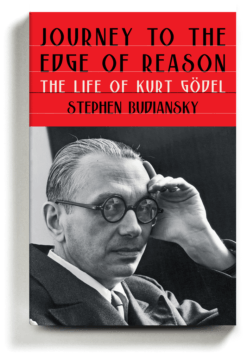 Gödel could go for long walks with his fellow institute scholar Einstein, who sponsored Gödel’s citizenship application and called him the greatest logician since Aristotle, but he was wracked by physical ailments and nervous conditions. A doctor told him he had a bleeding ulcer, which he strangely refused to believe, even though he was also a self-medicating hypochondriac. He subscribed to all sorts of conspiracy theories, insisting that “nothing happens without a reason,” and that the reason was almost always a hidden one. The unlimited freedom he had at the institute proved to be double-edged, Budiansky observes. In one sense, it saved Gödel’s life; but it also allowed his consciousness to wander into the darkest places, without the checks on his expansive anxieties that interactions with the ordinary world might have otherwise provided.
 W
W Just over five years ago, Inky the octopus became a folk hero because of his escape from a New Zealand aquarium. After squeezing through a narrow chink in his tank, he crawled across the floor and found an opening to a 164-foot-long drainpipe that led to the ocean. As much as I enjoyed the film based on Stephen King’s “The Shawshank Redemption”, which climaxes in Tim Robbin’s daring prison break, I only wish that a gifted animation team like the one that made “How to Train Your Dragon” could tell Inky’s story.
 In Delhi, Shahid also became aware of the city’s Mughal and colonial history, and was impressed by its architecture. In the early ’60s, the Mexican poet Octavio Paz had visited New Delhi and had been charmed by its architecture. He wrote numerous poems about the city and about all that he had witnessed here. He found Delhi’s “aesthetic equivalent” in “novels, not in architecture”, and to him, wandering the city was “like passing through the pages of Victor Hugo, Walter Scott, or Alexandre Dumas”.
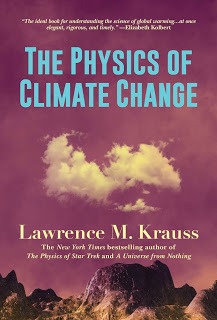 In the past years, media coverage of climate change has noticeably shifted. Many outlets have begun referring to it as “climate crisis” or “climate emergency”, a mostly symbolic move, in my eyes, because those who trust that their readers will tolerate this nomenclature are those whose readers don’t need to be reminded of the graveness of the situation. Even more marked has been the move to no longer mention climate change skeptics and, moreover, to proudly declare the intention to no longer acknowledge even the existence of the skeptics’ claims.
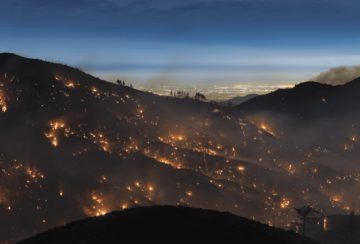 To those who still harbor doubts about the justness of this war, who continue to question the scientific consensus on global warming and the ravages it promises, I ask only that you entertain, if there is a chance you are right, that there is also a chance you are wrong. Let us even say, for argument’s sake, that the virtual certainty of scientists were reduced to 50 percent confidence and the forecasted effects of climate violence were reduced in severity by 50 percent as well. That would still justify the most massive mobilization of human energy and resources the world has ever seen, because the likely outcome would still be far worse than any threat we have faced in the past.
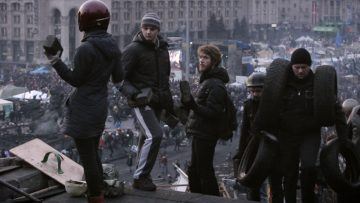 Ukrainian director Sergei Loznitsa once said that his films were about “the decay and disintegration of the former Russian Empire.” With 29 titles under his belt, ranging from fiction to observational and archival documentaries, Loznitsa demonstrates a keen interest in form, particularly in using fictional devices within documentary. He also opposes the recent tendency in Eastern Europe to frame histories with war and authoritarianism in heroic or rosy terms.
 In the 1980s, zoologists were thus astonished to discover that Salticidae, or jumping spiders, a family of the arachnids that contains more than five hundred genera and over five thousand separate species, had vision systems on par with cats, mammals famous for their acute eyesight. With around six hundred thousand neurons in its brain (roughly half that of a fly or a honeybee), a jumping spider can recognize images on a television screen and is the only invertebrate known to be capable of such a sophisticated feat of visual processing. “How does this speck of dust of a brain achieve such a complicated task?” asks Simon Pollard, curator of invertebrate zoology at the Canterbury Museum in Christchurch, New Zealand. “We need to look deep into these unblinking eyes.”
 T
T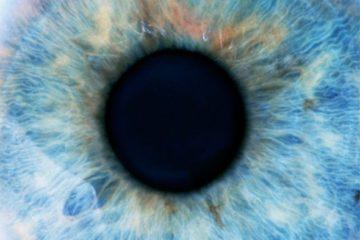 It has been said that “the eyes are the window to the soul,” but new research suggests that they may be a window to the brain as well.