
Phillip Meylan in The Factual:
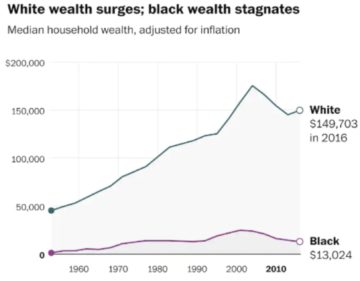 To mark 100 years since the Tulsa Massacre, President Biden recently visited Tulsa and decried the day’s tragic events. Beginning on May 31, 1921, groups of white men, reacting to a claim that a Black man attacked a white woman (later revealed to be false), began shooting Black residents and burning down businesses on Tulsa’s Black Wall Street. This led to some 300 deaths and the leveling of what had been the richest Black neighborhood in the U.S. Now, a century later, the area still shows scars, both from the massacre and from subsequent policies that frustrated the revitalization of the area.
The event has once more brought the question of reparations for Black Americans — both for slavery and for discriminatory policies long after abolition — to the forefront of public discussion, with many anticipating movement under the Biden administration to, at the very least, form a commission to formally study the situation and make recommendations. The question of whether reparations should be made, and how to make them, are both complex and contested. The idea remains fairly unpopular with Americans — 53% of Democrats support the idea, while just 6% of Republicans do; likewise, around three-quarters of Black respondents support reparations, compared to just 15% of white respondents.
More here.
 H
H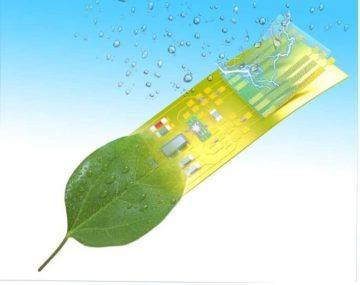 A research team from the University of Massachusetts Amherst has created an electronic microsystem that can intelligently respond to information inputs without any external energy input, much like a self-autonomous living organism. The microsystem is constructed from a novel type of electronics that can process ultralow electronic signals and incorporates a device that can generate electricity “out of thin air” from the ambient environment. The groundbreaking research was published June 7 in the journal Nature Communications.
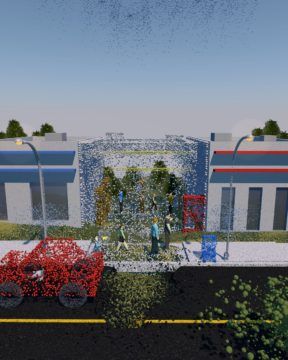 In 2013, a philosopher and ecologist named Timothy Morton proposed that humanity had entered a new phase. What had changed was our relationship to the nonhuman. For the first time, Morton wrote, we had become aware that “nonhuman beings” were “responsible for the next moment of human history and thinking.” The nonhuman beings Morton had in mind weren’t computers or
 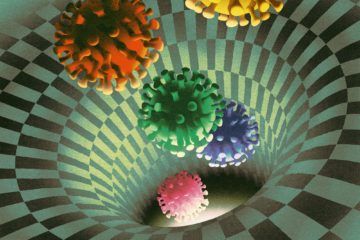 Gilles Demaneuf is a data scientist with the Bank of New Zealand in Auckland. He was diagnosed with Asperger’s Syndrome ten years ago, and believes it gives him a professional advantage. “I’m very good at finding patterns in data, when other people see nothing,” he says.
 Thirty years have passed since journalists were cut off from Punjab, and Punjab from the world. In June of each year, Sikhs throng to gurudwaras to observe one of the most significant of their religious holidays. On this day, when even the less observant find their way to gurudwaras, the Indian Army attacked Darbar Sahib—the Golden Temple, the Sikh Vatican —and dozens of other gurudwaras across the state.
 Nations, like individuals
 In a recent study
 In a speech to the First All-Union Congress of Soviet Writers in Moscow in 1934, Central Committee secretary Andreï Zhdanov reminded those assembled of Comrade Stalin’s recent declaration that, in the Soviet Union, writers are now “the engineers of the human soul”.
 In the 1950s, four decades before he won a Nobel Prize for his contributions to
  On June 2 ,Bill Gates’ advanced nuclear reactor company TerraPower, and Warren Buffett’s PacifiCorp announced that they’ve chosen Wyoming as the state to launch their Natrium advanced nuclear reactor project.
 Five years ago this month, I attended the
  I first saw