https://www.youtube.com/watch?v=pK8N47RFRd8&t=2638s

https://www.youtube.com/watch?v=pK8N47RFRd8&t=2638s
David Salle at Artforum:
 One of Janet’s themes as a writer was self-delusion in all its guises—the propensity we all share for telling ourselves stories that, at the very least, reconfigure events to cast ourselves in a more favorable light. I was stung by one line in the profile: that (I paraphrase) in all our time together, nothing I said about my work was of the slightest interest to her. Once my vanity recovered from the dismissal of my “thinking,” the veracity of Janet’s verdict was clear. (The passage continued to insist that nothing any artist ever says about their work is of interest.) I eventually came to feel more or less the same way—that nothing anybody says about their intentions or “process” is of any particular relevance unless it’s a one-liner by de Kooning. Who cares? This attitude is at odds with the prevailing reverence for that peculiar literary artifact, the artist’s statement, but such was the incontrovertible nature of Janet’s contrarianism. Like any good analyst, she was only interested in the story behind the story. The fact that a belief is widely held should be enough to raise our suspicions.
more here.
Ryan Ruby at The Point:
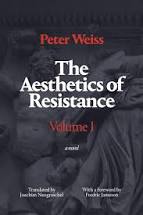 It seemed like a good idea to avoid the screen, but my resolve didn’t last long. The book I was reading at the time, On the Natural History of Destruction, a collection of W. G. Sebald’s lectures and essays about the literature of the Second World War, concludes with a piece on the German-Swedish writer Peter Weiss. Like most English-speakers who had heard of him, I knew of Weiss only as the author of the play The Persecution and Assassination of Jean-Paul Marat as Performed by the Inmates of the Asylum of Charenton Under the Direction of the Marquis de Sade (Marat/Sade for short), which had been made into a film starring Patrick Magee and Glenda Jackson during the brief vogue for interwar European aesthetic programs—in this case Brecht’s Epic Theater and Artaud’s Theater of Cruelty—among the countercultures of Britain and the United States in the 1960s. Sebald, however, mentions Marat/Sade only in passing. Instead, he discusses Weiss’s early career as a painter; his surreal autobiographical novella, Leavetaking; his controversial documentary play about the Frankfurt Auschwitz trials, The Investigation; and, at greatest length, his late three-volume novel about the German anti-fascist underground, The Aesthetics of Resistance.
more here.
Shakeeb Asrar in The Christian Science Monitor:
 Last month, when Samina Farooq, a domestic worker, learned that a fellow female worker in Lahore had been beaten by her employer for spilling milk on the floor, she went to see her. Her message: You should quit now. “Bibis [female employers] beat us for dropping milk on the floor or deduct a portion of our salary if we mistakenly burn a piece of cloth when ironing. Are we not humans? Can’t we make mistakes?” says Ms. Farooq. After the employer acknowledged that she had treated her maid unfairly, the maid agreed to stay on. The International Labor Organization (ILO) estimates that Pakistan has more than 8.5 million domestic workers, mostly women and children. Some suffer appalling abuse at the hands of their employers. Last year an 8-year-old girl was beaten to death by her employers in Rawalpindi for letting their parrots escape.
Activists have long complained that in addition to high-profile abuses, domestic workers are routinely exploited behind closed doors, without any of the protections and benefits provided to formal workers. So, when the province of Punjab, Pakistan’s most populous, passed a law in 2019 that barred child labor in homes and extended labor law and social security to all domestic staff, it was hailed as a landmark reform. But the Domestic Workers Act, a first for Pakistan, hasn’t lived up to its promise because of resistance from employers, lax government oversight, and, perhaps surprisingly, lukewarm support from domestic workers themselves.
More here.
Joshua Holden in Nautilus:
 There’s a rude charm to the title, “Why Your Friends Have More Friends Than You.” It’s catchy, like the title of an antagonistic explainer: Here are the causes of your lackluster social life. It sounds more like a New York Times op-ed than an academic paper. But in fact, “Why Your Friends Have More Friends Than You” is a 1991 paper from Scott Feld published in the American Journal of Sociology. It now has some claim to fame for introducing into popular culture the so-called “friendship paradox,” which researchers have used to detect the early onset of contagious outbreaks and design effective vaccination strategies. New research, published in the Journal of Complex Networks, suggests the paradox is more nuanced than Feld figured it to be.
The paradox stems from our poor intuitions about networks and averages. If you were to guess how many friends you have, compared to the number of friends your friends have, how would you fare? You may say it’s your friends that have more friends than you, if you’re feeling modest. But it’s also the case that some of those friends who have more friends than you also have friends who have more friends than them, and so on. The friendship paradox says that this is true for everyone—on average, everyone has friends with more friends than they have.
More here.
Long before there were
…. any stars
When the great empty void
…. was packed full of a hundred-thousand
other even emptier voids
There was a soft whisper in the dark
…. ..~ and maybe this whisper was more like a song
…. ~ and maybe this song was more like a poem
~ and maybe this poem was more like a prayer
And this soft whisper that was
a song that was a poem
that was a prayer
kept uttering your
name and saying
“I can’t wait for the
day you come to find me”
yes, even before
the first crack of
Genesis lightning
spread its dandelion
seed across the cosmos
you were the first thing
on the mind of a waking God
please hold on
…. you matter more than matter itself
please hold on
…. you have more time than time itself
please hold on
…. you have existed before existence
please hold on
by John Roedel
from John’s Website
Scott Aaronson in Shtetl-Optimized:
 In one sentence, then, here’s my beef with The Chair: its script portrays a mob, step by step, destroying an innocent man’s life over nothing, and yet it wants me to feel the mob’s pain, and be disappointed in its victim for mulishly insisting on his innocence (even though he is, in fact, innocent).
With real-life woke controversies, there often lingers the question of whether the accused might really be a racist, fascist, sexual predator, or whatever else, adequate proof or no. What’s different here is that we know that Bill Dobson is none of those things, we know he’s decent to his core, because the writers have painstakingly shown us that. And yet, in a weird narrative pretzel, we’re nevertheless supposed to be mad at him, and to sympathize with the campaign to cancel him.
More here.
Patricia Fara in Prospect:
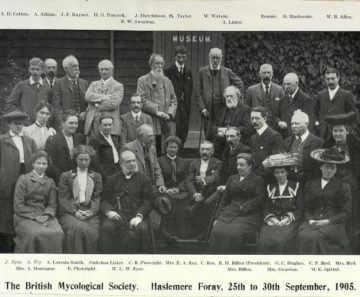 The pioneer of slime mould research was an extraordinary mycologist called Gulielma Lister (1860-1949). Like many female scientists, she has vanished into near obscurity, yet her colleagues celebrated her as the “Queen of Slime Moulds.” In 1905, she was among the first 25 women admitted as a Fellow of London’s prestigious Linnean Society. She made quite an impression on that august group: one younger admirer remembered that she “removed her hat in deference to the sexless character of a Fellow. It was an unusual thing then for a lady to remove her hat, but we all took our cue from Miss Lister and did the same.” She broke the conventions of her time, and a century later her research lies behind a major new approach to computer software.
More here.
Tomas Pueyo in his Substack Newsletter:

We love telling ourselves that our political systems were crafted by great people coming up with novel ideas, wise founding fathers, patriots revolting against the establishment.
There’s a bit of that. But humans believe they have more agency than they actually do. In reality, what we do is more determined by our context, by systems that drive our actions. We are like pawns on a chessboard.
I find it much more interesting to ask: what underlying systems cause our current society? And if the systems change, how will our society change?
We’re in the first decades of such a massive change. Internet and blockchain are upending everything we know. They will eventually kill the most powerful establishment: nation-states. And I’ll prove it to you by talking with Rigobert.
More here.
Henri Cole at The Paris Review:
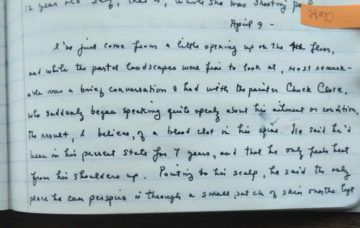 I’ve just come from a little opening up on the fourth floor, and while the pastel landscapes were fine to look at, most remarkable was a brief conversation I had with the painter Chuck Close, who suddenly began speaking quite openly about his ailment or condition, the result, I believe, of a blood clot in his spine. He said he’s been in his present state for seven years, and that he only feels heat from his shoulders up. Pointing to his scalp, he said the only place he can perspire is through a small patch of skin on the left side of his head. When he is touched anywhere below his shoulders, what he feels is an icy cold. He is happiest in the sun in his bathing suit.
When he paints, he straps his brushes to his wrists. It is easier for him to paint than to draw, because he can paint with his arm out before him; to draw requires more mobility than he has. He talked with such candor that a small group of us was drawn to him.
more here.
Fergus Butler-Gallie at Literary Review:
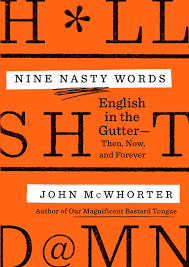 The lavatory facilities at Trisha’s bar, that glorious survivor of old Soho, adorned with photos of Al Capone and the pope, bear a legend written at eye level: ‘USE AS URINAL ONLY. NO SITTING.’ Except someone – I believe they are known usually as a ‘wag’ – has inserted an H into the final word, rendering it an equally familiar (and, arguably, more appropriate) piece of Anglo-Saxon. Or ought that to be Proto-Indo-European? As John McWhorter informs us in Nine Nasty Words, the history of that graffitied verb (though, as he points out, it can also be a noun, an adjective, a pronoun and even ‘with a bit of adjustment’ an adverb) goes back to the word skei – used by steppe dwellers of yore and meaning ‘to cut off’. It really is fascinating, the things one can learn in a lavatory.
Skei’s modern-day descendant is one of nine words profiled by McWhorter in this spirited and scholarly history of profanities. As you’d expect in a work by a professor of linguistics, etymologies and tales of bastardisation form a sizeable proportion of each chapter.
more here.
Rachel Cooke in The Guardian:
 Away from the sulphurous world of Twitter, the feminist campaigner and journalist Julie Bindel is best known as the co-founder of Justice for Women, an organisation that since 1990 has advocated for those convicted of murder after having experienced violence by men; JfW campaigned successfully for the release of Emma Humphreys, who killed her violent pimp, Trevor Armitage, in 1985, and more recently for Sally Challen, who was convicted of the murder of her abusive husband, Richard, in 2010. Thanks to this work, and to her reporting elsewhere, Bindel also has expertise in the areas of porn, prostitution and sex trafficking; she was one of those who helped to break the story of the grooming gangs operating in the north of England, an investigation that would eventually lead to the independent inquiry into child sexual exploitation in Rotherham in 2013.
All of which surely makes her a Good Thing: a person of integrity, bravery and determination. But alas, as she writes in her new book, Feminism for Women, there are people for whom none of this is relevant. To them, Bindel is a Bad Thing, and they would like her to disappear – if not from the world, then at least from public life. In recent years, she has been de-platformed by numerous universities and other institutions following protests by assorted trans activists and their allies, among them those who argue that “sex work is work”. Even when such events do go ahead, there’s often trouble. At one, a man tried to punch her in the face. At another, a debate about pornography, her opponent, a man who has made money in that industry, was given a warm welcome by the students who’d tried so hard to get her taken off the bill. What, you might well wonder, has she done to invoke such anger, disapproval and bizarre contrarianism? Why does her past now count for so little? Is it really such a crime to believe, as she does, that sex is a material reality, and gender a social construct?
More here.
Griffith and Woo in The New York Times:
 SAN FRANCISCO — After four years, repeated delays and the birth of her baby, Elizabeth Holmes, the founder of the blood testing start-up Theranos, is set to stand trial for fraud, capping a saga of Silicon Valley hubris, ambition and deception. Jury selection begins on Tuesday in federal court in San Jose, Calif., followed by opening arguments next week. Ms. Holmes, whose trial is expected to last three to four months, is battling 12 counts of fraud and conspiracy to commit wire fraud over false claims she made about Theranos’s blood tests and business. In 2018, the Department of Justice indicted both her and her business partner and onetime boyfriend, Ramesh Balwani, known as Sunny, with the charges. Mr. Balwani’s trial will begin early next year. Both have pleaded not guilty.
Ms. Holmes’s case has been held up as a parable of Silicon Valley’s swashbuckling “fake it till you make it” culture, which has helped propel the region’s start-ups to unfathomable riches and economic power. That same spirit has also allowed grifters and unethical hustlers to flourish, often with little consequence, raising questions about Silicon Valley’s tightening grip on society. But the trial will ultimately be about one individual. And the central question will be whether Ms. Holmes was a deceptive schemer driven by greed and power, or a naïf who believed her own lies and was manipulated by Mr. Balwani.
More here.
what is god
and what is stone
the dividing line
if it exists
is very thin
at jejuri
and every other stone
is god or his cousin
there is no crop
other than god
and god is harvested here
around the year
and round the clock
out of the bad earth
and the hard rock
that giant hunk of rock
the size of a bedroom
is khandoba’s wife turned to stone
the crack that runs across
is the scar from the broadsword
he struck her down with
once in a fit of rage
scratch a rock
and a legend springs
by Arun Kolatkar
from Jejuri
New York Review Book, 1974
Link: Jejuri
 Dear Readers,
We are collaborating with the company Now4real to bring you a new feature: the ability to chat in real time with any other people who happen to be visiting 3QD at the same time. You will notice in the left lower corner of your screen a widget which looks like the image shown at the top right of this post. The large number in the center indicates the number of current visitors reading 3QD. The smaller number in the little circle indicates the number of unread messages currently posted and available to read by clicking the widget.
Once you post a message in the chat area, it is available for anyone to read and respond to for 3 hours, after which it will automatically be deleted. We are not completely sure whether this will prove to be a useful way for 3QD readers to communicate with each other but it is an interesting supplement to comments and we are going to try it out as an experiment for a couple of weeks. Please let us know in the comments area of this post if you find it useful and would like us to keep it permanently.
Here is some information about the company provided by Now4real:
With Now4real, we aim at introducing a new paradigm for the web. We call it “instant communities”. An instant community is the group of people who happen to be visiting the same web page at the same time. The moment an online article is being read by someone, it becomes like a virtual place because a human is dedicating time and attention to it. That person is at home, in the office, or on a train, but is also on the web page containing that article. It’s quite surprising that until now, there has been no means for people to meet in these virtual places. Now4real connects these people in real time, by detecting and showing how many readers are present “right now” and where they are from in the world, and by providing a live group chat dedicated to that website. Chat messages are ephemeral, to stimulate the continuous birth of new and extemporaneous instant communities.
Try it and see if you like it! NEW POSTS ARE BELOW.
Justin E. H. Smith in his Substack Newsletter:
 Marcel Proust represents many things. Chief among these perhaps, especially for non-French readers, is quantity, and therefore the marathon-like endurance of anyone who actually reads all seven volumes of In Search of Lost Time, and can prove it. A 2016 cartoon in the New Yorker features a middle-aged couple sitting up in bed when one of them realises he and his partner are exactly the age at which they must start the opus if they hope to finish it before death. In a classic Looney Tunes episode Bugs Bunny has sent Elmer Fudd into a dustcloud of St. Vitus-like commotion from which he cannot escape; the sheer temporal extension of Fudd’s state is marked by Bugs sitting down next to him and patiently opening the cover of Remembrance of Things Past (as it used to be called in English).
Corollary to the length and weight of Proust’s work is the idea that to take it on amounts to a form of world-renunciation, and potentially an abnegation of our “real” moral connections and political duties. I recall shortly after September 11, 2001, Christopher Hitchens wrote that he had recently been on the cusp of giving up on politics altogether and devoting himself to a sustained critical work on the French novelist, only to be awoken and drawn back into the world by “Islamofascism”, and to the calling of militant atheism that would occupy him for the rest of his life.
More here.
Rachel Nuwer in Undark:
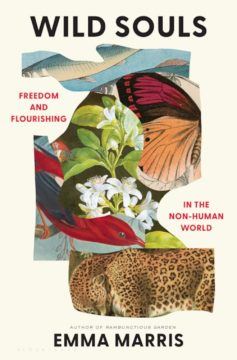 I was once challenged by a friend to explain why it matters if species go extinct. Flustered, I launched into a rambling monologue about the intrinsic value of life and the importance of biodiversity for creating functioning ecosystems that ultimately prop up human economies. I don’t remember what my friend said; he certainly didn’t declare himself a born-again conservationist on the spot. But I do remember feeling frustrated that, in my inability to articulate a specific reason, I had somehow let down not only myself, but the entire planet.
The conversation would have gone very differently had I already read environmental journalist Emma Marris’s “Wild Souls: Freedom and Flourishing in the Non-Human World,” a razor-sharp exploration of the worth of wild animals and the species they belong to, and the responsibility we have toward them. “I wanted to know whether the massive human impact on Earth changes our obligation to animals,” Marris writes. “Our emotions about animals have always been strong, but are our intuitions about how — and whether — to interact with them still correct?”
More here.
Kim Heacox in The Guardian:
 Shortly before he died in 2007, the celebrated American novelist, iconoclast and second world war veteran Kurt Vonnegut gave a final interview. “My country is in ruins,” he said. “I’m a fish in a poisoned fishbowl.” Vonnegut was 84, and sounded razor sharp as he spoke about inequality and political shortsightedness, adding that in the history of the United States “one thing that no cabinet has ever had is a Secretary of the Future, and there are no plans at all for my children and grandchildren.”
“Why should I care about future generations?” asked the comedian Groucho Marx. “What have they ever done for me?”
More here.