
Cody Delistraty in The Paris Review:
 The fifteenth-century Italian artist Fra Angelico invented emotional interiority in art; laid the stylistic groundwork for Michelangelo, Leonardo da Vinci, and Mark Rothko; and theorized a utopian world, one in which everything and everyone is ultimately linked.
In the summer of 1873, Henry James visited a former monastery on Piazza San Marco in Florence. Surrounded by a scattering of low-slung, washed-out government buildings and conical Tuscan cypresses, the church and convent were in what is still the city’s center. When James first entered the convent, he saw Fra Angelico’s The Crucifixion with Saints in the chapter room. A brightly colored, semicircle fresco about thirty feet wide, Crucifixion depicts Christ and the two thieves on either side of him, nailed to their crosses, as saints and witnesses grieve below. “I looked long,” James wrote. “One can hardly do otherwise.” As the author moved throughout what had then just become a museum, he felt a spiritual urge, even though he had rejected his Christian upbringing. “You may be as little of a formal Christian as Fra Angelico was much of one,” he wrote in Italian Hours. “You yet feel admonished by spiritual decency to let so yearning a view of the Christian story work its utmost will on you.” Even Angelico’s colors, he added, seem divinely infinite, “dissolved in tears that drop and drop, however softly, through all time.”
More here.
 A botanist’s quest for new medicines takes her deep into the Amazon. A computer scientist and a sci-fi author peer into the future of artificial intelligence. An anthropologist confronts changing attitudes about death. From an ambitious road map for the future of physics to a whirlwind tour of animal outlaws, the books on this year’s fall reading list—reviewed by alumni of the AAAS Science and Technology Policy Fellowship program—challenge readers to see the topics under consideration in a new light. Join a neurologist on a journey to understand the myriad causes of psychogenic illnesses, gain a better grasp of the origins of the climate crisis, and confront the ways ideas about gender have shaped innovation, all with the help of the books reviewed below. —Valerie Thompson
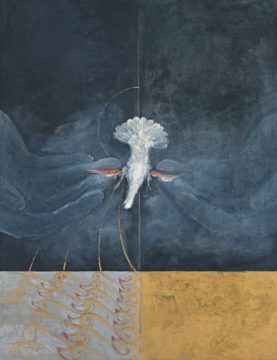 In his 1591 treatise De monade, numero et figura liber (On the Monad, Number, and Figure), Bruno described three types of monads: God, souls, and atoms. Much later, the concept of the monad was popularized by Gottfried Wilhelm Leibniz. In Leibniz’s system, monads are the basic, irreducible components of the universe. Each monad is a unique, indestructible soul-like entity. Monads cannot interact, but all are perfectly synchronized with one another by God.
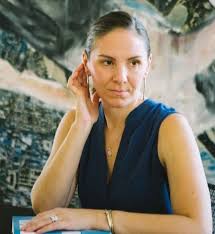 February, 1991. The first night on the ship, I wore a cobalt velvet jacket with a shawl collar, stonewashed jeans, and a necklace bearing three tiers of iridescent orbs, an unintentional nod to the disco ball that would cast the ballroom in a glittering glow. I was barely a teen-ager, and, from my view across the dining room, I appeared to be the sole female passenger on the cruise ship carrying several hundred gay men from Miami, Florida, to San Juan, Puerto Rico, over the course of seven days—and definitely the only kid. I was travelling with my father, who, less than eighteen months later, would die after a five-year battle with aids. But, for the moment, he was well—at least well enough to take his daughter on a Caribbean vacation.
 Memes become omnipresent for a variety of reasons. They might be fodder for entertaining video footage. They might provide a tool for people to express themselves, or cater to deep-seated hopes or anxieties. Ivermectin, which is used for some human applications as well as horse deworming, answered the desire for a covid miracle cure in the face of the United States’ recent surge in
 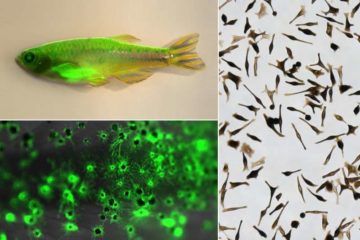 Right now, in your body, lurk thousands of cells with DNA mistakes that could cause cancer. Yet only in rare instances do these DNA mistakes, called genetic mutations, lead to a full-blown cancer. Why? The standard explanation is that it takes a certain number of genetic “hits” to a cell’s DNA to push a cell over the edge. But there are well-known cases in which the same set of mutations clearly causes cancer in one context, but not in another. A good example is a mole. The cells making up a mole are genetically abnormal. Quite often, they contain a mutated DNA version of the BRAF gene that, when found in cells located outside of a mole, will often lead to melanoma. But the vast majority of moles will never turn cancerous. It’s a conundrum that has scientists looking to cellular context for clues to explain the difference.
 I AM ON MY FOURTH HURRICANE
 I know that many liberals, and not a few leftists, will dismiss this account as wildly hyperbolic. Liberals have an abiding faith in the solidity of American democratic institutions; leftists have internally consistent arguments demonstrating why a putsch can’t happen because it wouldn’t be in capital’s interests. It always seems most reasonable to project the future as a straight-line extrapolation from the recent past and present; inertia and path dependence are powerful forces. But that’s why political scientists nearly all were caught flat-footed by the collapse of the Soviet Union. To be clear, I’m not predicting the possible outcome I’ve laid out. My objective is to indicate dangerous, opportunistic tendencies and dynamics at work in this political moment which I think liberals and whatever counts as a left in the United States have been underestimating or, worse, dismissing entirely. If forced to bet, based on the perspective on American political history since 1980, or even 1964, that I’ve laid out here, I’d speculate that the nightmare outline I’ve sketched is between possible and likely, I imagine and hope closer to the former than the latter.
 At the end of June, the World Health Organization certified China as having eliminated malaria. The announcement may have gotten a little drowned out by the mass spectacles surrounding the Communist Party’s 100th birthday, but make no mistake: going from 30 million cases annually to zero really is a reason to be cheerful.
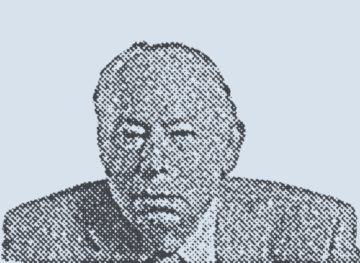 Steven Weinberg and I knew each other for seventy-four of our eighty-eight years. He was my friend and classmate throughout high school and college. We met at the Bronx High School of Science, where, together with Gerald Feinberg, Morton Sternheim, and Menasha Tausner, we decided to become theoretical physicists—as we all became.
 There is an old adage that if you want to understand state building or state breakdown, follow the guns. In conflict zones like Afghanistan, it is all too easy to take recourse to debates over development and culture, while ignoring the dynamics of armed conflict, and the presence of weaponry that militarises society and embeds violence. Even a casual perusal of databases at Small Arms Survey, Geneva, that tracks violent conflict and the proliferation of arms, brings home some basic facts about state building and violence.
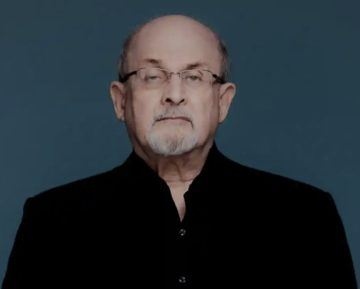 Out of the gloom Salman Rushdie floats into view, his familiar face with short beard and glasses hovering on screen in front of a library that should win any competition for the most impressive Zoom bookshelf backdrop.
 There is no general theory of problem-solving, or even a reliable set of principles that will usually work. It’s therefore interesting to see how our brains actually go about solving problems. Here’s an interesting feature that you might not have guessed: when faced with an imperfect situation, our first move to improve it tends to involve adding new elements, rather than taking away. We are, in general, resistant to subtractive change. Leidy Klotz is an engineer and designer who has worked with psychologists and neuroscientists to study this phenomenon. We talk about how our relative blindness to subtractive possibilities manifests itself, and what lessons might be for design more generally.
 Could admitting millions more immigrants over the next decade be the jolt the U.S. needs to revive its economy, culture, and politics? After four years of restrictionism under President Trump, ongoing border controversies, and an escalating culture war led by nativists, this idea may seem counterintuitive or even far-fetched. But recent labor market trends, demographic changes, and even accelerating climate change all point to dramatically increased immigration as a logical catalyst for national renewal. Becoming the most welcoming country on Earth for migrants—breathing new life into our most flattering, if too often inaccurate self-image—could be our salvation.