
Category: Recommended Reading
Lee “Scratch” Perry (1936 – 2021) musician, producer
Mikis Theodorakis (1925 – 2021) composer
Sunday Poem
Odes
1.
Of the gardens of Adonis, Lydia, I love
Most of all those fugitive roses
…. That on the day they are born,
…. That very day, must also die.
Eternal, for them, the light of day:
They’re born when the sun is already high
…. And die before Apollos’s course
…. Across the visible sky is run.
We too, of our lives, must make one day:
We never know, my Lydia, nor want
…. To know of nights before or after
…. The little while that we may last.
2.
To be great, be whole: nothing that’s you
…. Should you exaggerate or exclude.
In each thing, be all. Give all you are
….In the least you ever do.
The whole moon, because it rides so high,
….….Is reflected in each pool.
by Ricardo Ries (Fernando Pessoa)
from the Poetry Foundation
Translation: Edouardo Roditi
Embodiment : Salvaging a Self
Magali Duzant in Lensculture:
 Purple morning glories creep and sprawl against a white fence, embracing a sculpture of sorts, wooden arms akimbo; a blue plastic bin flipped over. One can almost hear the crunch of the photographer’s foot against the dried grass. The photographs of Sue Palmer Stone exist somewhere between the extremes of exuberance and decay, fragility and strength, loss and playfulness.
It has often been said that photography is a way of making sense of the world. Breaking down the dramas of life into manageable slices, pausing the fast pace of all that is moving around us, reordering a narrative to study it. But what about the overlooked? The quiet detritus that most of us pass right by? In Embodiment : Salvaging a Self, Stone creates conversations out of the discarded objects that litter the corners of our vision.
<p “=””>In a world in which everything is disposable, what does it mean to make something out of what others might term nothing? Stone has called the project a “salvage operation”. She began focusing on the work over three years ago, in part as a response to a mysterious autoimmune disorder that she had been diagnosed with. Early iterations of the project included more figurative self portraits but as time went on, the focus shifted. The sculptural forms she was both finding and creating took the lead. Within these forms, the viewer can find an abstraction of a self; something more open, more universal. Stone’s photographs ask us to put aside a modern day desire for constant stimulation in place of a quieter gaze, a more inquisitive eye attuned to small elements.
More here.
Only one presidential election has provoked civil war — at least until now
Mattew Rozsa in Salon:
 Before Joe Biden defeated Donald Trump in 2020, only one presidential election had resulted in massive violence against the federal government. That of course was the election of 1860, which was as divisive as any in history and plunged the United States into the Civil War. This alone makes it difficult to claim a parallel with the 2020 election, despite Donald Trump’s repeated false assertions that he actually won. To this point, there are no signs of a bloody internecine conflict that ends with at least 620,000 deaths.
So in some ways, Trump’s Big Lie about the 2020 election is not as bad as the lies that caused the Civil War. In other very important ways, however, it’s much worse.
First, though, one must understand the 1860 election, which came at a political moment fraught with danger. Americans were divided as to whether slavery should be allowed into the newly-acquired western territories. Extremists in the South, sensing an opportunity to profit off human bondage in nascent industries, wanted no limits on when, where and how slavery could be expanded. While there were certainly some abolitionists who wanted to entirely eliminate slavery, mainstream “anti-slavery” forces mostly sought a compromise, where slavery would not be allowed to spread outside states where it was already legal.
More here.
Saturday, September 4, 2021
Like Ordering Pizza: Thomas Meaney on the war in Afghanistan
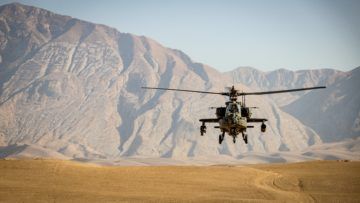 Thomas Meaney in the LRB (Photo by Andre Klimke on Unsplash):
Your cause is right and God is on your side!
Zbigniew Brzezinski, US national security adviser, to the Afghan mujahedin, 3 February 1980
I have benefited so greatly from the jihad in Afghanistan that it would have been impossible for me to gain such a benefit from any other chance, and this cannot be measured by tens of years but rather more than that.
Osama bin Laden, March 1997
Once, the Kabul Zoo housed ninety varieties of animals and got a thousand visitors a day, but in the era of fighting that followed the fall of the Soviets and then of Najibullah, the people stayed away, and the animals found themselves in a place more dangerous than any forest or jungle. For ten days, the elephant ran in circles, screaming, until shrapnel toppled her and she died. As the shelling went back and forth, the tigers and llamas, the ostriches, the elephant, were carried away to paradise. The aviary was ruptured and the birds flew free into the heavens from which the rockets rained.
Denis Johnson, 1 April 1997
Let’s step back a moment. Let’s just pause, just for a minute. And think through the implications of our actions today, so that this does not spiral out of control.
US Representative Barbara Lee, 14 September 2001
This crusade, this war on terrorism, is going to take a while. And the American people must be patient. I’m going to be patient.
President George W. Bush, 17 September 2001
The Taliban regime already belongs to history.
Jürgen Habermas, December 2001
More here.
Kim Stanley Robinson: Remembering climate change … a message from the year 2071
Will it Be Enough?
 Wolfgang Streeck in Sidecar (Photo by Kevin Woblick on Unsplash):
It’s summer, Brussels pretends to be on vacation, but nobody believes it: clouds are gathering, no silver lining in sight, nerves wrecked all around. Forests are burning, rain is falling, rivers are flooding – the climate crisis has hit home, more undeniably than ever. Of the €750 billion Corona ‘recovery fund’, not a single euro has yet been spent and the fourth wave is beginning to unfurl. Time for a fiscal booster shot – but how to pay for it? The French war in Africa drags on, the failed states of Libya, Syria, Iraq and Lebanon continue to fail, German demands for a European asylum regime that protects Germany from having to live up to its moral rhetoric are as divisive as ever, regime change in Russia must wait since Putin won’t resign. And now Afghanistan: Good Uncle Joe has become Bad Uncle Joe, toute l’Europe being shocked: unilateralism! In Germany and the UK, governments are desperately trying to avoid explaining why, apart from following American orders, they have been fighting a senseless war for two decades in an ungovernable faraway country. And in the midst of disaster everywhere Angela Merkel, the European Union’s unappointed but all the more effective Super-President, who they say has somehow kept it all together, is to leave her office as German chancellor this coming autumn, forever.
Will ‘Europe’, or the ‘European project’ as embodied by the EU, survive Merkel? In the Realpolitik of Brussels, this translates into whether Germany will continue to fulfil its obligations as the EU’s hidden hegemon after her departure, meaning first of all whether it will continue to pay. This it can do in a variety of ways, many of which are designed to be maximally obscure: by letting its net contributions to the EU budget rise; by allowing the European Central Bank to engage sub rosa in state financing, in contravention of the Treaties; by agreeing to underwrite the Corona ‘recovery fund’, also outside the Treaties; by allowing that debt to be serviced by more debt in the future, letting the €750 billion, sold as a one-of-a-kind emergency measure, turn into a ‘historic breakthrough’ toward a ‘supranational fiscal capacity’ à la française – while, in order to keep interest rates low, intimating to the markets that if the worst came to the worst, Germany would be on-hand to offer ‘European solidarity’.
More here.
The Violent Logic of Humanitarianism
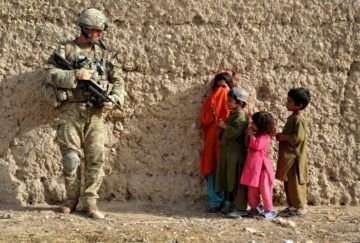 Faisal Devji in Boston Review:
“The idea that we’re able to deal with the rights of women around the world by military force is not rational.” This single sentence from President Biden’s ABC interview with George Stephanopoulos on August 18 exposed the paradox of humanitarian intervention. It acknowledged that trying to address violence with violence only serves to perpetuate it. Much commentary on the West’s two decades of intervention in Afghanistan assumes that Western humanitarianism masked political aims or was subordinated to them. But Biden seems to recognize that humanitarianism, far more than politics, justified, legitimized, and, indeed, required violence.
When the imagined violence that provoked mass evacuations as the Taliban entered Kabul on August 15 at first failed to materialize, it was willed into being by rumour and hysteria. The international media tended to every report of violence across the country after largely ignoring the torture, rape, massacres, and other war crimes committed by Western armies and their allies as well as by the Taliban, Al-Qaeda, and ISIS over the past twenty years. The final humanitarian act of the departing coalition, the evacuation of “vulnerable” Afghans, had to be justified by the threat of violence, which eventually came on August 26 with ISIS suicide bombings at the airport.
Even as Biden promises to forsake humanitarian interventions for political interests, he is still drawn back to the scene of cruelty that defines the former. But to abandon humanitarianism for politics is not to sacrifice compassion for calculation. In modern times, after all, politics has become the most important site to claim human freedom and equality. When we subordinate politics to humanitarianism, we inevitably displace the goal of freedom to a future that can only be achieved once the problem of violence has been resolved. This was also the logic of colonialism, whose subjects were perceived as unready for independence because of the cruelties they suffered and inflicted upon one another.
More here.
On Colm Toibin’s ‘The Magician’
Dwight Garner at The New York Times:
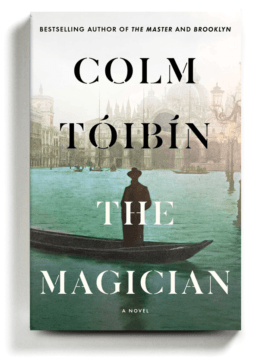 In those diaries, Mann frankly discussed his sexual interest in men, an interest that remained coded in his fiction. In “The Magician,” a subtle and substantial new novel about Mann’s life, Colm Toibin writes that, were Goebbels to get his hands on the diaries, he would Oscar Wilde the eminent author, transforming “the reputation of Thomas Mann from great German writer to a name that was a byword for scandal.”
Goebbels didn’t find them. A funny thing about those diaries, though. When they were finally published in the 1970s and ’80s, more than two decades after Mann’s death, they prompted a reappraisal of his life and work. The diaries humanized a writer who, off the page and sometimes on it, could seem stuffy and pompous, driven by protocol and vanity.
more here.
Colm Toibin on Thomas Mann
On Martha Stewart
Joan Didion at The New Yorker:
 The message Martha is actually sending, the reason large numbers of American women count watching her a comforting and obscurely inspirational experience, seems not very well understood. There has been a flurry of academic work done on the cultural meaning of her success (in the summer of 1998, the New York Times reported that “about two dozen scholars across the United States and Canada” were producing such studies as “A Look at Linen Closets: Liminality, Structure and Anti-Structure in Martha Stewart Living” and locating “the fear of transgression” in the magazine’s “recurrent images of fences, hedges and garden walls”), but there remains, both in the bond she makes and in the outrage she provokes, something unaddressed, something pitched, like a dog whistle, too high for traditional textual analysis. The outrage, which reaches sometimes startling levels, centers on the misconception that she has somehow tricked her admirers into not noticing the ambition that brought her to their attention. To her critics, she seems to represent a fraud to be exposed, a wrong to be righted. “She’s a shark,” one declares in Salon. “However much she’s got, Martha wants more. And she wants it her way and in her world, not in the balls-out boys’ club realms of real estate or technology, but in the delicate land of doily hearts and wedding cakes.”
more here.
Reports of vaccines’ decline have been greatly overstated
Katherine Wu in The Atlantic:
 Vaccines don’t last forever. This is by design: Like many of the microbes they mimic, the contents of the shots stick around only as long as it takes the body to eliminate them, a tenure on the order of days, perhaps a few weeks.
What does have staying power, though, is the immunological impression that vaccines leave behind. Defensive cells study decoy pathogens even as they purge them; the recollections that they form can last for years or decades after an injection. The learned response becomes a reflex, ingrained and automatic, a “robust immune memory” that far outlives the shot itself, Ali Ellebedy, an immunologist at Washington University in St. Louis, told me. That’s what happens with the COVID-19 vaccines, and Ellebedy and others told me they expect the memory to remain with us for a while yet, staving off severe disease and death from the virus at extraordinary rates.
That prediction might sound incompatible with recent reports of the “declining” effectiveness of COVID-19 vaccines, and the “waning” of immunity. According to the White House, we’ll all need boosters very, very soon to fortify our crumbling defenses. The past few weeks of news have made it seem as though we’re doomed to chase SARS-CoV-2 with shot after shot after shot, as if vaccine protections were slipping through our fingers like so much sand.
More here.
The Stenographer Who Married Dostoyevsky — and Saved Him From Ruin
Jennifer Wilson in The New York Times:
 In the spring of 1880, in the midst of what felt like a political tipping point, a new monument dedicated to the Russian poet Alexander Pushkin was unveiled in Moscow. Alexander II’s Great Reforms of the 1860s — including the emancipation of the serfs — had not satisfied the appetites of radicals for change. Most alarming to moderate Russians were the women who had begun joining the ranks of the self-described Nihilists. They smoked cigarettes, cut their hair short, preferred Feuerbach to romance novels and spurned marriage in favor of careers in science and medicine (or, occasionally, terrorism).
Everyone could sense that Russia was on a collision course with itself, and few feared the potential outcome more than Fyodor Dostoyevsky. At the unveiling ceremony, he delivered a fiery speech, calling on Russians to regard new theories of social progress coming from the West as spiritually alien. He praised Tatyana, the heroine of “Eugene Onegin,” Pushkin’s 1833 novel in verse, for embodying a uniquely Russian spirit of self-sacrifice. A married woman who rejects the advances of her erstwhile lover, Tatyana was proof to Dostoyevsky that, as Andrew D. Kaufman puts it in “The Gambler Wife,” a true “Russian woman would always refuse to build her happiness on the unhappiness of others.”
A biography of the writer’s second spouse, Anna Dostoyevskaya, Kaufman’s book suggests that her husband’s readers would have heard his speech and recalled his own characters, like Sonya in “Crime and Punishment,” “who follows the repentant Raskolnikov to a Siberian prison camp.” Yet Kaufman, a specialist in Slavic literature at the University of Virginia, is principally concerned with what this philosophy would mean for a woman who was not fictional. In the early years of her marriage, Anna was called on to practice superhuman levels of selflessness and forgiveness. She lived at the mercy of her husband’s gambling addiction, teetering on financial ruin for years — at one point having to pawn her own underwear. Dostoyevsky did little to shield her from his domineering family, who tried to control his purse strings. When Anna wanted to go on a honeymoon to Germany, his stepson from his first marriage reproached her: “I don’t allow any European trips.”
More here.
Saturday Poem
Where
You hear one degree. You hear Fahrenheit.
You hear warm weather in your hometown
And leave before the local news switches: they
Say half a degree, say Celsius, say warming
Global climate, so beeswax melts
Out your ear as it ships
Past the Sirens atop bones with plastic
Six pack yokes around them still choking
Those in rigor mortis. You hear them
As one hurricane siren—not constant, plural
Puddles feet deep of human waste smacking
Against Achilles—and chase them. As it turns out,
At half a degree warmer, all of you go
From underwater Otoh Gunga, Sub Diego, and Atlantis
To Upper and Lower Keys, Atlantic and Ocean City:
You go closer from myth to thawed
Greenland; deep-frozen heat in the sky
With smog and lung with tumor tips car
Exhaust pipes, blocking your airways
Yet trafficking cough drop
Needs; the soil’s dry spots a caught black sea bass,
Flat as a skate: you could skate on drought
To the North Pole and fall
Into the Arctic Ocean, devoid of any ice.
Algae moves out, breaks up with coral,
Who then bleaches their skin and dies,
The hottest day on record breaking
Its own record every two years until
Heat strokes are common colds
Nobody’s immune to, everywhere—
by Prince Bush
from Pank Magazine 1.1- Environmental Futures
Friday, September 3, 2021
Amitava Kumar on Fiction, Truth, and Fake News
Daniel Lefferts in The Millions:
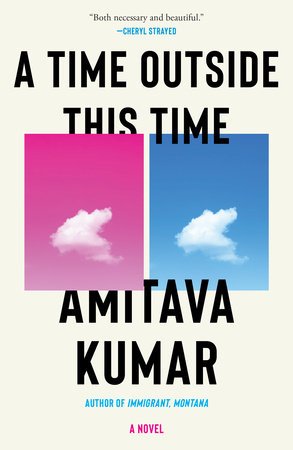 Amitava Kumar tends to talk about his forthcoming novel, A Time Outside This Time, as if he’s still in the process of writing it. He says he’s “going to” try to achieve certain effects with it. He says “I will” adopt certain narrative strategies. He poses provisional questions: “What form do I give,” he asks, to the story he wants to tell?
It’s a curious tic but, given the novel’s subject matter, it’s not surprising. A Time Outside This Time, set primarily in the first half of 2020, is about the global proliferation of fake news and the writer’s obligation to combat it. Rather than examine the vagaries of our moment from a retrospective distance, the novel allows itself to be shaped by them, navigating events—the Covid-19 pandemic, the Black Lives Matter protests, the last breaths of the Trump presidency—as they unfold. No wonder Kumar describes his novel as if he’s still writing it: the story he’s telling is still happening.
“I’m going to put down the news,” Kumar says via Zoom from a hotel room in Sewanee, Tenn., where he’s teaching a class at the Sewanee Writers’ Conference. “I will put everything down as it is occurring—there will be an immediacy—but also I’m doing something that is artistic, or cunning.”
More here.
The allergy epidemic: is a cure on the way?
Cal Flyn in Prospect:
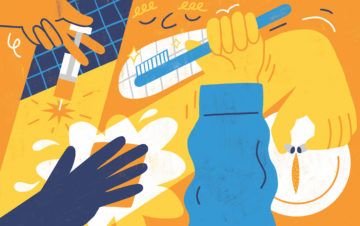 While the explosion in food allergies is well documented, there is no agreement on why it’s happened. Theories abound: one of the most enduring has been the so-called “hygiene hypothesis,” put forward by the epidemiologist David Strachan in 1989, which suggested that modern society’s obsession with cleanliness was at the root of the problem. The hypothesis proposed that a lack of exposure to dirt and bugs leads to a badly calibrated immune system prone to misfires. But though the idea feels intuitive, and has thus found a willing public audience, evidence for it has been lacking. Scientists now say that over-enthusiastic hygiene practices are unlikely to be the cause, although exposure to the lungs of particular cleaning products might be.
More here.
Yanis Varoufakis: Star Trek Versus Imperialist Doctrine
Yanis Varoufakis at Project Syndicate:
 On February 9, 1967, hours after the US Air Force pounded Haiphong Harbor and several Vietnamese airfields, NBC television screened a politically momentous episode of Star Trek. Entitled “The Return of the Archons,” the episode marks the debut of the Prime Directive – the supreme law of the fictional United Federation of Planets, and its Starfleet, banning any and all purposeful interference with alien people, civilizations, and cultures. Devised in 1966, as President Lyndon B. Johnson was sending another 100,000 troops into Vietnam, the Prime Directive constituted a direct, though well-camouflaged, ideological challenge to what the US government was up to.
Having remained central to the Star Trek series to this day, the Prime Directive is even more pertinent now. Military escapades always entail a variety of separate issues, making it hard to have a rational debate about their merits. For example, were the US invasions of Vietnam or Afghanistan motivated by good intentions, whether containing totalitarianism or saving women from radical Islamists? Or were those intentions invoked to provide political cover for cynical economic or strategic motives? Were they wrong because the US forces were defeated? Or would they have been wrong even in victory?
The beauty of the Prime Directive is that it cuts through this labyrinth of confusion and deception: the invader’s motives, good or bad, matter not one iota.
More here.