
Maddie Bender in Scientific American:
 When reptile breeder Steve Sykes saw that two particular leopard geckos were up for auction in 2015, he knew he had to have them. The chubby lizards’ bodies were dappled with the black spots that gave their species its common name. And at eye level, they looked to be smiling. But unlike other members of Eublepharis macularius, these were “lemon frost” geckos: they were pastel yellow from the base of their head to the root of their tail, as if they had been dipped in lemon sherbet. A breeder had created this variety, also called a “morph,” just one generation earlier. The combination of rarity and beauty made the two geckos instantly appealing to Sykes. He purchased the pair and named them Mr. and Ms. Frosty.
Leopard geckos are among the most common reptile pets. Native to the Middle East and South Asia, they have been so successfully bred in captivity that most sold today are not sourced from the wild. Instead owners create and mix dozens of morphs through selective breeding and random luck. The issue emerged with Mr. Frosty’s offspring. Sykes had bred the male with other leopard geckos he owned to produce more of the coveted lemon frosts. A year after the auction, he noticed small, white bumps growing on the bodies of some of the babies. Over time, he says, it became clear that these bumps were tumors. In fact, it turns out that more than 80 percent of the geckos with this morph suffer from a rare skin cancer that arises from pigment-producing cells called iridophores.
Sykes wanted to know if there was a way to breed lemon frosts to avoid this fate. Were the cancer and unique color somehow inextricably linked? Evolutionary geneticist Leonid Kruglyak of the University of California, Los Angeles, and his colleagues used Sykes’s geckos to crack the lemon frost genetic code—and found that a single gene controlled both the color and the cancer.
More here.
 I have said fuck off to the most powerful man in the world. Maybe you did too. It was on Twitter, which gave me some distance, but I stand by my word choice. It was the right thing to do.
 Practically everywhere we look in the Universe, the large-scale objects that we see — small galaxies, large galaxies, groups and clusters of galaxies, and even the great cosmic web — all not only contain dark matter, but require it. Only in a Universe with far more mass than normal matter can provide, and in a different form from the protons, neutrons, and electrons that scatter and interact with themselves and with light, can our observations be explained. However, an interesting consequence should arise in a Universe with dark matter: the existence of a small but significant population of galaxies containing no dark matter at all.
 Directly following the 2020 election, Republicans seemed to be through with Donald Trump.
 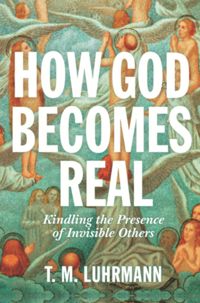 How God Becomes Real is an ethnographically-informed study focused on the development of a person’s relationship with God, including the ways in which they come to hear God speak to them. What is bracketed is the question of whether or not they are really hearing from God—or even whether or not God really exists. Whether or not God exists is an important question, of course, but it is primarily another kind of question – philosophical or theological, perhaps – rather than an anthropological one. How do believers foster a relationship with this divine, invisible other? that is the question addressed here. The research for this project was overwhelmingly done by studying Christians, but in her reflections and analysis Luhrmann supplements this occasionally with work she has done with adherents from other traditions, including Buddhism and Judaism.
 Trump may be out of office, but American politics seem more crisis laden than ever between the caretaker neoliberalism of the Democrats and the creeping totalitarianism of the Republicans. On the Democratic front, although the progressive Sanders-Warren-AOC wing of the party continues to push for liberal reforms, we’ve seen “more of the same” establishment-friendly politics from the neoliberal Biden wing that’s dominated the party for decades. This will come as no shock to those of us who have lamented the plutocratic biases of the Democrats during the Obama years and before.
 THERE’S A RICH IRONY that Malcolm Gladwell’s new book is spun off from episodes of his Revisionist History podcast. Ostensibly a meditation on the morality of bombing civilians during World War II, The Bomber Mafia is anything but revisionist. It’s indeed hard to imagine a more conventional account of the air war against Japan. In the questions it asks, the sources it uses, and the voices it amplifies, The Bomber Mafia offers an account virtually indistinguishable from the consensus position on the firebombings of urban Japan. It takes some of the most oft-repeated fallacies about the shift to area bombing and wraps them in a shiny new package.
 I have no expertise in antitrust. I come to you as a student of the history of political thought.
 We can sometimes forget that “India”—or the idea of a single unified entity—is not a very old concept. Indian history is complicated and convoluted: different societies, polities and cultures rise and fall, ebb and flow, as the political makeup of South Asia changes.
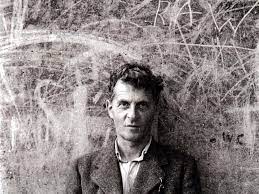 What exactly did Wittgenstein learn from his students? More than a few answers lie in Wörterbuch für Volksschulen (Word book for elementary schools), a curious artifact from his schoolmaster years. Wittgenstein was dissatisfied with existing spelling books, which were expensive and bulky and therefore scarce. One of the tasks in his classroom was for his students to create their own vocabulary list copied from what he wrote on the chalkboard. But production was time-consuming, and the quality was hard to control. If every student had their own slim wordbook, though, they could correct their own errors. These issues with the standard ways of making vocabulary lists led Wittgenstein to write the Wörterbuch, which was published in 1926, the year he quit teaching. For a few years it was used in Austrian village schools, and then it went out of print.
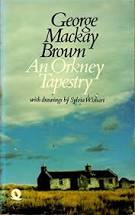 ‘Art, considered as the expression of any people as a whole, is the response they make in various mediums to the impact that the totality of their experience makes upon them, and there is no sort of experience that works so constantly and subtly upon man as his regional environment,’ wrote Mary Austin in The English Journal in 1932. ‘It orders and determines all the direct, practical ways of his getting up and lying down, of staying in and going out, of housing and clothing and food-getting; it arranges by its progressions of seed times and harvest, its rain and wind and burning suns, the rhythms of his work and amusements. It is the thing always before his eye, always at his ear, always underfoot.’
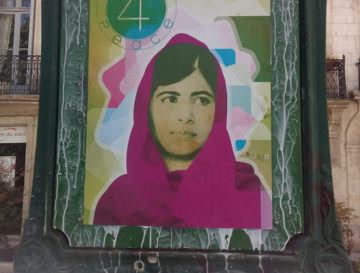 MALALA YOUSAFZAI IS FREAKING OUT