
Julian Brave NoiseCat at The Paris Review:

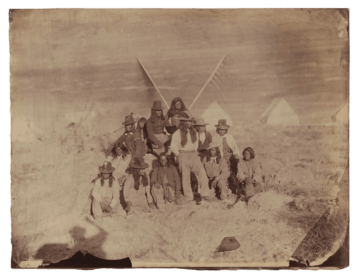
Putting Momaday’s work in conversation with the past half century of Indigenous activism it has paralleled is, I think, an illuminating way to consider both his books and the ideas undergirding Native movements. Voice is a fundamental building block for change, and ideas often have roots that run deeper than their political valence. If Momaday can speak so authentically to the Indigenous experience—our long odyssey through an imperial apocalypse, and the enduring power of our ceremonies and cultures, rooted in land and place, as organizing and governing principles—without saying a word about a political party, politician, or even an act of protest, then that just illustrates how fundamental the things he depicts are to our people. Epistemology, grounded in who we are and where we come from—our very being—becomes ontology. It’s from that starting place, that hearth, that you get the Alcatrazes, Standing Rocks, and Lanada War Jacks.
more here.
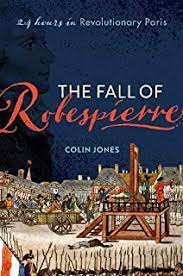 For 27 July 1794, ‘9 Thermidor Year II’ in the new republican calendar, has long been recognised as a ‘pivotal moment’ in the French Revolution. Until that point, the course of the revolution had been marked by increasing radicalism: France had gone from constitutional monarchy after the fall of the Bastille in 1789, to kingless republic in 1792, to wartime police state from 1793. After the events of 9 Thermidor, the trend was towards increasing conservatism. The democratic and reformist energies of the early revolution were mostly dissipated. Within a decade, France was again a monarchy, with a Corsican-born emperor in place of a Bourbon king.
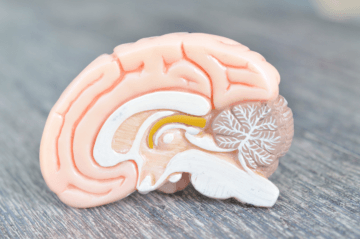 I spent many years thinking about how to design an imaging study that could identify the unique features of the creative brain. Most of the human brain’s functions arise from the 6 layers of nerve cells and their dendrites embedded in its enormous surface area, called the cerebral cortex — which is compressed to a size small enough to be carried around on our shoulders through a process known as gyrification — essentially, producing lots of folds.
 IMPLEMENTATION of the PTI’s Single National Curriculum has started in Islamabad’s schools and for students the human body is to become a dark mystery, darker than ever before. Religious scholars appointed as members of the SNC Committee are
  In Call Me Ishmael, Charles Olson’s magnificent 1947 study of Herman Melville’s Moby-Dick, the American poet writes: “I take SPACE to be the central fact to man born in America.” Using a common alternative title for the 1851 novel, Olson compares it to Walt Whitman’s self-published paean to his country: “The White Whale is more accurate than Leaves of Grass. Because it is America, all of her space, the malice, the root.”
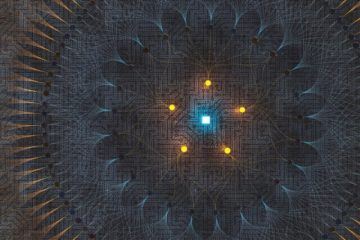 Quantum physicist Mario Krenn remembers sitting in a café in Vienna in early 2016, poring over computer printouts, trying to make sense of what MELVIN had found. MELVIN was a machine-learning algorithm Krenn had built, a kind of artificial intelligence. Its job was to mix and match the building blocks of standard quantum experiments and find solutions to new problems. And it did find many interesting ones. But there was one that made no sense.
 In September 1793, British envoy Lord Macartney was given a tour of the Qing summer palace north of Beijing. Earlier in his trip he presented the Qianlong emperor with gifts of two enameled watches of “very fine workmanship,” a telescope, Birmingham sword blades, and fine British clothes, among other items meant to awe the aging monarch with the superiority of British technology and manufacturing and convince him to sign a trade agreement.
 My daughter recently remarked, over breakfast in a cafe, that the customers, rather than the serving staff, should be known as waiters. Then she removed the mantle of cheese from my side order of hash browns and pointed out that these too were poorly named, since they were actually a shade of yellow. She is 3 years old—and though the assertive mode mostly trumps the interrogative, lately she has started asking tough questions about the English language.
 Readers of “Through the Looking-Glass” may recall the plight of the Bread-and-Butterfly, which, as the Gnat explains to Alice, can live only on weak tea with cream in it. “Supposing it couldn’t find any?” Alice asks. “Then it would die, of course,” the Gnat answers. “That must happen very often,” Alice reflects. “It always happens,” the Gnat admits, dolefully.
 Lorna Finlayson in Sidecar:
 Macabe Keliher in Boston Review:
 Ho-fung Hung in Phenomenal World: