
Katy Guest at The Guardian:
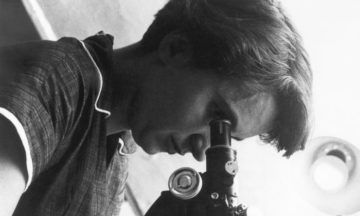 The first page of Howard Markel’s comprehensive history The Secret of Life reads like the opening scene of a movie. “On February 28, 1953, shortly after the chapel bells struck noon, two men hurtled down a stairwell of Cambridge University’s Cavendish Physics Laboratory. Bursting with exhilaration, they had just made the scientific discovery of a lifetime … ” Delving into the human lives and relationships behind “the race to unravel DNA’s structure”, the book frequently zooms in on such visual details, from the “crusty yellow remains” of fried egg at Francis Crick’s breakfast table to the “clickety clack” of Rosalind Franklin’s heels echoing “on the slick, wet marble floor” of King’s College London.
A movie needs a hero and a villain, and in this story they are Franklin – brilliant, female, Jewish, misunderstood – and James Watson, whose “mean-spirited” 1968 memoir “commandeered the historical record with boundless guile and cunning”.
more here.
 Merchant and Ivory, normally working with the writer Ruth Prawer Jhabvala, were one of the most dominant cinematic forces of the late 20th century, rolling out luxuriously appointed adaptations of E.M. Forster and Henry James novels, with the occasional more contemporary anomaly like Tama Janowitz’s “Slaves of New York.” Merchant died in 2005; Jhabvala in 2013. After decades conjuring the Anglo-American aristocracy clinking cups in gardens and drawing rooms, Ivory, the survivor, is ready to spill the tea.
 Benjamin Braun and Adrienne Buller also in Phenomenal World (image: Joëlle Tuerlinckx,
 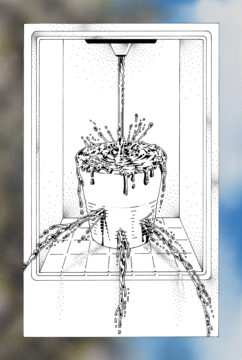 Ajay Singh Chaudhary in The Baffler (image
 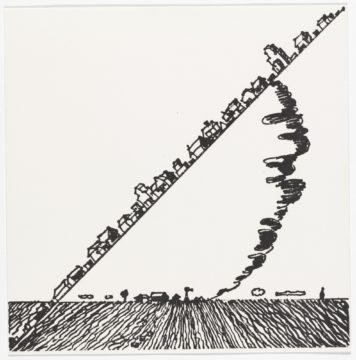 Herman Mark Schwartz in Phenomenal World:
 Something unnatural
 To be a literary biographer is to court the extravagant ridicule of the very people you write about. For all of the salutary services a writer’s biography can offer — the tracing of the life, the contextualizing of the work, the resuscitation of a reputation and the deliverance from neglect — the biographer has been derided as a “post-mortem exploiter” (Henry James) and a “professional burglar” (Janet Malcolm).
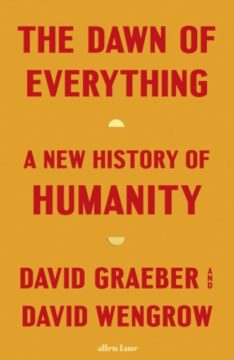 The standard history of humanity goes something like this. Roughly 300,000 to 200,000 years ago, Homo sapiens first evolved somewhere on the African continent. Over the next 100,000 to 150,000 years, this sturdy, adaptable species moved into new regions, first on its home continent and then into other parts of the globe. These early humans shaped flint and other stones into cutting blades of increasing complexity and used their tools to hunt the mega-fauna of the Pleistocene era. Sometimes, they immortalized these hunts—carved on rock faces or painted in glorious murals across the walls and ceilings of caves in places like Sulawesi, Chauvet, and Lascaux.
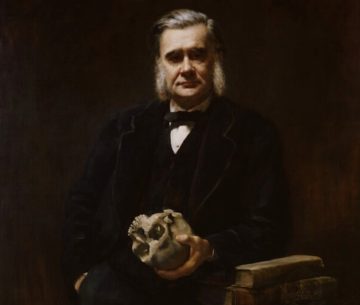 It’s easy to mock the Corporation Formerly Known As Facebook. Mark Zuckerberg’s announcement that Facebook would
  A LITTLE OVER halfway through his 1943 novel El luto humano (Human Mourning), the Mexican writer José Revueltas inserts himself as a character so unobtrusively that it’s easy to miss. A government go-between, when hiring an assassin to kill the leader of an agricultural strike, complains, “First there was the agitation sown by José de Arcos, Revueltas, Salazar, García, and the other Communists. […] And now all over again…” It’s a sly wink at the fact that the novel’s scenario overlaps with the author’s life; it also foreshadows the way that Revueltas’s place in Mexican letters today is inextricably entwined with his dramatic biography.
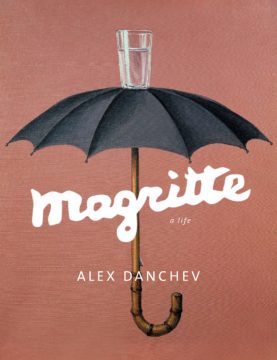 The instant recognisability of Magritte’s work has its roots not in his training at the Académie Royale des Beaux-Arts in Brussels from 1916 to 1918 but in his postwar work as a draughtsman in the city from 1922 to 1926. During this time he made artworks for advertising companies and designed wallpaper and posters. The skills garnered from the first two of these are immediately evident in Golconda, now in the Menil Collection in Houston, Texas. The bowler-hatted men, part Thomson and Thompson, part Gilbert and George, are as obviously Magritte’s logo as the part-eaten apple is that of a certain American computer giant. His eye for pattern was also acute. Golconda would make lovely wallpaper, and no doubt has.
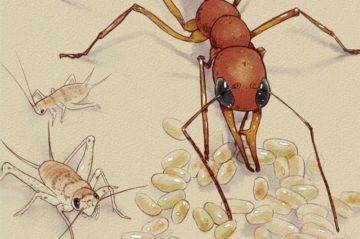 Depending on the outcome of social conflicts, ants of the species Harpegnathos saltator do something unusual: they can switch from a worker to a queen-like status known as gamergate. Now, researchers reporting in the journal Cell on November 4th have made the surprising discovery that a single protein, called Kr-h1 (Krüppel homolog 1), responds to socially regulated hormones to orchestrate this complex social transition.
 “Ever since I have been at court,” exclaimed the vidame, “the queen has always treated me with much distinction and amiability, and I have reason to believe she has had a kindly feeling for me. Yet there was nothing marked about it, and I had never dreamed of other feelings toward me than those of respect. I was even much in love with Madame de Themines. The sight of her is enough to prove that a man can have a great deal of love for her when she loves him—and she loved me.