
Lynne Murphy in the TLS:
 Until recently, Fran Lebowitz was not well known in Britain. The release this year of Martin Scorsese’s Netflix series Pretend It’s a City, however, has made her something of a household name here. A veritable Franbase has now formed in the UK, giving rise to online appearances, a tour scheduled for next year and the first publication in this country of The Fran Lebowitz Reader (which was originally published in the United States in 1994). The Lebowitz on the dust jacket is one fans of the series will recognize: the seasoned New Yorker with gorgeous overcoat, horn-rimmed sunglasses and cigarette, as famous for her writer’s block as for her wit. Between the covers, we meet the artist as a young woman. The Reader reproduces her only two essay collections: Metropolitan Life (1978) and Social Studies (1981), which in turn reproduce her magazine pieces of that era.
In the 1980s, those two books meant a great deal to young American women like me; they survived the subsequent drastic book culls necessitated by my three transatlantic relocations. Impossibly cool, cosmopolitan, smart, self-confident and hilarious, Lebowitz was (and is) the kind of woman we wanted to be, were afraid to be, and (let’s be honest) didn’t have the talent to be.
More here.
 It’s been more than
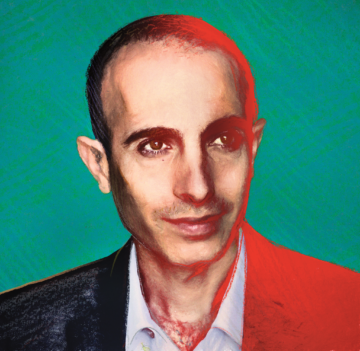 With the publication in the United States of his best-selling “Sapiens” in 2015, the Israeli historian and philosopher Yuval Noah Harari arrived at the top rank of public intellectuals, a position he consolidated with “Homo Deus” (2017) and “21 Lessons for the 21st Century” (2018). Harari’s key theme is the idea that human society has largely been driven by our species’s capacity to believe in what he calls fictions: those things whose power is derived from their existence in our collective imaginations, whether they be gods or nations; our belief in them allows us to cooperate on a societal scale. The broad sweep of Harari’s writing, which encompasses the prehistoric past and a dark far-off future, has turned him into a bit of a walking inkblot test. “The general misunderstandings of me,” says Harari, 45, co-author of the recently published “Sapiens: A Graphic History, Volume 2” (the latest in a series of graphic-novel adaptations of his work), “are that I’m the prophet of doom and then there’s this opposite view that I think everything is wonderful.” Both, of course, might be true. “Once the books are out, the ideas are out of your hands,” he says.
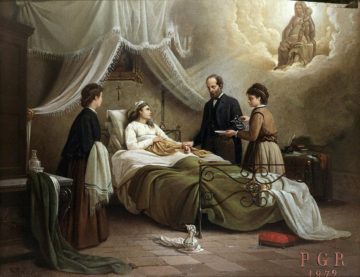 The pain struck suddenly in Venice.
 One day in 2010, when oncologist Paul Muizelaar operated on a patient with glioblastoma—a brain tumor infamous for its deathly toll—he did something shocking. First, he cut the skull open and carved out as much of the tumor as he could. But before he replaced the piece of skull to close the wound, he soaked it in a solution containing Enterobacter aerogenes,1 bacteria found in feces. For the next month, the patient lay in a coma in an intensive care unit battling the bacteria he was infected with—and then one day a scan of his brain no longer showed the distinctive signature of glioblastoma. Instead, it showed an abscess, which, given the situation, Muizelaar deemed a positive development. “A brain abscess can be treated, a glioblastoma cannot,”
 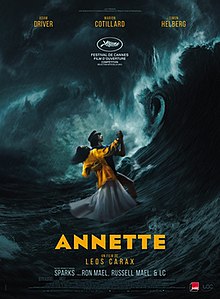 “I’m a storyteller” is a common self-description for virtually everyone in the film industry these days, from directors and scenarists to publicists and marketers. The phrase is a quintessential humble-brag. It carries a sense of modesty: “I may have a profoundly intricate knowledge of my craft, but at heart I’m no different from the people spinning a good yarn for their kids.” But it also holds a whiff of epic continuity, placing the speaker in a line that reaches back to Homer, and beyond that to the nameless bards who first narrativized our species into civilization. All to say: the phrase has passed through ubiquity to become an increasingly mocked cliché. Which is why it was so refreshing to hear the French director Leos Carax say in a recent interview with the
 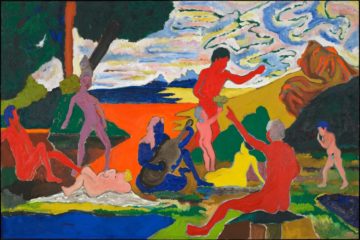 However reductive it may be to call the painter Bob Thompson the Jean-Michel Basquiat of the 1960s, the comparison is inescapable.
 The characters of
  Otto Celera 500L, it’s one that catches the eye. It looks like no other plane out there, and for a good reason: unique aerodynamics.
 Isaiah Berlin understood the parable of the fox and the hedgehog – ‘the fox knows many things, but the hedgehog knows one big thing’ – to illustrate two styles of thinking. Hedgehogs relate everything to a single vision, a universally applicable organising principle for understanding the world. Foxes, on the other hand, embrace many values and approaches rather than trying to fit everything into an all-encompassing singular vision.
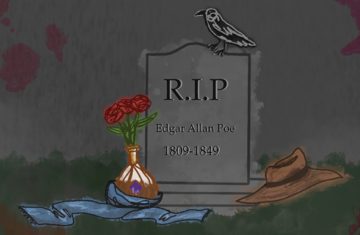 What is it about Poe that grips the popular imagination so, like the medieval Iron Shroud shrinking inward and threatening to crush the narrator of
  Standing in the middle of a room previously inhabited by a now-absent figure can conjure an eerily potent atmosphere, traceable through sensations rather than words. Perhaps it’s because so much of what shapes the edges of any individual’s persona resides within the colors they prefer, their cooking and cleaning smells, or the sounds they regularly hear emanating from the pipes in their walls or a creak in their floorboards. When a person’s body exits their habitat, all the things that previously swirled in and around their tangible body remain, suspended in the air in a thick, viscous hum. These remnants permeate the objects the person leaves behind, too, charged with energy, appearing as sentient creatures rather than a lifeless pile of stuff.
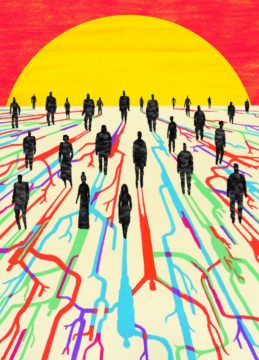 Moments of sociopolitical tumult have a way of generating all-encompassing explanatory histories. These chronicles either indulge a sense of decline or applaud our advances. The appetite for such stories seems indiscriminate—tales of deterioration and tales of improvement are frequently consumed by the same people. Two of Bill Gates’s favorite soup-to-nuts books of the past decade, for example, are Steven Pinker’s “