
Terry Hartle in The Christian Science Monitor:
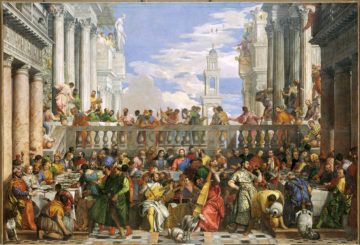 As his armies conquered most of Europe, Napoleon Bonaparte demonstrated an insatiable desire to steal art. These were not smash-and-grab operations. According to Cynthia Saltzman’s marvelous book, “Plunder: Napoleon’s Theft of Veronese’s Feast,” he sought out experts to advise him on which cultural treasures to ship back to Paris. Napoleon wanted to expand the art collection in the Louvre palace. He wrote to France’s five-member governing committee to “send three or four known artists” to choose the best paintings and sculptures.
The peace treaties Napoleon imposed on defeated foes usually required artworks to be forfeited. A 1796 treaty with Pope Pius VI, for example, was worded: “The Pope shall deliver to the French Republic one hundred paintings, busts, vases or statues at the choice of the Commissioners who will be sent to Rome.” At one point he even boasted to the governing committee, “we have everything that is a work of art in Italy, save for a small number of objects in Turin and Naples.”
The French justified this theft not only as part of the spoils of war but also as a way of demonstrating the French Republic’s dominant position in Europe’s new military, political, and cultural order, Saltzman writes. Possessing these objects would demonstrate “their passion for knowledge, their respect for history, their discipline, rationality, and expertise in the fine arts.”
Saltzman tells this story by focusing on the fate of one particular masterpiece: Paolo Veronese’s “The Wedding Feast at Cana.” Painted for the monastery of San Giorgio Maggiore in Venice in 1563, the painting recounts Jesus’ first miracle, the changing of water into wine. The giant canvas measures 22 feet by 33 feet and includes 130 life-size figures arranged across a richly colored and beautifully painted canvas.
More here.
 S
S Neruda’s declaration that “the reality of the world … should not be underprized” implies that we can and often do underprize it. We grow away from our primary relish of the phenomena. The rooms where we come to consciousness, the cupboards we open as toddlers, the shelves we climb up to, the boxes and albums we explore in reserved places in the house, the spots we discover for ourselves in those first solitudes out of doors, the haunts of those explorations at the verge of our security—in such places and at such moments “the reality of the world” first wakens in us. It is also at such moments that we have our first inkling of pastness and find our physical surroundings invested with a wider and deeper dimension than we can, just then, account for.
 Simone Weil was difficult for those who knew her in life and no less difficult for those who encounter her now, through the writings that survived her death at the age of 34 in 1943. Robert Zaretsky’s new intellectual biography, The Subversive Simone Weil: A Life in Five Ideas (2021), evokes several difficulties in its epilogue. Weil’s character was “extreme.” Her ideas were largely impractical (“at worst inhuman”). He calls her attitude “merciless.” And yet, “I cannot resist returning time and again to this remarkable individual,” Zaretsky writes. She led an “exemplary” life. “For many of her readers,” he suggests, “Weil’s life has all the trappings of secular sainthood.”
 Neo-Malthusians credited environmental feedback loops, not moral failings, for regime collapse. In the 1960s and ’70s, works by Paul Ehrlich and Donella Meadows et al argued that the world’s population was growing so fast it would soon outstrip resource supplies, leading to (among other things) widespread food shortages. More recently, Jared Diamond wrote of the role that environmental depletion and diseases played in the fall of civilisations, and his theory that the collapse of Easter Island resulted from overexploitation of the natural environment has enjoyed particular resonance. For its part, the
  Practically every animal that scientists have studied — insects and cephalopods, amphibians and reptiles, birds and mammals — can distinguish between different numbers of objects in a set or sounds in a sequence. They don’t just have a sense of “greater than” or “less than,” but an approximate sense of quantity: that two is distinct from three, that 15 is distinct from 20. This mental representation of set size, called numerosity, seems to be “a general ability,” and an ancient one, said
  Reviewing all of the region’s military interventions between 2010 and 2020, our research
 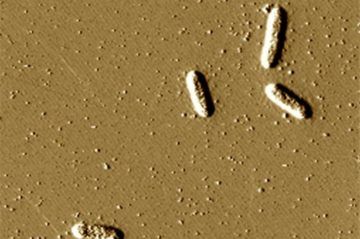 For decades, scientists suspected that bacteria known as Geobacter could clean up radioactive uranium waste, but it wasn’t clear how the microbes did it.
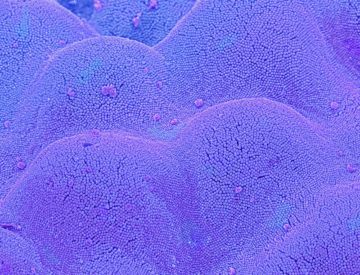 Our main goal is to begin deciphering the molecular communication between bacteria (and the small molecules they secrete) and host cells in the small intestine. We’re particularly interested in enteroendocrine cells — cells found in the lining of the small intestine and throughout the intestinal tract — and how the small-intestine microbiome prompts them to release hormones. We also want to explore how this communication allows gut bacteria to alter physiology throughout the body. We know that gut bacteria affect biological processes in distal places such as the brain and skeletal muscles. I believe that bacterial communication with enteroendocrine cells is a major mechanism. These cells secrete hormones and neurotransmitters, and they also talk to neurons, sending signals across the body. We know there are physical interactions, where bacteria adhere to host cells. There are also chemical-signaling interactions, where intestinal cells sense and react to small molecules produced by microbes. We don’t yet understand the full context or implications of this molecular language in the small intestine. We hope to begin probing which small molecules the enteroendocrine cells respond to, which bacteria produce these molecules, which receptors they bind to, and how that translates to changes in biological processes. Our hope is to provide valuable novel therapeutic targets, not just for metabolic disorders, but also for neuropsychiatric conditions, and disorders influenced by the microbiome.
 I’m not gonna say that Everybody Wants Some!!, the film by Richard Linklater, is a great movie. It is not. But it’s pretty good. We should also just appreciate a film that has not one but two!! exclamation marks in its official title. And yet, something nags at me about the title, that sentence, everybody wants some. What is it that everybody wants? Some. Some what? Well sex, of course, everbody wants some sex. And most of the people in the film are chasing after sex, especially the jocks on the baseball team, our ostensive heroes, the protagonists of the film if there are any protagonists in this film. They want to have as much sex as possible, those baseball jocks, and a few of them get just that. They also want something to do with baseball. They want to become baseball players of a professional sort. They want some fame, some glory, the glory of sport. Probably they want some money also, the money that goes along with the glory and that overlaps to at least some degree with the sex. Sex, glory, and money. That is what they want some of.
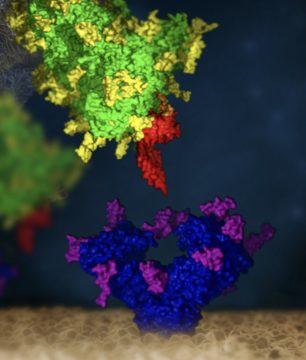 The road from SARS-CoV-2’s “immunity shield” or “sheep’s clothing” to its Achilles’ heel involved several state-of-the-art research techniques. In collaboration with Peter Hinterdorfer of the Institute of Biophysics at the University of Linz, Austria, the team used high-tech biophysical methods to analyze how the
  In the 1980s, I got to know a man who seemed to be the walking embodiment of privilege. He was an elderly but vigorous WASP, tall and lean, with ancestry in this country that reached back to the seventeenth century. A Princeton man, he had gone into finance and risen to become CEO and chairman of a major regional bank. He had one of those WASP names one can barely resist satirizing, but he had been known all his life by his childhood nickname, Curly.
 The
The 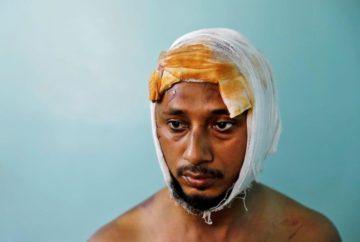 “No one who saw the photo thought I would survive,” said Mohammad Zubair, describing an image, taken by Siddiqui, which came to define last year’s anti-Muslim pogrom in New Delhi. Zubair was beaten by a mob of Hindu men, many wearing bike helmets. “It was like a war zone,” Siddiqui said, recounting how he had walked over the rubble of broken bricks and batons. He stood about a yard away from the group, his mask flecked with Zubair’s blood. He was spotted, and the attackers paused, looking right at his camera. Siddiqui fled just as Zubair lost consciousness. A group of young Muslim boys found Zubair and asked the neighborhood doctor to perform emergency stitches on his head wounds. Siddiqui looked for him later, relieved to find him alive in a local hospital. He made a portrait against the pale blue wall of the intensive treatment wing, Zubair’s head wrapped in gauze, eyes bruised and swollen. Siddiqui often said that he photographed “the human face of a breaking story.”
 It was embarrassingly obvious that