
Copernicus
You are always in the middle of the poem
even at the end.
More and more you are tied by ropes,
foliage, and as you move
the bindings grow around your knees, your feet.
Again and again you pass
your own footprints on the grass, on floors,
once more you have tracked mud into the house.
Have tracked a house into the mud. Outside the poem
are sirens, fires, ocean hitting
pier. Say to yourself: does not cohere
but is subsumed
and must not, must not. Outside the poem
a little vein clicks in the forehead of a financier,
a cue called, an oboe,
truncheons, pigeons, rain
mineralizes a colonnade.
A chorale stands up, taller than a building,
false in sense, numerically true.
You despise these techniques.
You have not got to the truth yet.
A truck downshifts on the freeway,
a shift whistle blows,
someone else’s emergency makes the poem hold.
At night, like notes pushed under doors,
sounds come in—
flypaper in an open window,
your mother rubbing lotion on her hands.
All this is with you, is you,
runs after you into the dark
like those men after Copernicus,
like a planet chased by telescopes into space.
by Timmy Straw
from Academy of American Poets, 8/5/21
Copyright © 2021
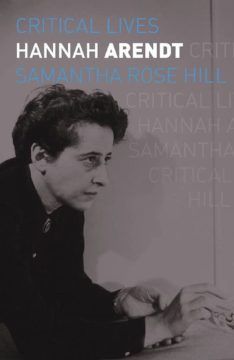 Shaan Sachdev over at the LA Review of Books:
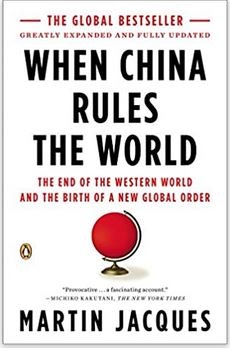 Branko Milanovic over at his substack:
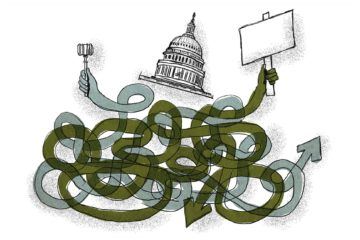 Kim Phillips-Fein in The New Republic:
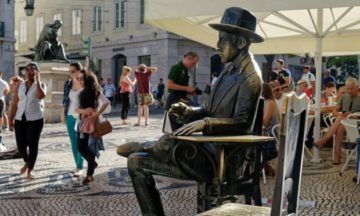 Three heteronyms in particular enabled Pessoa to work through the history of poetry. Impersonating a simple shepherd called Alberto Caeiro, he wrote naive pastoral lyrics; as the refined classicist Ricardo Reis, he composed Latinate homages to the gods; giving voice to the futurist Álvaro de Campos, supposedly an engineer by trade, he celebrated mechanised urban modernity. Commuting between these aliases was like metempsychosis or perhaps, as Pessoa confessed to a critic, like changing sex. His alter egos had extra-literary uses too. To extricate himself from a flirtation with a clingy young woman, Pessoa made Campos write a letter warning her off and when she telephoned in the hope of making a date he answered the call as Reis and informed her that Fernando was not available.
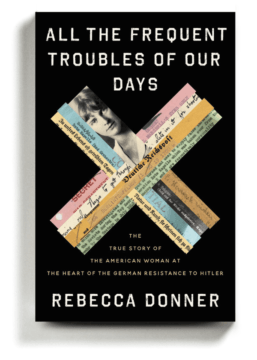 The title of Rebecca Donner’s astonishing new book is a line by Goethe, from a volume of his poems that had been smuggled into the cell of Mildred Harnack — an American woman who was shackled in a Berlin prison, awaiting her death sentence by the Nazi regime. On Feb. 16, 1943, the day she would be taken to the execution shed and beheaded, a chaplain found Mildred hunched over the poems, scribbling in the margins. The heavy gothic font of the German original was accompanied by the ghostly script of her English translation, written with a pencil stub.
 T
T O
O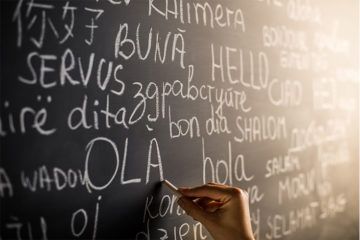 The better machines become at transferring equivalent words and even almost correct syntax and grammatical structures from one language to another, the more the mechanics of translation matter less, and the more we are aware of inflections and innuendoes; what we don’t know what to call, we call beauty.
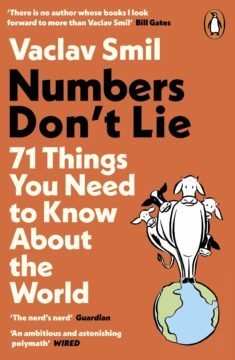 Vaclav Smil is my favorite author, but I sometimes hesitate to recommend his books to other people. His writing, while brilliant, is often too detailed or obscure for a general audience. (Deep dives on
 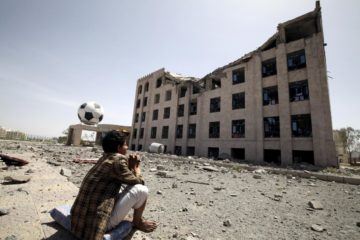 The shift in Washington is undeniable: the Middle East is no longer a top priority for the United States. The U.S. withdrawal from the broader region is evident in the departure of troops from Afghanistan and reductions in U.S. military commitments to Iraq, Jordan, Kuwait, and Saudi Arabia, alongside a heightened focus on China and Russia. There are good reasons for this shift in strategy, especially given the woeful recent history of U.S. involvement in the region, but it also brings risks of its own. The United States’ precipitous departure from Iraq in 2011, for example, paved the way for the rise of the Islamic State (also known as ISIS) and the expansion of Iran’s regional footprint. To avert similar damage this time, Washington must find a way to pair reductions in military commitments with gains in regional stability. One of the best opportunities for achieving those gains lies in emerging talks between the region’s two most consequential antagonists: Iran and Saudi Arabia.
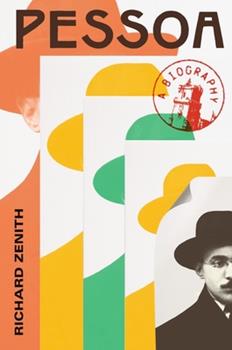 Pessoa has a telling line in his sequence of poems “Slanting Rain” that provides a good way of approaching this: “I don’t know who I dream I am.” Zenith doesn’t reference it, yet I’ve always thought the quotation succinctly gets at the impetus behind Pessoa’s use of heteronyms, among them his three principal and stylistically distinct poetry-writing pseudoselves: Alvaro de Campos (a naval engineer by trade with a lyrical bent), Alberto Caeiro (a rustic and believer in the essence of nature), and Ricardo Reis (a doctor who produced philosophical Horatian odes). And, true, in the poetry there is often the dreamlike element of being “the other,” a ghostly, untethered feeling marked by searingly honest searching.
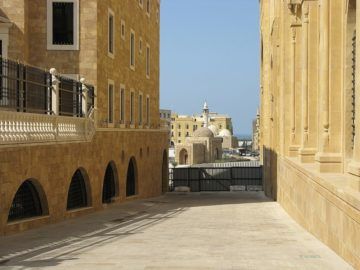 The economic machine is breaking down, retail businesses are almost bankrupt, and yet the city has been seized by a frenzy of activity since this morning, just like in the glory days of its suddenly vanished opulence. The gridlock is no worse than it was back then, even though the traffic lights are out because of the electricity shortages. And where the lights are actually working, police officers are controlling traffic and encouraging drivers to ignore them, directing everyone to move at the same time with grand, raging gestures, as if they were vengefully making a point of reminding us that order no longer reigns, so why should anyone even bother respecting these last damned surviving traffic lights. The drivers are astonished. Some, like me, resist, under the officers’ resentful eyes. They seem aware and ashamed that they have become representatives of the general chaos and the failure of the state, and are going above and beyond what’s actually necessary, as if they were furiously smashing a prized object to pieces to punish themselves for having carelessly chipped it. I talked to my wife about this when I got home, she didn’t seem to care about the feelings I was ascribing to the traffic officers. She doesn’t like them and even before the economic crisis she thought that they actually tend to be the cause of the gridlock rather than anything else, that they always complicate any situation they are in, that city traffic is like a natural process, it always ends up regulating itself, and that human intervention only disturbs it and makes it more complicated.
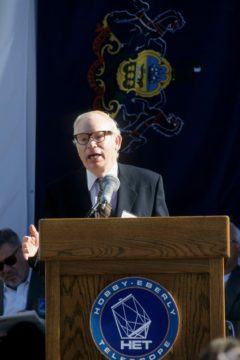 Steven Weinberg