
Elizabeth Cantalamessa in Aeon:
 Something is amiss with democracy. Ask people from any or no political persuasion and they’re likely to give a similar story: contemporary politics has gone haywire because one side (or both) has lost touch with reality. We are living in a ‘post-truth’ partisan news hellscape that prioritises ‘feelings over facts’ and disregards the natural authority of the truth. But all sides seem to agree that there is a ‘truth’ that explains what really makes someone a woman, or an institution racist, or a politician fascist, in a way that compels acceptance from those who otherwise disagree. What we need to do is further emphasise the importance of science and reason, and perhaps sanction the overtly partisan media outlets that mislead otherwise good-natured people, then everyone will come to their senses and agree on things because they are true, because they reflect reality. Humans are rational, remember? Surely, Immanuel Kant wouldn’t lie.
But I don’t think the truth will, in fact, set us free. Our current ‘post-truth’ political landscape in fact calls for a pragmatist therapy to rid us of the belief that ‘truth’ and ‘reality’ deserve a special place in our public justificatory practices altogether. A pragmatist ethics calls for prioritising feelings instead of facts, because a truly humanist democracy is sentimentalist rather than rationalist.
More here.
 Global greenhouse gas emissions must peak in the next four years, coal and gas-fired power plants must close in the next decade and lifestyle and behavioural changes will be needed to avoid climate breakdown, according to the
  Ed Miliband, now freed from the burden of party leadership, has at last resolved the tension between centrist caution and radical ambition firmly in favor of the radical option. In his funny and self-deprecating new book, GO BIG: How To Fix Our World, Miliband makes the case that the only way forward now for center-left parties is to embrace a radical platform of institutional innovation. The book is therefore addressed not only to a British audience, but to parties and activists in the social democratic tradition elsewhere. It has strong resonances for those, such as partisans of the French Parti Socialiste or the German SPD, who face the dangerous prospect of their parties being beached by the tides of history. As its title suggests, GO BIG is a sustained argument for a level of political ambition that would cast the Labour Party’s Blairite era deep into the dustbin of history.
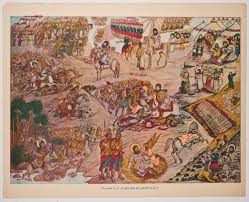 Ashura
 The argument was this: America at its most distinctive wasn’t Judeo-Christian or capitalist or even democratic in a simple way. It was pagan. Not an earth spirit paganism of the moors and glens, but a polytheistic, commercial, cosmopolitan paganism of the bazaar and the agora. We invested objects, people, and performances with the power of our dreams and fears, and then we organized ourselves around those idols in “non-exclusive communities of desire,” arguing about them, buying and selling pieces and images of them on the open market, trying to woo others into our camp and score points over rival camps. We were a democratic people, but to see American democracy clearly was to understand that our democracy renewed itself on a substratum of pagan devotions to movie stars, rock stars, oil paintings, charismatic political figures, football teams, ingenues, mystery novels, muscle cars, runway shows, action movies, and action painters.
 What is drag, anyway?
 When I was about 6, my mind did something wondrous, although it felt perfectly natural at the time. When I encountered the name of any day of the week, I automatically associated it with a color or a pattern, always the same one, as if the word embodied the shade. Sunday was dark maroon, Wednesday a sunshiny golden yellow, and Friday a deep green. Saturday was interestingly different. That day evoked in my mind’s eye a pattern of shifting and overlapping circular forms in shades of silver and gray, like bubbles in a glass of sparkling water.
 In explaining the rationale for approving female-libido drugs, the FDA often cites the “unmet medical need.” Yet researchers are fiercely divided over the question of just how many women lack libido and how best to help them. If you believe advertising for Vyleesi, American women suffer from an epidemic of insufficient horniness. More than 6 million premenopausal women — one in 10 — have low sexual desire, the website claims.
 This new surge brings a jarring sense of déjà vu. America has fallen prey to many of the
  The magnitude of the United States’ failure in Afghanistan is breathtaking. It is not a failure of Democrats or Republicans, but an abiding failure of American political culture, reflected in US policymakers’ lack of interest in understanding different societies. And it is all too typical.
 The two dozen Kalamazoo County Republicans are rapt. They sit shoulder to shoulder in foldout chairs as the guest speaker at their party meeting, who bills himself as an IT expert from the West Coast, details allegations of fraud he claims occurred in Michigan during the 2020 presidential election. No such fraud occurred, according to
  I met the most rational person I know during my freshman year of college. Greg (not his real name) had a tech-support job in the same computer lab where I worked, and we became friends. I planned to be a creative-writing major; Greg told me that he was deciding between physics and economics. He’d choose physics if he was smart enough, and economics if he wasn’t—he thought he’d know within a few months, based on his grades. He chose economics.
 Like many tales of compulsion, Campbell’s Hero brings dangers to those who put their faith in it. The first is a serious misunderstanding of how myth works. Myths and traditional stories function in specific environments for reasons bounded by time and place. Common traits are interesting, but the differences — what we might call variations or multiforms — cannot be ignored.
 N
N