Emmett FitzGerald in Orion Magazine:
 LAST YEAR, I watched Orange Sky Day play out on Instagram from a lake on the other side of the country. In a deck chair I scrolled through countless images of the uncanny wildfire sky, with caption after caption reminding me that this dusky light was from the middle of the afternoon. My beleaguered San Francisco Bay Area friends, who had spent the better part of a month trapped inside due to smoke, ventured out of their apartments to document the otherworldliness. At first, I felt lucky not to be at my home in Berkeley. But that feeling was quickly replaced with survivor’s guilt, as I watched my friends suffer while I read a dystopian novel and drank a beer.
I almost didn’t make it to the East Coast last year because of the pandemic, but after a month spent reading articles on airplane ventilation, I decided it was worth the risk to see my family at least once in 2020. I traveled from San Francisco in one of the N95 masks left over from the previous year’s fires and quarantined for a week in my friends’ New York City apartment. Two COVID tests and a borrowed car later, I was hugging my mother in the driveway.
A few days into the visit, I went on a canoe trip with my dad. We paddled a circuit of ponds with quarter-mile carries between them. There have always been loons in the Adirondacks, but on that trip we saw more than I could ever remember. Sometimes it was just a pair, sometimes five to ten of them swimming together in little groups, or “rafts.” Later, Dad and I watched a bald eagle leap from the top of a white pine to snatch a perch from the lake. It rose from the water with the fish in its talons and flapped off toward the sun.
For a brief moment that day I forgot about everything. Not just the pandemic, but about all the other crises that kept me up at night—climate change and ecological collapse. I let my brain overinterpret the loons and eagles as signs not only that these lakes were healthy, but that the whole planet was thriving. The birds were abundant, the air was clear, and for a brief moment, I felt profoundly calm.
More here.

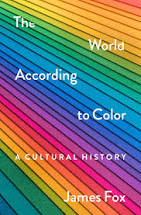 Never mind the physics and the biology and the chemistry. Forget all about the rods and cones and the mysterious workings of the cerebral cortex. Colour, says James Fox, is primarily a cultural construct, ‘a pigment of our imaginations that we paint all over the world’. The Tiv people of West Africa get by perfectly happily with just three basic colour terms: black, white and red. Mursi cattle farmers in Ethiopia have eleven colour terms for cows, but they have none for anything else. At the other end of the spectrum, the Optical Society of America lists 2,755 primary colours, while paint manufacturers now offer more than 40,000 dyes and pigments, so many, says Fox, that they have run out of sensible names for them. ‘Dead Salmon’ and ‘Churlish Green’ are two of the more outlandish mentioned in his entertaining new book.
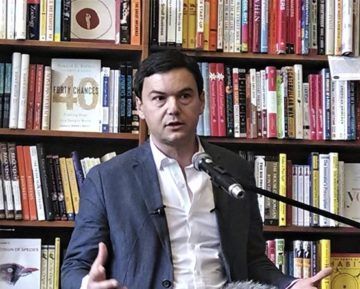 The Paris-based economist Thomas Piketty gained worldwide fame in 2014 for his Capital in the Twenty-First Century, which analyzed rising inequality in the modern world and offered new ways to understand data on income, wealth accumulation, and the changing value of labor. In 2020 he followed with another similarly massive, similarly impressive tome, Capital and Ideology, which looks at the belief systems that underly that data. In it he asks the kind of question economic historians tend to shy away from: Where does inequality come from and why do societies naturalize and put up with it? Put another way: Why aren’t we all screaming?
 Over the past millennia, humans have developed a remarkable notion of counting. Originally applied to a handful of objects, it was easily extended to vastly different orders of magnitude. Soon a mathematical framework emerged that could be used to describe huge quantities, such as the distance between galaxies or the number of elementary particles in the universe, as well as barely conceivable distances in the microcosm, between atoms or quarks.
 In Afghanistan, kinship and tribal connections often take precedence over formal political loyalties, or at least create neutral spaces where people from opposite sides can meet and talk. Over the years, I have spoken with tribal leaders from the Afghanistan-Pakistan border region who have regularly presided over meetings of tribal notables, including commanders on opposite sides.
 If Siri responded to your questions with QAnon conspiracy theories, would you want her answers to be legally protected? Would your verdict change if we labeled Siri’s answers either “computer generated” or “meaningful language?” Or as legal scholars Ronald Collins and David Skover ask in their recent monograph, Robotica: Speech Rights and Artificial Intelligence (2018), should the “constitutional conception of speech” be extended “to the semi-autonomous creation and delivery of robotic speech?”
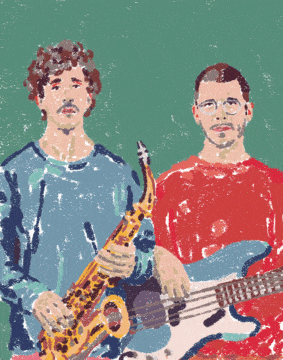 Wilkes, who is thirty-one, grew up in Connecticut, and Gendel, who is thirty-five, grew up in central California. Both were drawn to Los Angeles by way of the jazz program at the University of Southern California. They turned out to have mixed feelings about studying jazz in a university setting. And maybe they had mixed feelings, too, about being tied to a tradition that arouses as much strong feeling—and, worse, as much weak feeling—as jazz does. As a boy, Wilkes was obsessed with the Grateful Dead and Phish, which gave him a love of improvisation. By the time he applied to U.S.C., he was a proficient electric-bass player, and, although he knew that the jazz program typically accepted only upright-bass players, he figured that the jazz bureaucracy might make an exception for him. It did not, and so he studied R. & B. and funk instead, working with a string of legendary musicians, including Patrice Rushen, an esteemed composer and keyboardist, and Leon (Ndugu) Chancler, a drum virtuoso. This was not a sad story: it turned out that Wilkes loved session playing, which demands precision and adaptability, and he had no complaints about his college experience. But, as Wilkes talked in the studio, Gendel grew outraged on his behalf—he couldn’t abide the idea that a jazz department would reject an eager student just because he played the wrong instrument. “It’s the most anti-jazz, anti-open-minded mentality I can imagine,” he said, becoming more animated than he’d been all afternoon. “This is why I’m against it all. It’s just stupid!”
 I
I When Yas Crawford started feeling the effects of her chronic illness, she says she felt as if her body and mind were at war. “When you’re ill for a long time, your body takes over,” she says. “Your brain wants to do one thing, and your body does something else.”
 My beloved if
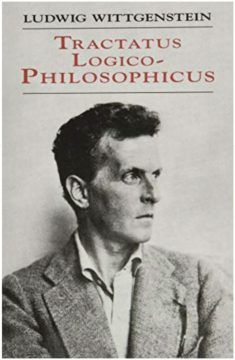 Somewhere along the crooked scar of the eastern front, during those acrid summer months of the Brusilov Offensive in 1916, when the Russian Empire pierced into the lines of the Central Powers and perhaps more than one million men would be killed from June to September, a howitzer commander stationed with the Austrian 7th Army would pen gnomic observations in a notebook, having written a year before that the “facts of the world are not the end of the matter.” Among the richest men in Europe, the 27-year-old had the option to defer military service, and yet an ascetic impulse compelled Ludwig Wittgenstein into the army, even though he lacked any patriotism for the Austro-Hungarian cause. Only five years before his trench ruminations would coalesce into 1921’s
  Biotechnology company Moderna is preparing to begin human trials on HIV vaccines as early as Wednesday, using the same mRNA platform as the firm’s COVID-19 vaccine.
 AT THE CASABLANCA Book Fair in Morocco back in 2009, the Iraqi poet Saadi Youssef was signing the seventh volume of his Complete Poetic Works. A flock of junior high school girls in their blue uniforms were standing nearby. One of them pointed to her friend, telling Youssef: “She, too, is a poet.” He smiled and gestured to the young poet to come forward. She hesitated: “I’m just a beginner.” “I, too, am a beginner. We are all beginners,” said Youssef. The septuagenarian who uttered those words is widely recognized as one of the greatest modern Arab poets. When he uttered those words, he had been writing and publishing poetry for more than half a century. It was neither a hyperbolic statement, nor false modesty on his part. Well into his 80s, one of the most remarkable features of Youssef’s poetry (and his persona) was his restlessness. He was audacious (even reckless, at times) and on an incessant quest for new beginnings.
 Hi. My name is Marc. I’m a guitarist who points extremely loud amplifiers directly at his head. Very often. Sometimes as often as 200 nights a year for the past 45 years. Audiologists say this could make one’s ears howl, create an uncomfortable sensation of density in one’s head, and eventually make it impossible to hear human conversation. Yet I persist . . . Why?
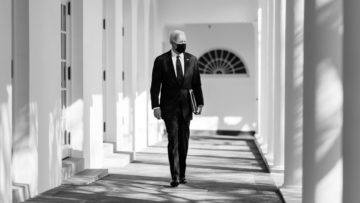 In the past few weeks, the Biden administration’s domestic agenda has come into sharp focus: a bipartisan Senate bill for physical and environmental infrastructure projects nearing passage; new statistics showing that COVID-19 relief has dramatically reduced poverty across demographic groups; an executive order aimed at concentrated market power, promoting competition and worker power; a $3.5 trillion budget proposal with large outlays in social spending, paid for by taxes on the rich and corporations; presidential speeches on behalf of better jobs for Americans at the bottom and middle of the economy. The sum of these and other policies is more ambitious, and more ideologically pointed, than the Biden campaign slogan “Build Back Better.” President Biden is using the resources of the federal government to reverse nearly half a century of growing monopoly, plutocracy, and inequality. Regardless of whether this agenda goes far enough, or whether Congress allows it to go anywhere at all, the administration is pointing the country in a fundamentally new direction.