
Category: Recommended Reading
Saturday Poem
He Thanks His Woodpile
The wood of the madrone burns with a flame at once
lavender and mossy green, a color you sometimes see in a sari.
Oak burns with a peppery smell.
For a really hot fire, use bark.
You can crack your stove with bark.
All winter long I make wood stews:
Poem to stove to woodpile to stove to
typewriter. Woodpile. Stove.
and can’t stop peeking at it!
can’t stop opening up the door!
can’t stop giggling at it
“Shack Simple”
crazy as Han Shan as
Wittgenstein in his German hut, as
all the others ever were and are
………………. Ancient Order of the Fire Gigglers
who walked away from it, finally,
kicked the habit, finally, of Self, of
man-hooked Man
………………. ( which is not, at last, estrangement )
by Lew Welch
from Ring of Bone
Grey Fox Press, 1960
A Lake in Florida Suing to Protect Itself
Elizabeth Kolbert in The New Yorker:
 Lake Mary Jane is shallow—twelve feet deep at most—but she’s well connected. She makes her home in central Florida, in an area that was once given over to wetlands. To the north, she is linked to a marsh, and to the west a canal ties her to Lake Hart. To the south, through more canals, Mary Jane feeds into a chain of lakes that run into Lake Kissimmee, which feeds into Lake Okeechobee. Were Lake Okeechobee not encircled by dikes, the water that flows through Mary Jane would keep pouring south until it glided across the Everglades and out to sea.
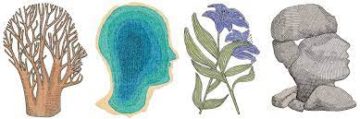
Mary Jane has an irregular shape that, on a map, looks a bit like a woman’s head in profile. Where the back of the woman’s head would be, there’s a park fitted out with a playground and picnic tables. Where the face would be, there are scattered houses, with long docks that teeter over the water. People who live along Mary Jane like to go boating and swimming and watch the wildlife. Toward the park side of the lake sits an islet, known as Bird Island, that’s favored by nesting egrets and wood storks. Like most of the rest of central Florida, Mary Jane is under pressure from development. Orange County, which encompasses the lake, the city of Orlando, and much of Disney World, is one of the fastest-growing counties in Florida, and Florida is one of the fastest-growing states in the nation. A development planned for a site just north of Mary Jane would convert nineteen hundred acres of wetlands, pine flatlands, and cypress forest into homes, lawns, and office buildings.
In an effort to protect herself, Mary Jane is suing.
More here.
Play and Devotion with Oliver Sacks
Lawrence Weschler in Orion Magazine:
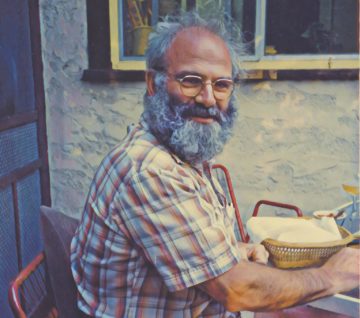 As a student at St. Paul’s Academy in London, Oliver Sacks founded a tremendously successful literary society. It quickly eclipsed the staid Milton Society, “which had been founded at St. Paul’s, years earlier, by Milton himself,” he says. “We were a ravenous Jewish overgrowth,” he goes on, “and one day the headmaster called me in and said, ‘Sacks, you’re dissolved, you don’t exist,’ as simple as that—a phrase that has persisted within me, hauntingly, through the years.” Talking about St. Paul’s, which “used to be in Hammersmith, in a magnificent Gothic monstrosity,” to which Oliver would bike or bus (“the 28, the bus of my childhood, whose fare has in the meantime jumped from one penny to forty pence”), puts him in mind of the Natural History Museum in nearby South Kensington, which he would often skirt on the way to and from school—and he proposes we head over for a visit.
On the drive, he explains how, though his romance with motorcycles began in adolescence, he really only got his first one on his twenty-first birthday. During his last six months in England, stationed for a residency in Birmingham, he would gun his black Norton down the Birmingham–London highway. Eventually, as virtually his last act in England—he starts to laugh at the memory—he “stepped o=” his bike, at eighty miles an hour, slid a hundred yards on the slippery road, and survived, protected by his leather swaddling. (The bike was destroyed.)
Then, the minute he got to America, he got another, “an off-road scrambler.”
Arriving at the Natural History Museum, a huge and imposing stone secular cathedral built in high confident Victorian Gothic, Oliver relates, as we approach the ramp, “Beneath the visible museum, there was a vast underground one, crammed with anatomical samples. The New Spirit Building, it was called; I was a frequent visitor. The place used to be so unpopular, it was a delight. There were no concessions to popular presentation,” he says, punning.
More here.
Friday, April 15, 2022
Psychedelics Show Promise as a Treatment for Alcoholism
Michaela Haas in Reasons to be Cheerful:
 Ralph Gerber* has tried nearly everything a wealthy alcoholic can try during two decades of excessive drinking: half a dozen stints in rehab, Alcoholics Anonymous, even a shaman-led quest through the Arizona desert. Each time, the treatments got him sober, yet the 48-year-old real estate broker in Los Angeles kept relapsing. His divorce, problems at his firm, the Covid lockdowns — there was always a trigger that sent him back to the gin.
In the spring of 2021, he decided to try a path that is not entirely legal. He flew to Denver, Colorado, to take a dose of psilocybin, the hallucinogenic component in magic mushrooms. “It was a journey into my innermost core,” is how Gerber describes the six-hour experience. “I felt flooded with love and was able to get in touch with long-suppressed feelings.” Six months later, he made the trip again for a second session. “I have been sober ever since,” he says proudly, half confident he’s reached the end of his addiction, half fearful the effects might eventually wear off.
More here.
The AI protein-folding revolution
Ewen Callaway in Nature:
 For more than a decade, molecular biologist Martin Beck and his colleagues have been trying to piece together one of the world’s hardest jigsaw puzzles: a detailed model of the largest molecular machine in human cells.
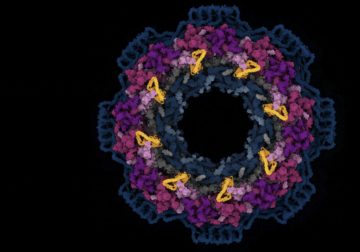
This behemoth, called the nuclear pore complex, controls the flow of molecules in and out of the nucleus of the cell, where the genome sits. Hundreds of these complexes exist in every cell. Each is made up of more than 1,000 proteins that together form rings around a hole through the nuclear membrane.
These 1,000 puzzle pieces are drawn from more than 30 protein building blocks that interlace in myriad ways. Making the puzzle even harder, the experimentally determined 3D shapes of these building blocks are a potpourri of structures gathered from many species, so don’t always mesh together well.
More here.
Western Dissent from US/NATO Policy on Ukraine is Small, Yet the Censorship Campaign is Extreme
Glenn Greenwald in his Substack newsletter:
 If one wishes to be exposed to news, information or perspective that contravenes the prevailing US/NATO view on the war in Ukraine, a rigorous search is required. And there is no guarantee that search will succeed. That is because the state/corporate censorship regime that has been imposed in the West with regard to this war is stunningly aggressive, rapid and comprehensive.
On a virtually daily basis, any off-key news agency, independent platform or individual citizen is liable to be banished from the internet. In early March, barely a week after Russia’s invasion of Ukraine, the twenty-seven nation European Union — citing “disinformation” and “public order and security” — officially banned the Russian state-news outlets RT and Sputnik from being heard anywhere in Europe. In what Reuters called “an unprecedented move,” all television and online platforms were barred by force of law from airing content from those two outlets. Even prior to that censorship order from the state, Facebook and Google were already banning those outlets, and Twitter immediately announced they would as well, in compliance with the new EU law.
But what was “unprecedented” just six weeks ago has now become commonplace, even normalized.
More here.
David Bowie’s Advice to Young Artists
A New Biography of Czesław Miłosz
Cory Oldweiler at the LARB:
 Haven draws on a compendious knowledge of her subject, having mused on and written about Miłosz for more than 20 years. She met with the man himself on two occasions in early 2000, visits that turned out to be his last interviews in the United States, and since then she has talked with his translators, including Robert Hass, Lillian Vallee, and Peter Dale Scott; his family, including his son, Anthony, and his brother-in-law, Bill Thigpen; and his friends, including Mark Danner, who purchased Miłosz’s longtime home on Grizzly Peak. She has also edited two prior volumes on Miłosz, one collection of interviews and one of essays; has penned dozens of blog posts relating to him on her fecund website, The Book Haven; and has written numerous articles about him, including a 2013 essay for Quarterly Conversation entitled “Miłosz as California Poet,” which can be read as an urtext for A California Life.
That essay opens in the winter of 1948–’49, with Miłosz sitting in a canoe on a Pennsylvania river, waiting for beavers and contemplating defecting to the United States, as one does.
more here.
Czesław Miłosz: A California Life – A Conversation with Cynthia Haven
What One Does: Rainer/Aristotle/Welling
Walter Benn Michaels at nonsite:
 In 1968, Yvonne Rainer wrote an essay criticizing “much of the western dancing we are familiar with” for the way in which, in any given “phrase,” the “focus of attention” is “the part that is the most still” and that registers “like a photograph.”1 Her problem was not the standard complaint that the movement essential to dance is falsified by a still photograph. It was instead that the western dancing she wanted to break away from had the aesthetic of the still photograph built into it—it was already too photographable. What she wanted instead was a dance that refused that aesthetic, that really would be falsified by being photographed. In 1971, James Welling started taking dance classes at the University of Pittsburgh. When, the following year, he started at Cal Arts, he made the decision to become an artist instead of a dancer, but he continued to be interested in dance and especially in Rainer’s essay, which he “read and reread,”2 even as his decision to become an artist turned more specifically into the decision to become a photographer. And much later, in 2014, realizing that he “wasn’t finished with dance,” he began making still photographs of dance performances.
more here.
Friday Poem
In days threatened by disease and war the still quiet
of ordinary boredom might seem desirable.
………………………………………………. —Roshi Bob
Northeast Regional
The all-seats-filled Thursday 3:26
from Boston to New York speeds along
the same familiar route
through tiny Connecticut towns
whose pulse beats only in the narrow corridor
between tracks and docks:
Mystic, New London, Old Saybrook.
They are the kind of New England fishing town
one would imagine from a Longfellow poem,
half-hidden under coastal mist,
where the moisture in the air
creates halos around neon signs on the row of stores
that provide the communities essentials.
—Nails, Pizza, Karate—
where the driftwood that knocks at the hull of moored boats,
the smell of the sea’s salty brine
and the metallic twang of wires
slapping the mast of rocking sailboats
are lost to the traveler
behind the thick-paned windows of the train,
where the steady tedium of clanking rail
is broken only by the sight of the lone seagull
whose ghostly silhouette
glides against the descending dusk.
by Sassan Tabatabai
from Uzunburun
The Pen & Anvil Press, 2011
Meet me in the metaverse
Jay Ownes in New Humanist:
 The metaverse leapt into popular awareness in 2021, in a world all too prepared for virtual sociality thanks to a year and counting of pandemic social distancing and Zoom Christmases. Last April, Epic Games announced $1 billion in investment to build “revolutionary” connected social experiences. In June, Facebook announced itself as “a metaverse company”, with 10,000 employees working on virtual reality products and experiences, and by October, it had rebranded itself as Meta, driving a flurry of commentary as people scrambled to work out what that might actually mean.
The word quickly made it into the Oxford English Dictionary, where it’s defined as “a virtual-reality space in which users can interact with a computer-generated environment and other users”. Venture capitalist Matthew Ball, whose “Metaverse Primer” essays have done a lot to shape thinking around the concept, wrote of it: “You can walk into any experience or activity, and potentially address almost any of your needs, from a single starting point or world that’s also populated by everyone else you know.”
Online video games are probably the easiest way in to imagining the metaverse. They allow for flexibility of interaction (for example, while Fortnite began as a shooter game, it now tags itself as the place where you can “Watch a concert, build an island or fight”) as well as scale (Fortnite has over 200 million players). There are also their highly developed internal economies and social organisation – in Second Life, for instance, users can build houses and open businesses, which contribute to its $600 million economy. But the metaverse is potentially more than just a gateway to digital experiences. It crosses over into physical experiences too. Augmented reality, where the so-called IRL (“in real life”) world is visible alongside digital content, does not require special headsets or fancy glasses.
More here.
Could gut microbes regulate appetite and body temperature?
Elizabeth Pennisi in Science:
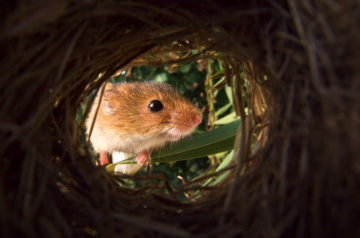
With more microbes than cells in our body, it’s not surprising that bacteria and other invisible “guests” influence our metabolism, immune system, and even our behavior. Now, researchers studying mice have worked out how bacteria in the mammalian gut can ping the brain to regulate an animal’s appetite and body temperature—and it involves the same molecular pathway the immune system uses to detect bacterial pathogens.
“It’s quite an important finding,” says Antoine Adamantidis, a neuroscientist at the University of Bern who was not involved with the work. “Our life depends on food intake, and this is one more [thing] that bacteria can [influence].”
Over the past 20 years, researchers have uncovered connections between the human gut and the rest of the body. They have linked certain intestinal microbes to conditions such as depression, multiple sclerosis, and immune system disorders; they have also documented nervous system connections between the gut and the brain. But researchers have been hard pressed to understand exactly how gut microbes—or the molecules they make—influence the brain.
More here.
Thursday, April 14, 2022
Amartya Sen on identity, decolonisation and how to change the world
Gavin Jacobson in The New Statesman:
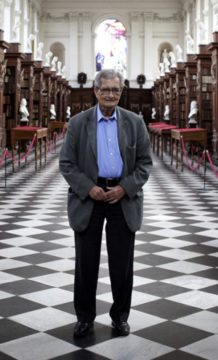 The history of economics owes many of its greatest contributions to the philosophers. Like Adam Smith, John Stuart Mill, Karl Marx and Friedrich von Hayek, Amartya Sen, who won the Nobel Prize for Economics in 1998, has a formidable reputation both as a world authority on development, welfare and famine, and as a distinguished theorist and moral philosopher. Born in Bengal in 1933, Sen’s life has been one of border-crossings – geographic and intellectual – as well as the rejection of narrow identities. He is, as he once put it:
“An Asian, an Indian citizen, a Bengali with Bangladeshi ancestry, an American or Great Britain resident, an economist, a dabbler in philosophy, an author, a Sanskritist, a strong believer in secularism and democracy, a man, a feminist, a heterosexual, a defender of gay and lesbian rights, with a non-religious lifestyle, from a Hindu background, a non-Brahmin, a non-believer in an afterlife, and also, if the question is asked, a non-believer in before-life. This is just a small sample of diverse categories. There are a number of other categories which can inform and engage me.”
Home in the World (2021) is a memoir of an intellectual life, one that trades inner revelation for sharp scholarly observation and social insight. Humbly recounting his upbringing and then his career as a young academic, the book charts Sen’s peregrinations through the key imperial quarters – India, Burma, Cambridge – as well as offering elegant disquisitions on those thinkers who helped shape his own work and world-view.
Amartya Sen recently spoke from his home in Cambridge Massachusetts to the New Statesman’s ideas editor, Gavin Jacobson.
More here.
Why modern airplanes have winglets
Jacopo Prisco at CNN:
 What caught your eye the last time you looked out of your airplane window? It might have been the winglet, a now ubiquitous appendage at the end of each wing, often used by airlines to display their logo and put their branding in your travel pictures.
But the winglet isn’t there for marketing purposes alone — it actually saves fuel. On average, an aircraft equipped with them can use up to 5% less fuel, and for a typical Boeing 737 commuter plane that can mean 100,000 gallons of fuel a year, according to NASA. The collective savings for airlines are in the billions of dollars.
They do so by reducing the natural vortices that form at the wingtips, which can be so strong that smaller aircraft can even flip in mid-air when crossing the wake of very large planes. The effect is so obvious that aerodynamicists were thinking about it even before the Wright brothers completed their first flight. The widespread adoption of winglets, however, is far more recent.
More here.
A theory of why we’re all going nuts online
Alan Jacobs in The New Atlantis:
On January 6, 2021, Samuel Camargo posted a video on Instagram showing him struggling to break through a police barrier to get into the U.S. Capitol building. The next day he wrote on Facebook: “I’m sorry to all the people I’ve disappointed as this is not who I am nor what I stand for.”
A month after the riot, Jacob Chansley, the man widely known as the QAnon Shaman, wrote a letter from his jail cell in Virginia asking Americans to “be patient with me and other peaceful people who, like me, are having a very difficult time piecing together all that happened to us, around us, and by us.”
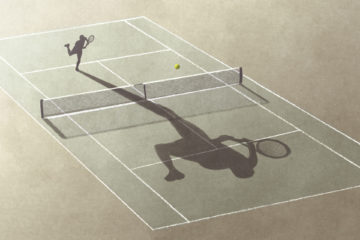
“This is not who I am,” “all that happened … by us” — it is commonplace to hear such statements as mere evasions of responsibility, and often they are. But what if they reflect genuine puzzlement, genuine difficulty understanding one’s behavior or even seeing it as one’s own, a genuine feeling of being driven, compelled, by something other than one’s own will?
More here.
Seamus Heaney interview, 1996
Persuading the Body to Regenerate Its Limbs
Matthew Hutson in The New Yorker:
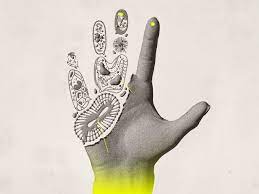 Each year, researchers from around the world gather at Neural Information Processing Systems, an artificial-intelligence conference, to discuss automated translation software, self-driving cars, and abstract mathematical questions. It was odd, therefore, when Michael Levin, a developmental biologist at Tufts University, gave a presentation at the 2018 conference, which was held in Montreal. Fifty-one, with light-green eyes and a dark beard that lend him a mischievous air, Levin studies how bodies grow, heal, and, in some cases, regenerate. He waited onstage while one of Facebook’s A.I. researchers introduced him, to a packed exhibition hall, as a specialist in “computation in the medium of living systems.”
Levin began his talk, and a drawing of a worm appeared on the screen behind him. Some of the most important discoveries of his career hinge on the planarian—a type of flatworm about two centimetres long that, under a microscope, resembles a cartoon of a cross-eyed phallus. Levin is interested in the planarian because, if you cut off its head, it grows a new one; simultaneously, its severed head grows a new tail. Researchers have discovered that no matter how many pieces you cut a planarian into—the record is two hundred and seventy-nine—you will get as many new worms. Somehow, each part knows what’s missing and builds it anew. What Levin showed his audience was something even more striking: a video of a two-headed planarian. He had cut off the worm’s tail, then persuaded the organism to grow a second head in its place. No matter how many times the extra head was cut off, it grew back.
More here.
Mutations across animal kingdom shed new light on aging
From Phys.Org:
 The first study to compare the accumulation of mutations across many animal species has shed new light on decades-old questions about the role of these genetic changes in aging and cancer. Researchers from the Wellcome Sanger Institute found that despite huge variation in lifespan and size, different animal species end their natural life with similar numbers of genetic changes. The study, published today in Nature, analyzed genomes from 16 species of mammal, from mice to giraffes. The authors confirmed that the longer the lifespan of a species, the slower the rate at which mutations occur, lending support to the long-standing theory that somatic mutations play a role in aging.
Genetic changes, known as somatic mutations, occur in all cells throughout the life of an organism. This is a natural process, with cells acquiring around 20 to 50 mutations per year in humans. Most of these mutations will be harmless, but some of them can start a cell on the path to cancer or impair the normal functioning of the cell. Since the 1950s, some scientists have speculated that these mutations may play a role in aging. But the difficulty of observing somatic mutations has made it challenging to study this possibility. In the last few years, technological advances have finally allowed genetic changes to be observed in normal tissues, raising hopes of answering this question.
More here.