
Yanis Varoufakis at Project Syndicate:
 Last week, in its financial stability review, the European Central Bank issued an angst-ridden warning: Europe is facing a self-perpetuating debt-fueled real estate bubble. What makes the report noteworthy is that the ECB knows who is causing the bubble: the ECB itself, through its policy of quantitative easing (QE) – a polite term for creating money on behalf of financiers. It is akin to your doctors alerting you that the medicine they have prescribed may be killing you.
The scariest part is that it is not the ECB’s fault. The official excuse for QE is that once interest rates had fallen below zero, there was no other way to counter the deflation menacing Europe. But the hidden purpose of QE was to roll over the unsustainable debt of large loss-making corporations and, even more so, of key eurozone member states (like Italy).
Once Europe’s political leaders chose, at the beginning of the euro crisis a decade ago, to remain in denial about massive unsustainable debts, they were bound to throw this hot potato into the central bank’s lap. Ever since, the ECB has pursued a strategy best described as perpetual bankruptcy concealment.
More here.
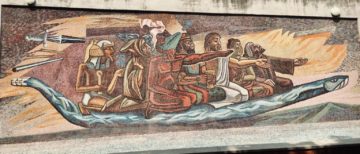 “We were superior to the god who had created us,” Adam recalled not long before he died, age seven hundred. According to The Apocalypse of Adam, a Coptic text from the late first century CE, discovered in Upper Egypt in 1945, Adam told his son Seth that he and Eve had moved as a single magnificent being: “I went about with her in glory.” The fall was a plunge from unity into human difference. “God angrily divided us,” Adam recounted. “And after that we grew dim in our minds…” Paradise was a lost sense of self, and it was also a place that would appear on maps, wistfully imagined by generations of Adam’s descendants. In the fifteenth century, European charts located Eden to the east, where the sun rises—an island ringed by a wall of fire. With the coordinates in their minds, Europe’s explorers could envisage a return to wholeness, to transcendence, to the godhood that had once belonged to man.
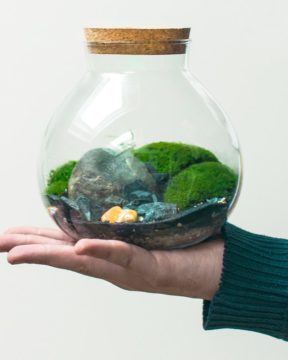 The roots of the modern terrarium can be traced to a 19th Century experiment by Nathaniel Bagshaw Ward, an English doctor who also studied botany and entomology. Ward’s interest seems to have arisen from a journey to Jamaica as a 13-year-old boy, when he fell in love with the exotic plant life. Growing up, he developed a large collection of specimens, but he was disappointed to find that many species – particularly the ferns and mosses – failed to thrive in his east London garden, thanks, in large part, to the air pollution of the city. The UK was, after all, in the midst of the Industrial Revolution, meaning that his house was
 For the polymath, there is always a cardinal subject, a chief preoccupation around which all the other interests spin. For the fashion designer Virgil Abloh, the polymath of his cohort, who died on Sunday of a rare cardiac cancer, offensively too young, the center was architecture. He studied as an architect, and the training never really left him, even as he ventured into other arts. Abloh’s thinking was organizational, spatial, and mind-numbingly lofty. He longed to build an intricately structured life for his muse, the young Black man. Abloh designed not only this man’s clothing but also his shoes, the music he listened to in order to prime himself for the workday, the furniture he looked upon before leaving for said workday, the shiny vernacular he used in his speech, the high-concept museum exhibition at which he could practice this speech. At forty-one years old, Abloh already did all that, and so the question coursing through the minds of his mourners, whose lives had been quite literally stamped with the fruits of his imagination, is this: What was next?
 If childhoods have leitmotifs, mine was the steady, subtle, though sometimes bullying insistence on the unsurpassed importance of my Jewish American identity. On one side of my two-track upbringing, there was the uncontested conviction that Jews were the chosen people, the main players in God’s plan for humanity; on the other side, the daily pledge of allegiance to the American Republic, in all its shining-city- on-a-hill exceptionalism. How it is that my self-importance is not positively Trumpian is as big a mystery as why Muammar al-Qaddafi took over Libya and declared himself colonel, not king, or why, as John Berryman once wondered, cats love fish and hate water.
 In the face of escalating
  In the mid-2000s I set out, along with my colleagues Joseph Carroll, John Johnson, and Dan Kruger, on a large-scale study of classic Victorian novels by such authors as Jane Austen, George Eliot, and Charles Dickens, among many others. We distributed a survey to hundreds of knowledgeable people—professors, graduate students taking courses on Victorian literature, and authors who had published articles or books in the field. The respondents rated the attributes of characters in the novels exactly as if these fictional people were actual people.
 The ethical rules that govern our behavior have evolved over thousands of years, perhaps millions. They are a complex tangle of ideas that differ from one society to another and sometimes even within societies. It’s no surprise that the resulting moral landscape is sometimes hard to navigate, even for humans.
 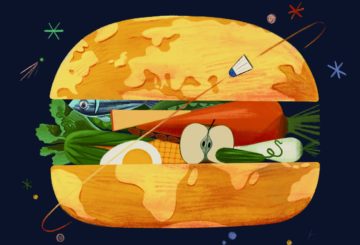 A clutch of fishing villages dot the coast near Kilifi, north of Mombasa in Kenya. The waters are home to parrot fish, octopus and other edible species. But despite living on the shores, the children in the villages rarely eat seafood. Their staple meal is ugali, maize (corn) flour mixed with water, and most of their nutrition comes from plants. Almost half the kids here have stunted growth — twice the national rate. In 2020, Lora Iannotti, a public-health researcher at Washington University in St. Louis, and her Kenyan colleagues asked people in the villages why the children weren’t eating seafood, even though all the parents fish for a living; studies show that fish and other animal-source foods can improve growth
 About halfway through Ryusuke Hamaguchi’s three-hour film someone asks Yūsuke Kafuku, an actor and theater director, why he didn’t cast himself as the titular character in his production of Uncle Vanya. “Chekhov is terrifying,” he replies. “When you say his lines, it drags out the real you.”
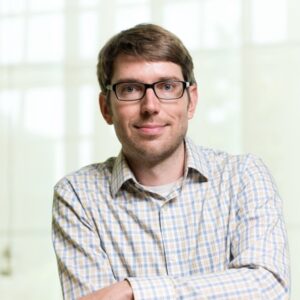 We’ve talked about the very origin of life, but certain transitions along its subsequent history were incredibly important. Perhaps none more so than the transition from unicellular to multicellular organisms, which made possible an incredible diversity of organisms and structures. Will Ratcliff studies the physics that constrains multicellular structures, examines the minute changes in certain yeast cells that allows them to become multicellular, and does long-term evolution experiments in which multicellularity spontaneously evolves and grows. We can’t yet create life from non-life, but we can reproduce critical evolutionary steps in the lab.
 When I reviewed Vitamin D, I said I was about 75% sure it didn’t work against COVID. When I reviewed ivermectin, I said I was about 90% sure.
 HOW OUR BRAIN,