Second Drink
………… For my grandfather, Michael Giovio, 1920-1997
………… On my pillow bit by bit waking,
………… suddenly I hear a cicada cry—
………… at that moment I know I’ve not died,
………… though past days are like a former existence,
………… I want to go to the window, listen closer,
………… but even with a cane I cant manage.
………… Before long like you I’ll shed my shell
………… and drink again the clear brightness of the dew.
………… ..—Xin Oiji, “Start of Autumn: “Hearing a Cicada While Sick in Bed”
On your pillow, bit by bit waking,
….. dreams of playground slides, highways, swatches of sky
all scatter into the fume of your first breath, waking.
Bit by bit, on your pillow, you wake
and suddenly you hear a cicada cry
….. from its flaky tomb. Caked in green, a fresh buzz breaking
the silence of an eight o’clock light, a clear cicada cry.
Suddenly you hear a cicada cry,
and at that moment, you know you have not died.
….. Now, an armada of cicadas, in apocalyptic quaking,
soars from the trees that have not died.
Neither, at that moment, have you.
though past days are like a former existence,
….. cast in a tomb, gilded in aching
like the words of a song that only in memory exists.
Future days, too, are like a former existence.
You want to go to the window, listen closer
….. to the cicada’s rise, their resurrection, they’re remaking,
but your legs cannot bring you closer.
You want to go to the window, listen closer,
but even with a cane, you can’t manage.
….. Never in your daughter’s dreams are your legs forsaken—
they’re your wings, your wheels, your dream’s imagining—
but even with a cane, you can’t manage.
Before long, like the cicada, you’ll shed your shell—
….. your apocalyptic limbs regaining, reshaping—
stronger now than used to be. Strong like the cicada, you’ll shed your shell.
Before long, like the cicada, you’ll shed your shell
and drink the clear brightness of the dew.
….. You’ll drink again the clear brightness of the dew,
and bit by bit, you will wake.
by Lauren Marie Schmidt
from Filthy Labors
Curbstone Books, 2017

 A.S. Byatt’s reputation as a master of the long form has been crystallized by Possession, a novel of depth, breadth and heft; the “Frederica Quartet,” a prose tapestry of post-war England; and The Children’s Book, a many-chambered country house of a narrative. Her new collection, Medusa’s Ankles, showcases Byatt’s gifts as a master of the short story. To my mind, she belongs in that select club of writers whose members include Dickens, John Cheever, Sylvia Townsend Warner and Elizabeth Bowen, and who achieve virtuosity in both short- and long-form fiction.
 Metaculus predicts
 Superhero movies offer plenty of drama: big personalities, colorful explosions, the fate of the world hanging on the contest between good and evil. Thrilling as they may be, these movies don’t provide much practical guidance about saving the real world, where our problems demand more grappling with ambiguity than derring-do. Yet you can see the influence of superhero theatrics in public discourse about the culture wars. On Twitter and in podcasts, everything now seems to be an epochal struggle between two factions, the “Wokeists” and the “anti-Wokeists,” whose battles over social justice will doom or save us all.
 Much of this progressive ire is directed at the presence of cars in cities. It resists how cities are shaped to suit the needs and preferences of drivers. But the attitude easily extends to sneering at rural or suburban life, especially when it seems to bleed over into cities. Consider the broad dislike of SUVs.
  Sylvère’s way of creating accidents or chance was like this: He’d come in to the classroom of about five to ten students, depending on the day, and begin thinking aloud about literature, art, and philosophy—in French or occasionally heavily accented English—in a way that I only understood, at some point during my second or third Sylvère semester, was intended to “disorganize” us, his students, regardless of our level. If we asked him to explain “structuralism,” he might lecture on Saussure and Barthes for a while, but then go off into Nietzsche, the schizophrenic writings of Judge Daniel Paul Schreber, and onto Deleuze, thus making clear the limitations of any rage for ordering things. Sylvère encouraged or provoked everyone to excess. Even the French graduate student who gave a seemingly flawless presentation on the idea of “la grève” in Mallarmé and Rimbaud, and who once accused me of working for the police when I asked him how long he was staying at Columbia—a true disciple if ever there was one—Sylvère blew up his presentation, too.
 T
T Scientific terms are often used interchangeably, and scientifically-accepted descriptions are constantly being refined and reinterpreted, which can lead to errors in scientific understanding. While such errors can’t be completely eliminated, they can be reduced by making ourselves aware of them, better understanding the terminology, and using thoughtful and careful scientific methods. This is certainly true when it comes to understanding spectroscopy and spectrometry which, despite being similar, aren’t the same thing. With this in mind, let’s take a deeper look at these terms.
 Imagine a world haunted not just by the dead, but by the specter of death. Drawn ever closer by the already locked-in consequences of our actions and inaction. Its domain extended by endless escalating catastrophe.
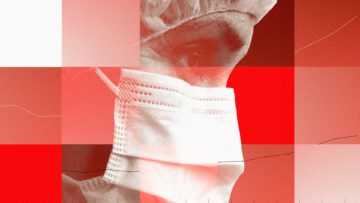 Since COVID-19 first pummeled the U.S., Americans have been told to flatten the curve lest hospitals be overwhelmed.
  In April of 2001 I began my monthly Skeptic column at Scientific American, the longest continuously published magazine in the country dating back to 1845. With Stephen Jay Gould as my role model (and subsequent friend), it was my dream to match his 300 consecutive columns that he achieved at Natural History magazine, which would have taken me to April, 2026. Alas, my streak ended in January of 2019 after a run of 214 essays.
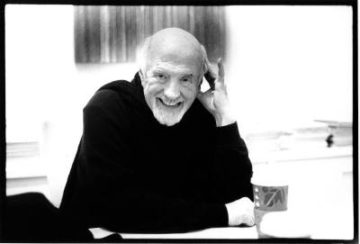 The Invisible Dragon exemplifies Hickey’s sensibility. It mounts an argument that beauty still mattered at a time when it was viewed as being anathema to relevant art-making, and it does so elegantly and seemingly effortlessly. In one essay, he compares Robert Mapplethorpe’s sexually explicit photography of queer subcultures to Caravaggio’s religious paintings. Using language indebted to art theory of the postwar era, he muses on sleek Mapplethorpe pictures that had been the subject of a culture war in the early ’90s, writing that they “seem so obviously to have come from someplace else, down by the piers, and to have brought with them, into the world of ice-white walls, the aura of knowing smiles, bad habits, rough language, and smoky, crowded rooms with raw brick walls, sawhorse bars and hand-lettered signs on the wall. They may be legitimate, but like my second cousins, Tim and Duane, they are far from respectable, even now.” Such a statement came alongside an honest disclosure: he had first come across these works in a coke dealer’s penthouse.
 For much of her sixteen years in office as Germany’s chancellor, Angela Dorothea Merkel, née Kasner, has been ‘a riddle wrapped in a mystery inside an enigma’, to quote Churchill’s famous dictum on the Soviet Union. Her meteoric rise defied all rational explanation. A woman from East Germany, a scientist with an inbuilt aversion to straddling the political stage and mounting the bully pulpit: how could she succeed in a country with a conservative mind-set which had all but closed out women from professional advancement?
 “These Precious Days,” Ann Patchett’s generous new collection of essays, nearly all of which were previously published in periodicals, offers a burst of warm positivity. Like her first collection, “This Is the Story of a Happy Marriage” (2013), this appealing mix of the personal and the professional highlights the centrality of books, family, friendship, and compassion in Patchett’s life. At the heart of “These Precious Days” is the title essay, a tribute to a woman Patchett befriended in what turned out to be the last years of the woman’s life. Patchett, who memorialized her difficult, intense friendship with fellow writer Lucy Grealy in “Truth & Beauty” (2004), has an easier time celebrating her less complicated, serendipitous relationship with Sooki Raphael, Tom Hanks’ longtime personal assistant.
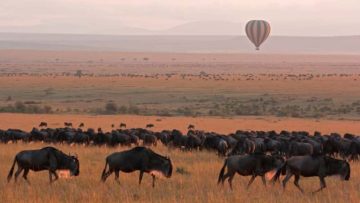 There’s more recognition that ecological restoration can be an essential tool in fighting climate change, and there are many projects aimed at restoring degraded forests to capture carbon. Still, the focus on forests ignores much of the land in the tropics that would not naturally be forested. A team of scientists is arguing that people need to become aware of other habitats and their value.