
Iman Ghosh in Nautilus:
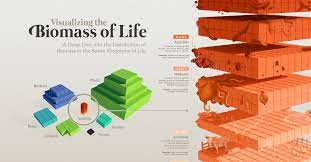 Our planet supports approximately 8.7 million species, of which over a quarter live in water. But humans can have a hard time comprehending numbers this big, so it can be difficult to really appreciate the breadth of this incredible diversity of life on Earth. To fully grasp this scale, we draw from research from “The biomass distribution on Earth,” by Yinon M. Bar-On, Rob Phillips, and Ron Milo to break down the total composition of the living world, in terms of its biomass, and where we fit into this picture.
Why Carbon?
A “carbon-based life form” might sound like something out of science fiction, but that’s what we and all other living things are. Carbon is used in complex molecules and compounds—making it an essential part of our biology. That’s why biomass, or the mass of organisms, is typically measured in terms of carbon makeup. In our visualization, one cube represents 1 million metric tons of carbon, and every thousand of these cubes is equal to 1 Gigaton (Gt C). Here’s how the numbers stack up in terms of biomass of life on Earth:
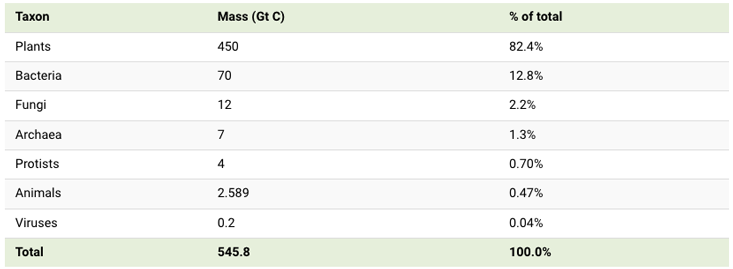
Plants make up the overwhelming majority of biomass on Earth. There are 320,000 species of plants, and their vital photosynthetic processes keep entire ecosystems from falling apart. Fungi is the third most abundant type of life—and although 148,000 species of fungi have been identified by scientists, it’s estimated there may be millions more.
More here.
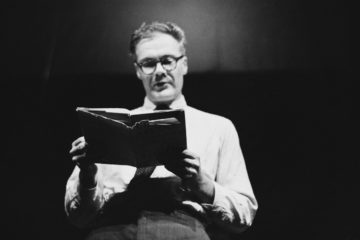 Robert Lowell is, for me, the inescapable elder poet, and Day by Day is the inescapable book. It is where you go if you want to see where American poetry last set into major balance an art fully aware of its traditions and an experimental openness to unliterary raw material. Leaving behind the ruck and rubble of Notebook and History, it steps beyond the Cyclopean masonry blocks of the unrhymed sonnets of The Dolphin and ventures into irregular but adamantine shapes of feeling and thought. The smashed sonnets may suggest the smashed life or lives the book loosely recounts: aging friends, dead friends, dead parents, are summoned; a marriage is chronicled in its dilapidations; mental breakdown sends the suffering speaker once again to a hospital. From these wreckages and from the wreck of stricter verse form, Lowell has saved the aphoristic essentials, and broken through to poetic renewal in the very recognition of failure. Sacrifice, truly executed, earns recompense, and these poems do.
 A
A  Paul Auster, Aldous Huxley, Thomas Mann, Susan Sontag, John Updike, Oscar Wilde and Virginia Woolf – many novelists who have written about fictional artists have also produced criticism. Indeed, one of the great novels of the 20th century, Marcel Proust’s In Search of Lost Time, began life as a work of criticism, a series of essays arguing against the author Sainte-Beuve. This voluminously chatty work is, over the course of its 1.5 million words, peppered with the names of more than 100 real-life artists – from Giotto and Corot, to Bellini and Léon Bakst. By my rough estimate, Vermeer and Whistler are the most frequently referred to, though much dinner party gossip is given over to Édouard Manet’s 1863 painting Olympia (‘Nowadays nobody is in the least surprised by it. It looks just like an Ingres!’ exclaims a duchess). Amidst the masters mingle Proust’s contemporaries – little-known or forgotten academicians, as well as critics and collectors – above whom towers just one fictional artist: Elstir, a famed painter whose seascapes, according to the narrator Marcel, ‘break up that medley of impressions which we call vision’. Many have tried to identify the source of Carquethuit Harbour, which is said to be Elstir’s greatest painting: Manet’s Le Port de Bordeaux (1871) is often mentioned, along with Vuillard and Hokusai, while Michel Butor has pointed out that ‘Elstir’ is a Gallicized anagram of ‘Whistler’.
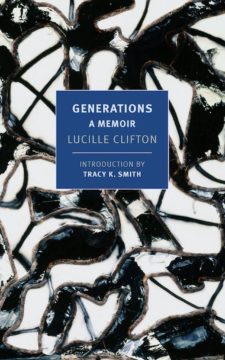 LUCILLE CLIFTON’S Generations, her only work of nonfiction amid a vast body of poetry, was published in 1976, before memoir ballooned into a commodified genre, including ghostwritten celebrity tell-alls.
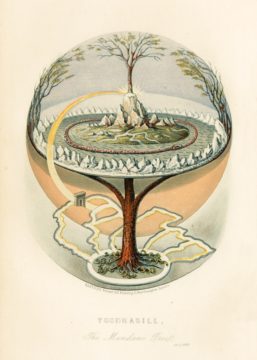 Just minutes after St. Nicholas was born, on December 6, he stood up on his own two feet in the basin where the midwives washed him, and completed the task himself. Then the babe grabbed a knife from the table and severed his own umbilical cord. Through the rest of his infancy he refused to nurse more than twice a week, and only ever on Wednesdays and Fridays. As Nicholas grew older he developed a sharp hatred of sin, and wept whenever he witnessed it. Having inherited a great wealth from his parents, he decided to fight sin through what you might today call “effective altruism”. When he overheard his neighbor announcing a plan to sell his two daughters into prostitution in order to lighten his debts, Nicholas contrived to throw a sack of gold coins through the neighbor’s window in the middle of the night (the sled and reindeer, we may imagine, are later accretions upon the legend). After a life of such good works, when he died in 313 AD, oil poured from his head, and water from his feet, and continued to pour for some centuries after that from the site of his burial, when such things as this still occurred.
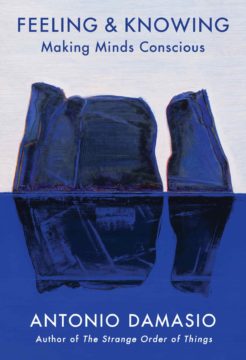 Consciousness is such a slippery and ephemeral concept that it doesn’t even have its own word in many Romance languages, but nevertheless it’s a hot topic these days. “Feeling & Knowing” is the result of Damasio’s editor’s request to weigh in on the subject by writing a very short, very focused book. Over 200 pages, Damasio ponders profound questions: How did we get here? How did we develop minds with mental maps, a constant stream of images, and memories — mechanisms that exist symbiotically with the feelings and sensations in our bodies that we then, crucially, relate back to ourselves and associate with a sense of personhood?
 Many readers around the world are still just discovering Abdulrazak Gurnah. After his winning the Nobel Prize for Literature in 2021 – which almost no one saw coming – the 72-year-old Zanzibar-born author is finally in the limelight that was perhaps due to him for a few decades now.
 W
W Our science delivers a lot of exciting breakthroughs to make life better today. But we’re also busy working behind-the-scenes on science that takes a bit longer to develop. Science that will significantly change what the future looks like. We call these areas of cutting-edge research our
  One year earlier, in the first throes of my renewed interest in the Manson Family, I had taken the Helter Skelter bus tour operated by Dearly Departed, an outfit specializing in Los Angeles death and murder sites. It sells out nearly every weekend, which is surprising given that there’s actually not much to see anymore. Scott Michaels, Dearly Departed’s founder and main guide, set the tone with a custom soundtrack of hits from 1969 (“In the Year 2525,” “Hair”), cozy oldies made newly spooky by our proximity to death. He also included extensive multimedia add-ons, such as cleavage-heavy clips from Sharon Tate’s early films and Jay Sebring’s cameo on the old bang-pow Batman TV show. Going on the tour is a little like taking a road trip through the parking lots and strip malls of central Los Angeles, accompanied by a group of strangers wearing various skull accessories. Many of the sites aren’t visible or no longer exist. The former Tate-Polanski house on Cielo Drive has been demolished; the site of Rosemary and Leno LaBianca’s murders in Los Feliz is mostly hidden by a hedge.
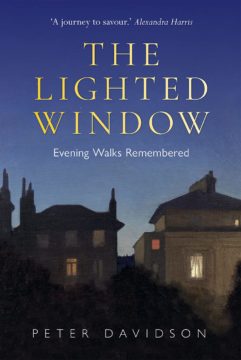 Davidson is evidently a great wanderer and his book, largely an account of his nocturnal wanderings and the thoughts inspired by them, is itself an engagingly wandering affair. It is a work of great charm, moving from text to text and painting to painting in a disarmingly associative way: the connective tissue of the work is a network of phrases such as ‘My mind circles back…’, ‘I think of other lights which shine in more than one dimension…’, ‘I am reminded of an odd fragment of narrative…’ and ‘My thoughts moved to a far comparison…’. We begin and end accompanying the author through the crepuscular autumnal fog beside the Thames in Oxford, and in between we follow him through the sighing willows of Ghent, the frozen mid-afternoon darkness of Stockholm, the scruffy urban romance of central London, the smart neoclassical streets of Edinburgh’s New Town, the autumnal fields of Norfolk and the snows of Princeton. And as we make our way, Davidson tells us what emerges from his extraordinarily well-stocked mind.
 Boeing’s self-hijacking plane took its first 189 lives on October 29, 2018, just over two months after it had been
 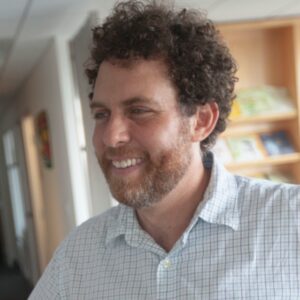 We all know you can’t derive “ought” from “is.” But it’s equally clear that “is” — how the world actual works — is going to matter for “ought” — our moral choices in the world. And an important part of “is” is who we are as human beings. As products of a messy evolutionary history, we all have moral intuitions. What parts of the brain light up when we’re being consequentialist, or when we’re following rules? What is the relationship, if any, between those intuitions and a good moral philosophy? Joshua Greene is both a philosopher and a psychologist who studies what our intuitions are, and uses that to help illuminate what morality should be. He gives one of the best defenses of utilitarianism I’ve heard.