
Maureen Tkacik in The American Prospect:
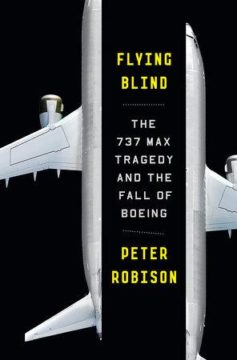 Boeing’s self-hijacking plane took its first 189 lives on October 29, 2018, just over two months after it had been delivered to the Jakarta Airport terminal of Indonesia’s reigning discount carrier Lion Air. Fishermen described the fuselage plunging nose-first, directly perpendicular to the Java Sea, at speeds many times that of Komarov’s four-and-a-half mile descent from the half-baked Soyuz 1, with its malfunctioning parachutes. A 48-year-old diver dispatched to plumb the deep sea floor for body parts and the elusive cockpit voice recorder became the 190th fatality. As with the Soyuz, in which the famous cosmonaut Yuri Gagarin was said to have detailed 200 outstanding manufacturing defects in a memo to superiors, the 737 MAX had been the subject of numerous ignored whistleblower reports, tormented confessions, and abrupt career changes; the general manager of the plane’s final assembly line outside Seattle had resigned in despair the week Lion Air took delivery.
But three years later, nothing has surfaced to suggest that any senior official at Boeing took so much as a passing glance at the corpse stew its greed chucked into the Java Sea, much less any semblance of responsibility.
More here.
 We all know you can’t derive “ought” from “is.” But it’s equally clear that “is” — how the world actual works — is going to matter for “ought” — our moral choices in the world. And an important part of “is” is who we are as human beings. As products of a messy evolutionary history, we all have moral intuitions. What parts of the brain light up when we’re being consequentialist, or when we’re following rules? What is the relationship, if any, between those intuitions and a good moral philosophy? Joshua Greene is both a philosopher and a psychologist who studies what our intuitions are, and uses that to help illuminate what morality should be. He gives one of the best defenses of utilitarianism I’ve heard.
 At last month’s COP26 climate summit, hundreds of financial institutions declared that they would put trillions of dollars to work to finance solutions to climate change. Yet a major barrier stands in the way: The world’s financial system actually impedes the flow of finance to developing countries, creating a financial death trap for many.
 W
W The New Mexican desert unrolled on either side of the highway like a canvas spangled at intervals by the smallest of towns. I was on a road trip with my 20-year-old son from our home in Los Angeles to his college in Michigan. Eli, trying to be patient, plowed down I-40 as daylight dimmed and I scrolled through my phone searching for a restaurant or dish that would not cause me pain. After years of carefully navigating dinners out and meals in, it had finally happened: There was nowhere I could eat.
 I
I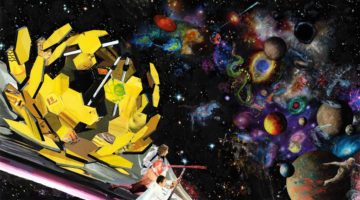 To look back in time at the cosmos’s infancy and witness the first stars flicker on, you must first grind a mirror as big as a house. Its surface must be so smooth that, if the mirror were the scale of a continent, it would feature no hill or valley greater than ankle height. Only a mirror so huge and smooth can collect and focus the faint light coming from the farthest galaxies in the sky — light that left its source long ago and therefore shows the galaxies as they appeared in the ancient past, when the universe was young. The very faintest, farthest galaxies we would see still in the process of being born, when mysterious forces conspired in the dark and the first crops of stars started to shine.
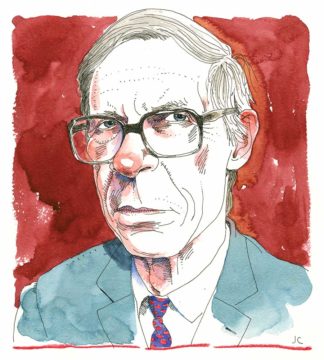 With its doctrine of fairness, A Theory of Justice transformed political philosophy. The English historian Peter Laslett had described the field as “dead” in 1956; with Rawls’s book that changed almost overnight. Now philosophers were arguing about the nature of Rawlsian principles and their implications—and for that matter were once again interested in matters of political and economic justice. Rawls’s terms became lingua franca: Many considered how his arguments, focused mostly on domestic or national issues of justice, might be applied to questions of international justice as well. Others sought to extend his theory’s set of political principles, while still others probed the limits of Rawls’s epistemology and the narrowness of his focus on individuals. A decade after A Theory of Justice appeared, Forrester notes, 2,512 books and articles had been published engaging with its central claims.
 Last week, the
  Nancy Kathryn Walecki: So first of all, most people probably think of psychedelics in the context of the 1960s countercultural movements, when they were being used recreationally. So is using psychedelic drugs in psychiatric treatment a new idea?
 E
E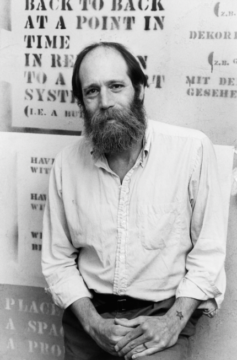 Lawrence Weiner, a towering figure in the Conceptual art movement arising in the 1960s and who profoundly altered the landscape of American art, died December 2 at the age of seventy-nine. Known for his text-based installations incorporating evocative or descriptive phrases and sentence fragments, typically presented in bold capital letters accompanied by graphic accents and occupying unusual sites and surfaces, Weiner rose to prominence among a cohort that included Robert Barry, Douglas Huebler, Joseph Kosuth, and Sol LeWitt. A firm believer that an idea alone could constitute an artwork, he established a practice that stood out for its consistent embodiment of his famous 1968 “Declaration of Intent”:
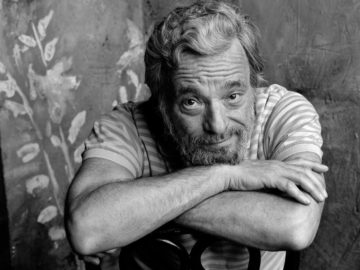 “Stephen’s story is well documented, the pain of it. Now here he was writing a beautiful song for the mother and wanting to write the son’s part. I had a relationship with my mother that I don’t think was as difficult, it had a little more grace, but it was challenging nonetheless. Stephen and I came to the conclusion that we never made the connection in the way we were searching for it. We kept passing by each other like ships in the night. A few days later, he hands me my part of the mother’s song. He’d taken our conversation and poeticised it. I got to be a teeny tiny part of what he was trying to say for this character. He wrote the most beautiful love song of two human beings trying to reach each other. That was the highlight of my entire professional life.”