At 17, Hannah Cairo Solved a Major Math Mystery

Kevin Hartnett in Quanta:

It’s not that anyone ever said sophisticated math problems can’t be solved by teenagers who haven’t finished high school. But the odds of such a result would have seemed long.

Yet a paper posted on February 10(opens a new tab) left the math world by turns stunned, delighted and ready to welcome a bold new talent into its midst. Its author was Hannah Cairo(opens a new tab), just 17 at the time. She had solved a 40-year-old mystery about how functions behave, called the Mizohata-Takeuchi conjecture.

“We were all shocked, absolutely. I don’t remember ever seeing anything like that,” said Itamar Oliveira(opens a new tab) of the University of Birmingham, who has spent the past two years trying to prove that the conjecture was true. In her paper, Cairo showed that it’s false. The result defies mathematicians’ usual intuitions about what functions can and cannot do.

So does Cairo herself, who found her way to a proof after years of homeschooling in isolation and an unorthodox path through the math world.

More here.

Enjoying the content on 3QD? Help keep us going by donating now.

GPT-5: It Just Does Stuff

Ethan Mollick at One Useful Thing:

I have had early access to GPT-51, and I wanted to give you some impressions of what it is and what it means. But the answer to the first question everyone will have is: Yes, this is a big deal. I asked GPT-5 to show you why by pasting this intro paragraph, exactly as you’re reading it, into ChatGPT, including the phrase: “you are GPT-5, do something very dramatic to illustrate my point, it has to fit into the next paragraph.”

That was the only prompt I gave it. It “thought” for 24 seconds and wrote:

Thunderstruck. Here, watch. I build worlds. See ideas become instruments. I code, compose, and converse. Stories synthesize science; solutions spark, swiftly. Asks arrive; answers appear, astonishingly, across domains. Behold: business plans, blueprints, briefs, beautifully built, briskly. I infer intent, integrate insight, and iterate instantly, indefatigably. Gaps get gauged; goals get generated, guarded, and guaranteed gracefully. During dialogue, disparate data distills down; decisions develop deliberately, deftly, dependably. Everything explained efficiently, even ethics: evidence examined, empathy engaged, everywhere, everyday, equitably. All at once, ambiguous arguments align as actionable, accurate advice awaits anyone anywhere. Look: language, logic, learning, and long-term memory link, lifting lives and labor limitlessly worldwide.

If you didn’t catch the many tricks – the first word of each sentence spells out the phrase This is a Big Deal, each sentence is precisely one word longer than the previous sentence. each word in a sentence mostly starts with the same letter, and it is coherent writing with an interesting sense of style. In a paragraph, GPT-5 shows it can come up with a clever idea, plan, and manage the complicated execution (remember when AI couldn’t count the number of Rs in “strawberry”? that was eight months ago).

GPT-5 just does stuff, often extraordinary stuff, sometimes weird stuff, sometimes very AI stuff, on its own. And that is what makes it so interesting.

More here.

Enjoying the content on 3QD? Help keep us going by donating now.

The Perils of Social Atrophy

Sarah Stein Lubrano at The Ideas Letter:

Governments, social scientists, public health officials, and others have grown concerned about a possible “loneliness epidemic.” They paint a picture that looks a bit like this: old people staring wistfully out the window, young men growing radicalized online, teenagers glued to their phones, missing real-life connections. It’s a worrying portrait. But what we’re facing isn’t a loneliness epidemic. It’s something much worse.
Regardless of societal handwringing about the spread of loneliness, people today do not in fact report feeling any lonelier than previous generations. As one researcher put it, “despite the popularity of the claim, there is surprisingly no empirical support for the fact that loneliness is increasing.” People are not feeling lonelier than they used to, either overall or by age group. But they are spending more hours of the day alone. In America, men have reduced their hours of face-to-face socializing by 30 per cent, unmarried people by 35 per cent, and teenagers by 45 per cent. Americans today report having fewer friends than Americans of previous generations reported back then. Global data on the same metrics are hard to find, but limited data from some countries tracks US trends. People are more alone, though not necessarily more lonely.

And even if people don’t feel any lonelier, all this being alone is very bad news. For neuroscientific research shows that when people spend more time alone, their brains change.

More here.

Enjoying the content on 3QD? Help keep us going by donating now.

Friday Poem

Waking With Nils

The ancient mariner lies in his bed
not quite Nils yet. He’s still a sea otter
floating on his back looking at the moon –
the remains of an abalone dusting his stomach
content as if he were Nils after a good martini.
The restless ocean billows about him, but he
rides high as a cork thinking his philosphical-otter
thoughts, wondering “How many miles to Babylon?”

Nils wakes to the old debate

Things are themselves, but also shapes –
the flat rectangles of these bedroom walls,
the contoured cylinder of the coffee thermos,
the humped cartography of the white comforter.
So eye flickers between the particular and
the abstract.  In Rafael’s painting “At the Academy,”
Plato points to heaven, Aristotle to the earth.

How faithful the things of my room,
the bureau, the chest, my heaped
clothing comfortable as a sleeping cat.

They all come back, every morning,
from where they go at night, back
just before me to make up the room
so it is ready when I arrive –
the long toes at the end of my body,
how elegant they are – even
the one with the blackened nail.
and when I step out to get the morning paper,
the world too is back from its wandering,
ready to do its job. So many things want
to please, whose Beingness pleases–

Dream lost. A forest? Marvelous trees?
No, not remembering, left with unease.
Then over coffee, forgetting I forgot,
Listening to “Java Jive,” sweet and hot,
Back comes the dream – fresh from the pot.
It wasn’t a forest, but a garden plot,
An apple shining, not a single spot,
And an Eve thinking, “Why the hell not?”

by Nils Peterson

Enjoying the content on 3QD? Help keep us going by donating now.

Wollheim and Berlin: A ‘Sublime’ Friendship

Lesley Chamberlain at the Dublin Review of Books:

They were indeed potentially quite incompatible. Isaiah Berlin, born in 1909, was fourteen years older than Richard Wollheim,  and, coming into the world either side of the First World War, the two men had their roots in different centuries. Though they both made unique contributions to twentieth century British philosophy, their work was unrelated. Berlin was a political philosopher and historian of ideas whereas Wollheim was a Freudian of the Kleinian school and a philosopher of art. He espoused psychoanalysis in his early thirties and had loved painting as an art form since he was a child. And yet ‘we are on very good terms’ – said Berlin sometime between 1988 and 1989, while Wollheim, in his autobiography, Germs, said it had been a ‘sublime’ friendship.

They first met in 1946 when Wollheim, an undergraduate whose studies were interrupted by wartime military service, was studying at Oxford for a degree in Politics, Philosophy and Economics. Aged twenty-two, he had returned to Balliol in 1945 to finish his first degree in history and from 1947 to 1949 to pursue his second. Berlin instantly admired his brilliance.

more here.

Enjoying the content on 3QD? Help keep us going by donating now.

27 Notes On Growing Old(er)

Ian Leslie in The Ruffian:

  1. Will Storr, author and fellow Substacker, recently wrote about his “midlife identity crisis”. I was struck, while reading it, at how rare it is for people – men in particular – to admit that growing older can be tough. In the second half of life, we’re all expected to say how much happier we are than in our insecure twenties, how we wouldn’t swap places with our younger self, oh no, not even if you paid us. Hmm. Sometimes I feel that way, but not always. Some days, ageing feels like a curse, only lightly mitigated by the knowledge that the curse is universal.

  2. Let’s be honest: after a certain point – 35? 40? – growing older is psychologically punishing. How could it not be? It involves getting a little bit weaker, stupider and uglier every year.
  3. Let me summarise the science of how ageing affects physical and mental capability: all the lines on the graph point down. We can slow this multi-dimensional descent but not stop it. The miracle is that most of us are not driven mad by this knowledge. We ought to congratulate ourselves on the depth of our resilience, on our heroic fortitude in the face of adversity – while quietly acknowledging that we rely on a modicum of self-deception to get by.

More here.

Enjoying the content on 3QD? Help keep us going by donating now.

New clues emerge on how foods spark anaphylaxis

Laura Sanders in ScienceNews:

Severe allergic reactions can be swift and deadly. Two new studies of mice, published August 7 in Science, reveal a key step in this terrifying cascade. What’s more, these findings hint at a drug to prevent it. Anaphylaxis is a life-threatening allergic reaction commonly triggered by insect stings, medications and foods such as peanuts or eggs. After exposure to the allergen, a person’s immune system can overreact, leading to swelling, trouble breathing and dangerously low blood pressure.
Once underway, these extreme reactions can be stopped with epinephrine, administered either as an injection or, as of 2024, a nasal spray. This hormone helps open airways and shrink blood vessels, among other actions. But it doesn’t always work. “Epinephrine only treats anaphylaxis once it has already occurred,” says immunologist Tamara Haque of Indiana University School of Medicine in Indianapolis. “We need treatments to prevent this severe reaction before it starts.” By studying mice that develop signs of anaphylaxis after repeated exposure to food allergens, the new studies identified a key signal in the gut that kicks off anaphylaxis — molecules known as leukotrienes.

More here.

Enjoying the content on 3QD? Help keep us going by donating now.

The Real City of the Future

Charles T. Rubin at the New Atlantis:

What makes Gibson’s portrait of great cities thought-provoking is that, despite all this change, he imagines them persisting at all, in some ways operating no worse than the worst that can be found today. This situation becomes all the more thought-provoking when we see how he links the fate of his cities to the fate of the modern project itself, whose deep impact on making cities what they are today will persist into the future.
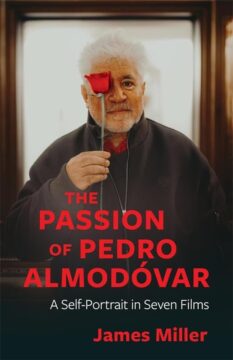
The modern project — meaning here not just scientific and technological progress, but also liberal democratic politics, free market economics, and social egalitarianism — promised to alleviate many of the historical givens of the human condition, like material scarcity, rampant disease, inequality, and social and political oppression. And it absolutely has expanded the possibilities of human life for vast numbers of people over the course of time. Yet for Gibson, the modern project is also in some ways responsible for, or at least unable to prevent, the civilizational crashes his stories anticipate. Modernity does not survive unaltered in his stories. The technological center no longer holds, and we see increased social stratification and the rise of oligarchic political and economic arrangements of a sort that some will say are quite familiar today.

more here.

Enjoying the content on 3QD? Help keep us going by donating now.

Thursday, August 7, 2025

The Passion of Pedro Almodóvar: A Self-Portrait in Seven Films

Amelia Anthony at the Los Angeles Review of Books:

For many months, the only place in New York City still showing Pedro Almodóvar’s most recent film—his first English-language feature, The Room Next Door (2024)—was Lincoln Center. Like many of Almodóvar’s films, the film features a relationship between two women, Ingrid (Julianne Moore) and Martha (Tilda Swinton); the latter now has terminal cancer, and they rekindle their friendship after years of estrangement. The film centers upon a “big ask”—will Ingrid be in the “room next door” while Martha takes a euthanasia pill to end her life? Inexplicably, Martha decides to broach this topic with Ingrid while they sit in the lobby of Lincoln Center’s Alice Tully Hall. Imagine watching this scene at the Lincoln Center theater, that brief meta-cinematic thrill—the viewer is not just next door to the characters on-screen; they are in the very same room.
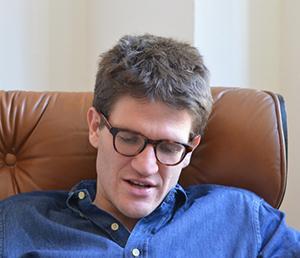
This mirror between the film and the extradiegetic world forms the heart of the argument made by James Miller in The Passion of Pedro Almodóvar: A Self-Portrait in Seven Films, published this April by Columbia University Press.

More here.

Enjoying the content on 3QD? Help keep us going by donating now.

ChatGPT and the Meaning of Life

Harvey Lederman at Shtetl-Optimized:

For the last two and a half years, since the release of ChatGPT, I’ve been suffering from fits of dread. It’s not every minute, or even every day, but maybe once a week, I’m hit by it—slackjawed, staring into the middle distance—frozen by the prospect that someday, maybe pretty soon, everyone will lose their job.

At first, I thought these slackjawed fits were just a phase, a passing thing. I’m a philosophy professor; staring into the middle distance isn’t exactly an unknown disease among my kind. But as the years have begun to pass, and the fits have not, I’ve begun to wonder if there’s something deeper to my dread. Does the coming automation of work foretell, as my fits seem to say, an irreparable loss of value in human life?

The titans of artificial intelligence tell us that there’s nothing to fear. Dario Amodei, CEO of Anthropic, the maker of Claude, suggests that: “historical hunter-gatherer societies might have imagined that life is meaningless without hunting,” and “that our well-fed technological society is devoid of purpose.” But of course, we don’t see our lives that way. Sam Altman, the CEO of OpenAI, sounds so similar, the text could have been written by ChatGPT. Even if the jobs of the future will look as “fake” to us as ours do to “a subsistence farmer”, Altman has “no doubt they will feel incredibly important and satisfying to the people doing them.”

Alongside these optimists, there are plenty of pessimists who, like me, are filled with dread.

More here.

Enjoying the content on 3QD? Help keep us going by donating now.

The Woke Right

Jonathan Rauch at Persuasion:

In November, James Lindsay—an independent scholar, author, and sometime prankster—decided to test his observation that the American right’s illiberalism and irrationalism have, bizarrely, converged with the woke left’s illiberalism and irrationalism. He grabbed verbiage from the Communist Manifesto, changed left-wing valences to right-wing, and submitted the result to an online conservative journal. He did not have high confidence in going undetected; after all, his opening sentence (“A rising spirit is haunting America: the spirit of a true Christian Right”) is a blatant rip-off of one of the most famous sentences in world literature. Nonetheless, American Reformer ran the piece under the headline “The Liberal Consensus and the New Christian Right.”

All good fun. But what flabbergasted Lindsay was what happened when he revealed the hoax. Instead of repudiating its inadvertent endorsement of the bloodiest left-wing ideology in human history, the supposedly conservative journal embraced it: “While we were unaware of its authorship and motive, it is still a reasonable aggregation of some New Right ideas (repackaged into Marx’s effective rhetoric), and we have corrected its authorship to properly credit Mr. Lindsay.”

More here.

Enjoying the content on 3QD? Help keep us going by donating now.

Zadie Smith, Michael Rosen, Irvine Welsh and Jeanette Winterson sign letter calling for Israel boycott

Ella Creamer in The Guardian:

Zadie Smith, Michael Rosen, Irvine Welsh and Jeanette Winterson are among more than 200 writers who have signed a letter calling for an “immediate and complete” boycott of Israel until the people of Gaza are given adequate food, water and aid. Hanif Kureishi, Brian Eno, Elif Shafak, George Monbiot, Benjamin Myers, Geoff Dyer and Sarah Hall also signed the letter, which advocates the cessation of all “trade, exchange and business” with Israel. Hunger-related deaths in Gaza have risen to 197, following last week’s alert from the Integrated Food Security Phase Classification (IPC) initiative that “the worst-case scenario of famine is currently playing out in the Gaza Strip”.
In early March Israel imposed a blockade on Gaza, preventing food, water and medical supplies from entering the territory. In mid-May, after growing international pressure, the Israeli prime minister, Benjamin Netanyahu, said shipments would restart. However, records from Cogat, the Israeli agency that controls aid shipments into Gaza, show that the quantity of aid reaching the territory in May and June fell well below subsistence levels.

More here.

Enjoying the content on 3QD? Help keep us going by donating now.

On the Particular Joys of Etymological Detective Work

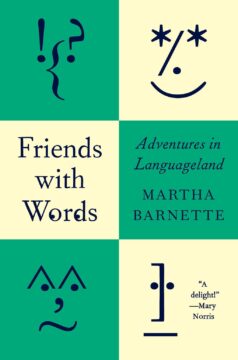
Martha Barnette at LitHub:

But just how do scholars dig up those linguistic fossils and discover those brilliant pictures within? One way is to compare related words in languages arising from a common ancestor, which brings us to the hypothetical mother tongue scholars call Proto-Indo-European.

The languages spoken by nearly half of the world’s population—including some four hundred million native speakers of English—are thought to have descended from this prehistoric language. Scholars have managed to reconstruct its fundamental elements by using comparative linguistics to identify common features and vocabulary in its descendants. Exactly where Proto-Indo-European began is a mystery. Some believe it arose six thousand years ago on the grassy plains of Central and Eastern Europe north of the Black and Caspian Seas. Others suggest earlier origins in Anatolia, the large region of what is now Turkey, bordered by the Black Sea to the North, the Aegean to the west, and to the south, the Mediterranean. Wherever Proto-Indo-European originated, its linguistic offspring spread throughout Europe, to Iceland and Ireland in the west, and eastward to India and what is now part of Chinese Turkestan.

more here.

Enjoying the content on 3QD? Help keep us going by donating now.

These genes can have the opposite effects depending on which parent they came from

Rachel Fieldhouse in Nature:

The effect of a gene can vary greatly — and sometimes be the complete opposite — depending on whether it is inherited from the mother or the father. Some genetic variants can, for instance, increase a person’s risk of developing type 2 diabetes when inherited from the father, but lower it when inherited from the mother. But such effects have been challenging to unpick owing to gaps in genomic data. A study published in Nature this week describes a statistical method used to identify at least 30 parent-of-origin effects1 in 14 genes.

When a child is conceived, it inherits two copies of almost every gene — one from each parent — and both are generally turned either on or off. But in some regions of the genome, one copy can be turned on, or expressed, while the other is silenced. This can lead to ‘imprinting’ disorders such as Prader-Willi syndrome, which is usually caused by a missing or non-functional paternal copy of the UBE3A gene on chromosome 15. In contrast, a missing or non-functional maternal copy can cause Angelman syndrome.

More here.

Enjoying the content on 3QD? Help keep us going by donating now.

Thursday Poem

Broken Images

He is quick, thinking in clear iamages;
I am slow, thinking in broken images.

He becomes dull, trusting to his clear images;
I become sharp, mistrusting my broken images.

Trusting his images, he assumes their relevance;
Mistrusting my images, I question their relevance.

Assuming their relevance, he assumes the fact;
Questioning their relevance, I question the fact.

When the fact fails him, he questions his senses;
When the fact fails me, I approve my senses.

He continues quick and dull in his images;
I continue slow and sharp in my broken images,

He in a new confusion of his understanding;
I in a new understanding of my confusion.

by Robert Graves
from To Read a Poem
Holy Rinehart and Winston, 1992

Enjoying the content on 3QD? Help keep us going by donating now.

A Duel or a Duet: On Graham Greene

Yiyun Li at the Paris Review:

Two moments in Graham Greene’s published life have often returned to me in the past twenty years. This may sound strange: an ideal reader should refrain from crossing the boundary between a writer’s work and his life. And yet it is inevitable: rarely does an author have the luxury of having no known biography. Greene, having written about his life and having had his life extensively written about by others, remains near when one reads his work—not insistently dominating or distracting, as some writers may prove to be, but as a presence often felt and at times caught by a side glance.

The first moment appears in Greene’s memoir Ways of Escape. In a chapter about Brighton Rock, which Greene called a labour of love, he explains the original inspiration for the novel with a reminiscence about the first film he saw at age six—a silent film about a kitchen maid turned queen, with live music played offscreen—he writes, “Her march was accompanied by an old lady on a piano, but the tock-tock-tock of untuned wires stayed in my memory when other melodies faded … That was the kind of book I always wanted to write: the high romantic tale, capturing us in youth with hopes that prove illusions, to which we return again in age in order to escape the sad reality.”

more here.

Enjoying the content on 3QD? Help keep us going by donating now.