
Zeynep Devrİm Gürsel at Public Books:
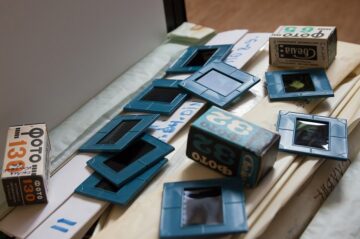
“Just as any advanced comrade must have a watch, he shall also possess mastery of a photo camera.” So declared Anatoly Lunacharsky in 1926, in his role as the Soviet Union’s Commissar of Enlightenment. This programmatic statement was included in the very first issue of the photography journal Sovetskoe Foto, published that same year. In fact, such amateur photographic practice—as Oksana Sarkisova and Olga Shevchenko make clear in their book In Visible Presence: Soviet Afterlives in Family Photos—was a key form of active Soviet citizenship. A photographer’s manual published in 1931 openly ordered all to turn their cameras away from family, friends, and other mundane subjects and demanded, “Not one photograph devoid of social significance!”
As a scholar of photography, I appreciate anyone’s recognition of the power of photography. As a social scientist, I read the manual’s call to action as a statement of the obvious. Indeed, no photograph, Soviet or not—even (or perhaps, especially) that of friends, family, or other mundane subjects—is “devoid of social significance.” What people choose to photograph or put in family albums is itself socially significant.
More here.
Enjoying the content on 3QD? Help keep us going by donating now.
 Yes, every fashionable conference has some panel on AI. Yes, social media is overrun with hypemen trying to alert their readers to the latest “mind-blowing” improvements of Grok or ChatGPT. But even as the maturation of AI technologies provides the inescapable background hum of our cultural moment, the mainstream outlets that pride themselves on their wisdom and erudition—even, in moments of particular self-regard, on their meaning-making mission—are lamentably failing to grapple with its epochal significance.
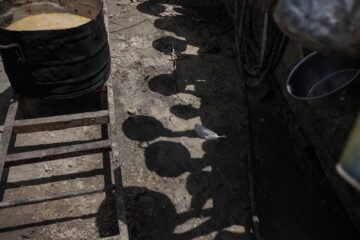 The worst-case scenario of famine is currently playing out in the Gaza Strip.” These were the
  A
A IN 1975, JACK KIRBY, the “King of Comics” whose wildly kinetic art and sweeping visions had shaped the whole universe of Marvel Comics, sent a Hanukkah card to a friend, a young fan Kirby had met a few years earlier at a New York comics convention. At the time, Kirby had been living in Thousand Oaks, California, where he’d joined a Conservative synagogue, Temple Etz Chaim. An active temple member, Kirby occasionally read Torah portions at Shabbat services, visited the Hebrew School to demonstrate the art of drawing comics for the students, and later fulfilled a lifelong dream when he joined a congregational trip to Israel. So there was nothing remarkable about him sending a Hannukah card—except, that is, for
  There are plenty of healthy activities available at home, of course, from playing with your children to pursuing a hobby. But there are also consequences to our homebody lifestyle. Time in the house is more likely to be
 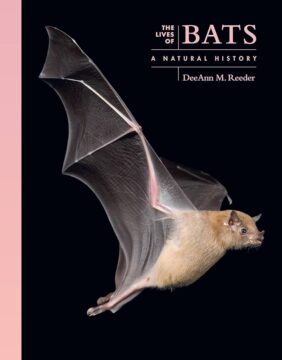 I have always had a soft spot for bats, and yet, after more than 500 reviews, this is the first bat book I cover here. Having now read this richly illustrated general introduction to their biology, I am even more engrossed with their many unique adaptations.
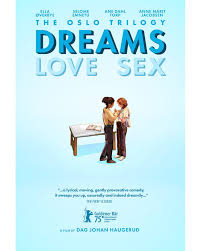 “These days, I rarely think about her. And when I do, it’s happy thoughts. Because it was so nice. Very painful, but mostly wonderful. That’s why I wrote it down. To keep it with me. I know I will never forget it, but memories change. I thought if I found the right words to describe it exactly as it was, I could capture it, make it solid. Something I could hold in the palm of my hand forever.”
 Roy, who is the author of novels like Booker Prize-winning
 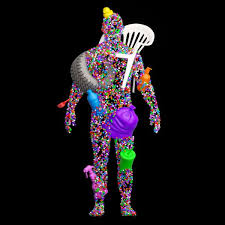 Everywhere they look, they find particles of pollution, like infinite spores in an endless contagion field. Scientists call that field the “exposome”: the sum of all external exposures encountered by each of us over a lifetime, which portion and shape our fate alongside genes and behavior. Humans are permeable creatures, and we navigate the world like cleaner fish, filtering the waste of civilization partly by absorbing it.
 T
T