Thomas Piketty Thinks America Is Primed for Wealth Redistribution

David Marchese in The New York Times:
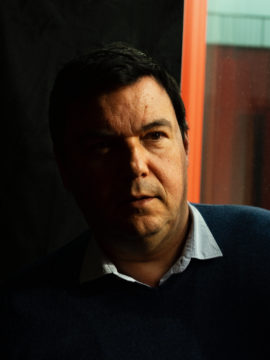
In 2013, the French economist Thomas Piketty, in his best seller “Capital in the Twenty-First Century,” a book eagerly received in the wake of the 2008 economic collapse, put forth the notion that returns on capital historically outstrip economic growth (his famous r>g formula). The upshot? The rich get richer, while the rest of us stay stuck in the mud. Now, nearly a decade later, Piketty is set to publish “A Brief History of Equality,” in which he argues that we’re on a trajectory of greater, not less, equality and lays out his prescriptions for remedying our current corrosive wealth disparities. (In short: Tax the rich.) If the line from one book to the other looks slightly askew given the state of the world, then, Piketty suggests, you’re looking from the wrong vantage point. “I am relatively optimistic,” says Piketty, who is 50, “about the fact that there is a long-run movement toward more equality, which goes beyond the little details of what happens within a specific decade.”

In the time since “Capital in the Twenty-First Century” was published, there has been a huge proliferation in the number of American billionaires. Something like 130 new ones were added between 2020 and 2021 alone. That happened in the context of growing public discussion — and anger — about economic inequality. So what the hell happened? What enabled the ultrawealthy to flourish in the face of such widespread antipathy? Let me put this very clearly: I understand that each year and each decade is tremendously important, but it’s also important not to forget about the general evolution. We have become much more equal societies in terms of political equality, economic equality, social equality, as compared with 100 years ago, 200 years ago. This movement, which began with the French and U.S. revolutions, I think it is going to continue.

Of course there are structural factors that make it difficult: the system of political finance, the structure of media finance, the basic democratic institutions are less democratic than they should be. This makes things complicated. But it’s always been complicated. The Supreme Court for decades made it impossible to create a progressive income tax. They were fine with the racial segregation, but having a progressive income tax was unconstitutional. In the end, it took 20 years to change the Constitution, but then it happened and contributed to reduced inequality.1

More here.
Sunday, May 1, 2022

Should we take Kingsley Amis more seriously as a poet?

Alexander Larman in The Critic:

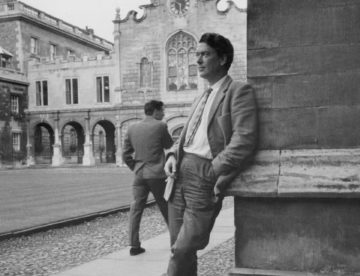
If Sir Kingsley Amis was still alive today, on the occasion of his centenary — an event that would owe a quite remarkable amount to medical science, and might, given the context of this particular weekend, even be seen as a second Resurrection narrative — he might be amused by the way that he has been treated by posterity. I’ve written about the decline in Kingers’ fortunes, justified or not, for the May issue of The Critic, but one area that I was only able to touch on in the most passing of fashions was one that many Amis aficionados prefer not to dwell on. Yes — oh dear yes — Kingsley Amis wrote poetry. Many may have wished that it were not so.

This does one of the twentieth century’s most brilliant writers a disservice. One of the oft-repeated ironies of his epochal friendship with Philip Larkin is that, for a fair amount of their early lives, each man saw himself in the opposite sphere to the one in which he ended up excelling: Larkin wished to be a novelist, Amis a poet.

More here.

The Worst Person in the World

Morgan Meis in Slant Books:

Well Rick B. from the United States, it seems that you did not like the Norwegian director Joachim Trier’s newest film The Worst Person in The World very much. Your Amazon review is quite short, and pretty rough. You gave it one star. The title of your review is “tedious, annoying people talking too much.”  And then you followed that up with two words and an exclamation mark: “It sucks!”
I did like the film and so I found your annoyance annoying, which brings up the immediate question as to why I spend so much time reading Amazon reviews of things, films in particular, but also books, and I will also confess that when I read an Amazon review I find especially baffling I will often click on the name of the person leaving the review and look at other things they have reviewed.

More here.

Elegant Six-Page Proof Reveals the Emergence of Random Structure

Jordana Cepelewicz in Quanta:

When the mathematicians Jeff Kahn and Gil Kalai first posed their “expectation threshold” conjecture in 2006, they didn’t believe it themselves. Their claim — a broad assertion about mathematical objects called random graphs — seemed too strong, too all-encompassing, too bold to possibly be true. It felt more like wishful thinking than a reflection of mathematical truth. Even so, no one could prove it false, and it quickly became one of the most important open problems in the field.

Now, more than 15 years later, a pair of young mathematicians at Stanford University have done what Kahn and Kalai thought borderline impossible: In a surprisingly short preprint posted online just a few weeks ago, Jinyoung Park and Huy Tuan Pham have provided a complete proof of the conjecture.

“It’s strikingly simple and ingenious,” said Kalai. “It’s stunning. It’s wonderful.”

More here.

Aligning Artificial Intelligence with Human Rights

Jeff Bleich and Dr. Bradley J. Strawser at the Harvard Advanced Leadership Initiative:

Artificial Intelligence (AI) is the next technological revolution, a breakthrough that poses both great risks and great rewards for human rights. Our ability to mitigate AI’s risks will depend not on its technical features, but on how and why those features are used. A hammer can build a house or break a skull — the impact of any tool depends on who wields it, their intentions behind its use, and what constraints, if any, have been built around the tool’s use.

Having studied leading AI technologies, we are optimistic about their capacity to enhance the core values of human rights — including the right to life, equality, freedom of movement, and a sustainable environment. But realizing that potential requires being clear-eyed about the threat AI technologies pose, then addressing those threats.

AI is already embedded in many aspects of our lives, from mail systems that anticipate our words to Alexa/Siri assistants learning our needs to bank systems recognizing out-of-pattern purchases to playlists shuffling to match our personal tastes. Some find these things convenient; some find them annoying. Few consider them an immediate threat to our lives and freedoms.

Yet, as AI advances, its presence in the world will come into sharper relief.

More here.

How to cultivate creativity as an adult, according to an expert

Mary Elizabeth Williams in Salon:

Creativity is an essential element of the human condition. Yet unlike other elements of our humanity, there’s a perception that creativity seems to leave us as we age. Children, wrapped up in their imaginary play worlds and projects, are notoriously unhindered in their creativity. But adults are far less adept at conjuring the fantastical and bizarre imagination that their childhood selves had easy access to. Many adults long for those playful youthful days, when conjuring up a grand scene, on paper or on the playground, was as natural as breathing.
To write his new book on creativity, author Matt Richtel turned to a diverse group of individuals who exemplify the essence of the word — director Judd Apatowentrepreneur Mike Lee, musician Rhiannon Giddens, Nobel prize laureate Dr. James Allison. He listened to their stories about what sparks them and how they’ve attained their achievements. And the good news is, you and I don’t have to be like any of them.

More here.

Sunday Poem

I Went Into the Maverick Bar

I went into the Maverick bar
In Farmington, New Mexico.
And drank double shots of bourbon
………………………….. backed with beer.
My long hair was tucked up under a cap
I’d left the earing in the car.

Two cowboys did horseplay
…………………………..by the pool tables,
A waitress asked us
…………………………..where are you from?
a country-and-western band began to play
“We don’t smoke Marijuana in Muskokie”
And with the next song,
…………………………..a couple began to dance.

They held each other like in High School dances
…………………………..in the fifties;
I recalled when I worked in the woods
…………………………..and the bars of Madras, Oregon.
That short-haired joy and roughness—
…………………………..America—your stupidity.
I could almost love you again.

We left—onto the freeway shoulders—
…………………………..under the tough old stars—
In the shadow of bluffs
…………………………..I came back to myself
To the real work, to
…………………………..”What is to be done.”

by Gary Snyder
from No Nature-
New and Selected Poems
Pantheon Books, 1992

In Edna St. Vincent Millay’s Diaries, the Private Life of a Celebrity Poet

Heather Clark in The New York Times:

Edna St. Vincent Millay (1892-1950) was once the most famous poet in America. Her collections sold tens of thousands of copies, and her readings filled theaters from New York to Texas. She was the female voice of the Jazz Age, the New Woman incarnate whose passionate and iconoclastic verse earned her a devoted following. Her 1920 poem “First Fig” became an anthem for a generation tired of Victorian mores:
My candle burns at both ends;
It will not last the night;
But ah, my foes, and oh, my friends—
It gives a lovely light!

Millay won the Pulitzer Prize for poetry in 1923, and at the height of her fame she seemed unstoppable. But not long after World War I, modernist poets began rejecting rigid rhyme, meter and expressions of emotion. Millay’s wildly popular love sonnets suddenly seemed quaint when set beside the oblique and somber lines of T.S. Eliot’s “The Waste Land.” The modernists won the day, and the discrete, imagistic verse of Eliot, Ezra Pound, William Carlos Williams, Wallace Stevens and Marianne Moore eventually crowded out the more decadent, romantic lyrics of Millay and Sara Teasdale. The poet Maxine Kumin remembered her Harvard professors dismissing Millay as “just a sentimental woman” in the mid-1940s.

Now, 72 years after her death, Yale University Press has published Millay’s diaries nearly in full. Their editor, Daniel Mark Epstein, hopes this landmark publication will revive interest in Millay’s daring, transgressive verse. And indeed, Millay’s best work — with its coy rhymes, bravado and playful sexual politics — deserves a contemporary reassessment. It’s something of a miracle that Millay was published at all. She grew up in poverty in Newburyport, Mass., and Camden, Maine.

More here.

Saturday, April 30, 2022

Regime Change?

Mona Ali in Phenomenal World:

The centerpiece of shock and awe of the West’s economic response to Russia’s invasion and bombardment of Ukraine was the freezing of Russia’s central bank assets. In the March 7 edition of his Global Money Dispatch newsletter, the Credit Suisse investment strategist Zoltan Pozsar writes that the G7 seizure of Russia’s foreign exchange reserves marks a regime change in the global monetary system. Pozsar pronounces this new regime Bretton Woods III. He anticipates that Asian sovereigns, fearing that their dollar- and euro-denominated foreign reserves are at risk of expropriation in the event of future foreign policy disputes, will park their surplus funds outside of the reach of Western financial authorities. For Pozsar, this heralds the rise of “commodity-backed currencies in the East” and spells the denouement of dollar hegemony.

In a follow-up piece published on March 31, Pozsar speculates that recent developments will drive China to replace the West as the buyer of last resort of Russian oil. As a result, oil tankers will have to be rerouted from the quicker East-West route via the Suez to a longer passage (one requiring ship transfers) from Russia to China. Geopolitics will shape the reorganization of real infrastructure networks, slowing down supply chains and increasing the cost of credit. Pozsar predicts that this rearrangement of global commodity and money flows presage a new world economic order, one in which China will replace the US as the monetary hegemon. The petrodollar, he envisages, will be replaced by the petro-yuan.

Pozsar’s analysis—as well as Adam Tooze’s response to it—appreciates the asymmetry in the world economy: between advanced economies that dominate global finance, and developing countries that produce the majority (about sixty percent) of world GDP. Asia may be the center of gravity of world manufacturing, but European and North American firms still command the bulk of the profits embedded in global supply chains.

More here.

The split-body problem

Gunnar O Babcock in Aeon:

If you split yourself down the middle to become two people, would you survive the process? And, if you did, would your other half be your child, your clone or your sibling? Would this create two instances of the same you, existing simultaneously in two places at the same time; or would it create two entirely new people, causing you to suddenly cease to exist? While such thought experiments raise baffling questions about personal identity, there is a more fundamental problem I want to consider: would splitting in two be an instance of reproduction or an entirely different kind of process?

When we think about how organisms reproduce, we don’t tend to think of splitting bodies. We think of sex. We tend to think of animals such as panda bears, leopards, ravens or any other large multicellular organisms having sex, becoming pregnant (or laying fertilised eggs), and giving birth. It isn’t surprising that this is how we think new organisms come into existence. Sexual reproduction is, after all, the form of reproduction that nature has selected for creatures like us. But sex is not the way most reproduction takes places.

Most forms of life on this planet create other living beings through asexual processes – and there are many ways this can happen (as we’ll see). Some of the most common forms are similar to the thought experiment above: a body splits in two. Nearly all prokaryotic microbes, such as bacteria, reproduce through various forms of this process, such as binary fission (when a body separates into two new bodies). However, it’s not always clear what kinds of relation result from fission, as in the thought experiment above.

More here.

Black Like Me? Bridgerton and the Fantasy of a Non-Racist Past

Gary Younge in The Nation:

When I first moved to the US from London, I asked an American journalist what kind of reception I might expect as a Black Briton. “Well, when they hear an English accent, Americans usually add about 20 points to your IQ,” he said. “But when they see a Black face, they usually don’t.” Recalling that the authors of the book The Bell Curve had claimed that Black people have an IQ 15 points lower than whites, I figured that, at the very least, I would still come out at least five points ahead.

There were moments during my 12 years as the US correspondent for The Guardian when I needed all the help I could get. It could be a particular challenge when reporting from Republican events. Englishness, the American journalist had made clear, carried cultural cachet; Blackness did not. The two arriving in the same body could mess with some people’s heads. When I introduced myself as a British journalist, I was occasionally subjected to an interrogation of my credentials. “Were you born there?” they’d ask. “I don’t hear an accent.” (I sound like Ricky Gervais, with nary a hint of a transatlantic twang.)

But my point here is not partisan. Republicans could be, as it happens, ruder than most. But despite Oscar-winning director Steve McQueen, acclaimed author Zadie Smith, and actors Idris Elba, David Oyelowo, and Thandie Newton—to name but a few—the general American image of Britain (particularly outside the big cities) remains ossified in a time before the large-scale migration of Black people to Britain following the Second World War. (My parents came from Barbados in the early 1960s.) When I wrote an article for The Washington Post about being Black and British in the US, it ran alongside a picture of a Black man in a bowler hat carrying an umbrella in one hand and a cup of tea in the other.

More here.

The end of crypto’s “Wild West”?

Adam Tooze over at his substack Chartbook:
Bitcoin has no reason to exist. It delivers no meaningful benefit for society. It is a form of gambling, propelled by naked greed and generating vast quantities of CO2 emissions.

This was the uncompromising and hostile position towards crypto taken on behalf of the ECB by Executive Board member Fabio Panetta in December 2021, a campaign which Panetta continues today…

Panetta’s stance is the hard edge of what amounts to a global push to regulate the crypto currency business, a push which has gathered significant pace in recent months.

China has taken the lead by going a long way towards banning both the use of crypto as a means of payment and bitcoin mining. Egypt, Morocco, Algeria, Bolivia, Bangladesh and Nepal have followed China’s lead.

Countries that have restricted the ability of banks to deal with crypto-assets or prohibited their use for payment transactions include Nigeria, Namibia, Colombia, Ecuador, Saudi Arabia, Jordan, Turkey, Iran, Indonesia, Vietnam and Russia.

In the financial centers of the West, in EU, UK and US, regulators, politicians and lobbyists are jostling to decide what will be the rules of the game.

It seems that we have reached a turning point in the development of the industry. For many this is the end of the “Wild West” phase of crypto’s development.

More here.

Orlam by PJ Harvey

Liz Berry at The Guardian:

A novel-in-verse written in dense Dorset vernacular, Orlam is a curious and enchanting thing. Like a dark poetic almanac, it charts, month by month, a year in which its heroine, nine-year-old Ira-Abel Rawles, leaves behind the innocence of her childhood.

Orlam takes the reader by the hand, with each poem laid out opposite its “standard” translation and an abundance of footnotes to illuminate a hoard of folklore. This doubling slows down the reader who cares to be slowed, allowing them to puzzle out the dialect words and the way they change the poems.

Ira’s world is a magical realist outpost of the West Country where PJ Harvey grew up. Conjured through tightly rhyming poems, often taking the form of songs or incantations, the village of Underwhelem appears: “Voul village in a hag-ridden hollow. / All ways to it winding, all roads to it narrow.”

more here.


The Witchery of Mallacoota

Evelyn Juers at The Sydney Review of Books:

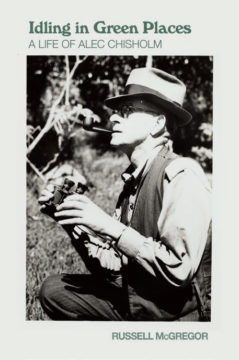
Natural history is deeply rooted in, and benefits from, connections between the personal and the scientific. There is a blog called ‘Cassin’s Sparrow – Why Blog About Cassin’s Sparrow?’ which explains that there is plenty of information on birds but less on ‘the story of how we know’ about them, ‘the historic, cultural, political, and scientific processes behind their discovery…[and] this blog tries to fill that gap’, as well as ascertaining ‘what Cassin’s Sparrow can teach us about life on Earth’ and ‘why it matters to know these things’. The author is John Schnase, an American biologist and computer scientist who calls Cassin’s Sparrow his ‘sherpa bird’. ‘Its plaintive song and spectacular skylarks have been a constant source of solace and joy in my life’. Similarly, Alec Chisholm’s observations, vivid descriptions, and emotional attachments to birds and locations are part of a larger ornithological and cultural history.
Chisholm’s favourites included the extremely elusive, also called ‘cryptic’, ground-dwelling Rufous Scrub-birds, that he first saw in Queensland’s Lamington National Park and described as ‘quiet in plumage’ with ‘resonant voices’.

more here.

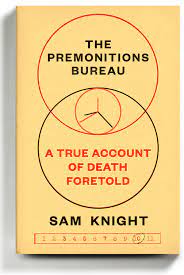
‘The Premonitions Bureau’ Recounts Crowdsourcing the Supernatural

Dwight Garner in The New York Times:

Gabriel García Márquez would not sleep in a house if someone had died in it. Colette was passionate about dowsing. James Merrill had his Ouija board. Ted Hughes taught Sylvia Plath to read horoscopes. Robert Graves believed in ghosts. If Edmund Wilson had a dream about you, he’d call you to mull it over.
Most of us sense, at times, that there are parts of the electromagnetic spectrum not accessible with the tools at hand. Moments manifest as auguries, as kismet, as a sense that God has glanced at us or, conversely, that we have been silently brushed by demons.

Coincidence can provide shivers of this sort. G.K. Chesterton called coincidences “spiritual puns.” Don DeLillo, in “Libra,” wrote, “A shrewd person would one day start a religion based on coincidence, if he hasn’t already, and make a million.”

Intuitions collect intensely around disasters. Inevitably there is the man who slept late and missed the crashed jet, the woman who saw the tsunami coming in a dream or the teen who had an urge to hit the floor before the first rounds left the semiautomatic rifle. Jeff Tweedy, of Wilco, spooked a generation by writing, shortly before Sept. 11, a song that included the lyrics “Tall buildings shake / Voices escape singing sad, sad songs.”

More here.

The Collateral Damage of Queen Elizabeth’s Glorious Reign

Sam Knight in The New Yorker:

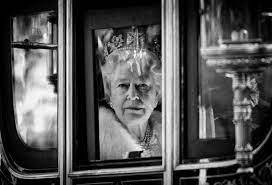
The Queen is the only royal who actually matters or does anything. That’s not fair, of course, but the monarchy is unfairness personified and glorified, long to reign over us. Naturally, the rest of the Royal Family—the heirs; the spares; Princess Michael of Kent, whose father was in the S.S. and whom Diana nicknamed the Führer; Princess Anne, Charles’s younger sister, who’s known to feed the chickens in a ballgown and Wellington boots after a night at the palace—are all busy. They have numberless engagements and causes, which fill their identical, repeating years, but they exist only as heralds for the magical authority of the Crown, which resides in the Queen and nobody else. “They are high-born scaffolding,” as Tina Brown, a former editor of The New Yorker, writes in “The Palace Papers,” her latest chronicle of the unhappy House of Windsor. The Queen decides. She elevates. She exiles. The rest of them sweat: about their annual allowance; their ridiculously discounted rents on apartments in Kensington Palace; the granting of a weekend cottage on the grounds of Sandringham; their access to the balcony of Buckingham Palace for big photo ops; their entry to the Knights of the Garter, a reward for not fucking things up too badly; their Instagram followers; today’s ghastliness in the MailOnline.

More here.